


Contemplating coverage?
Subscribe to receive our emails & get
$200 OFF!
Have questions?
Call us: (833) 544-8273

Expert-Reviewed Content: Guided by Editorial Standards

Written By Allaire Conte
If your garbage disposal is leaking from the bottom, the most likely cause is that the internal seals have failed or the motor housing is cracked. In most cases, this type of leak requires full unit replacement rather than a parts repair. Understanding why is my garbage disposal leaking and asking can you fix a garbage disposal leaking from the bottom are natural first reactions, but a bottom leak is different from a top or side leak. Those can often be fixed cheaply. A bottom leak usually cannot. Do not use the disposal or run the sink until you have identified the source and cut power at the breaker. This guide walks you through the full diagnosis, every repair scenario, and how to decide between fixing and replacing.
SAFETY FIRST
Turn off the disposal at the circuit breaker before inspecting any leak. A bottom leak can expose water to the motor and electrical components, creating a shock or fire risk. The motor housing sits at the bottom of the unit. Water contacting the motor can cause electric shock or a short circuit. Always cut power at the circuit breaker, not just the wall switch, before touching the unit. The Consumer Product Safety Commission (CPSC) identifies water contact with powered appliances as a recognized electrical shock hazard.
Water coming out of the bottom of a garbage disposal means the internal seals or motor housing have failed. This type of leak, especially near the reset button hole, cannot be repaired by replacing parts. The entire unit will need to be replaced to stop the leak permanently.
That is the core answer. Understanding the anatomy of the unit explains why.
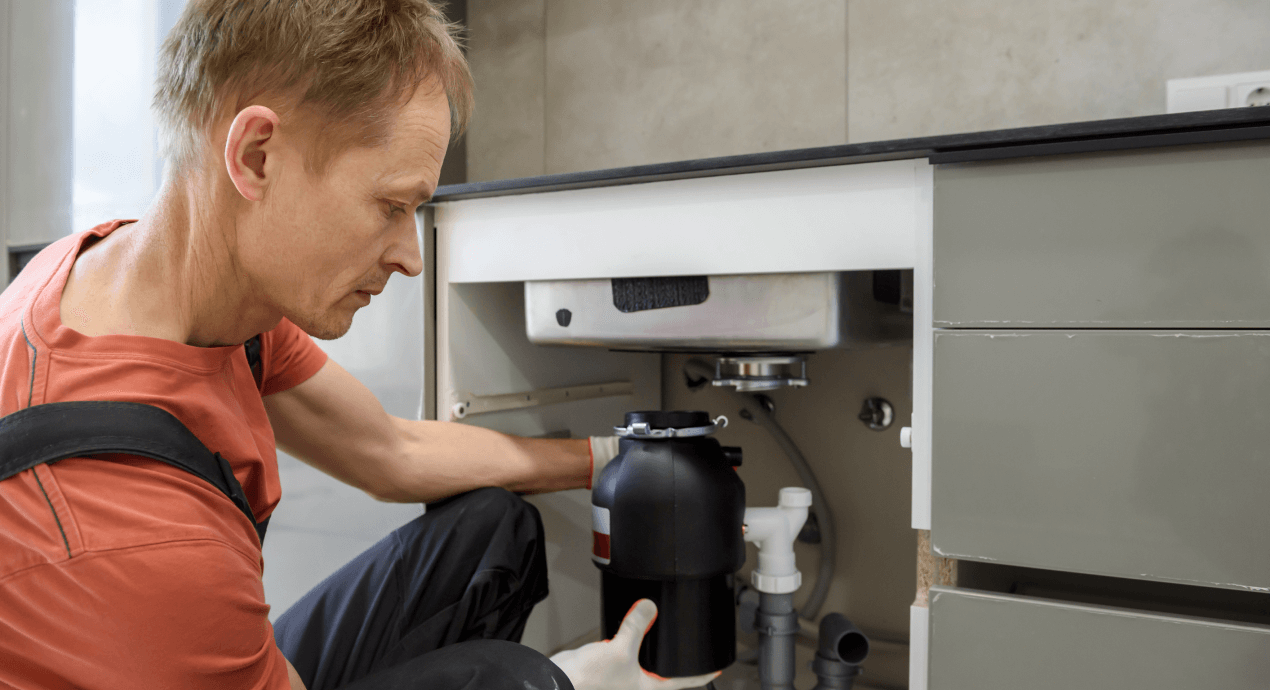
Internal seals separate the grinding chamber from the motor compartment inside the disposal body. On most consumer-grade models, including units from InSinkErator, Moen, and Badger, these seals are integrated directly into the housing. They are not sold as individual replacement parts and are not accessible for DIY repair.
The motor lives at the bottom of the disposal unit. When water reaches the very bottom drain point or the area near the reset button, it means those integrated seals have broken down completely. Units that are 8 to 10 years old or older are most susceptible to this failure. At that age, the seals have simply worn out.
Here is what causes water to come from the bottom of a garbage disposal, including causes that can mimic a bottom leak.
The internal seals inside the grinding chamber are the most common source of a true bottom leak. When internal seals fail, water drips from the very bottom of the disposal body, often near the reset button hole. This seal failure occurs gradually as the unit ages and the seals dry out, crack, and compress under repeated use. InSinkErator, Moen, and Badger disposals all share this design, and none offer a seal-only replacement part for standard consumer models. Replacement of the full unit is the only fix.
The motor housing is the outer body at the bottom of the unit. Moisture from food waste and exposure to acidic foods like citrus and vinegar weaken it over years of use. After 8 to 10 years, the housing can develop small cracks that allow water to escape. A cracked housing cannot be patched permanently. If you see visible cracks or heavy corrosion on the housing body, the unit needs to be replaced, not repaired.
Water from a loose discharge pipe or drain connection on the side of the unit can travel down the exterior and pool at the bottom. This is a fixable scenario that many homeowners misdiagnose as a bottom leak. A defective sink flange at the top of the unit can also send water running down the outside, making the leak appear to originate from the bottom. The paper towel test described later in this guide will help you confirm the true source.
The sink flange is the metal ring that connects the disposal to the underside of your sink drain opening. A ring of plumber’s putty seals this connection. Over time, that putty dries and cracks. Loose mounting bolts under the sink can also let the flange shift slightly, allowing water to seep through and run down the outside of the unit. This type of leak mimics a bottom leak but originates at the very top of the disposal.
If the leak only happens when your dishwasher runs, the source is almost certainly the dishwasher inlet hose on the side of the disposal, not a true bottom leak. Many disposals include a dishwasher inlet port on the side of the unit where a drain hose connects. If the metal clamp securing that hose becomes loose or the hose itself develops a crack, water will drip from that side connection during the dishwasher drain cycle. This targets the question "garbage disposal leaking from bottom when dishwasher runs" and the fix is simple. First, locate the dishwasher inlet port on the side of the disposal. Second, check the metal clamp securing the drain hose and tighten it with a flathead screwdriver. Third, if tightening does not stop the leak, inspect the hose for cracks and replace it if needed. The hose and clamp assembly typically costs under $10 at any hardware store.
A new garbage disposal leaking from the bottom is almost never caused by internal seal failure. New units fail at the bottom for two primary reasons: the sink flange was not mounted correctly during installation, or there is a factory defect. Start by checking that all three mounting bolts under the sink are tightened evenly. Uneven tightening can cause the flange to tilt slightly and leak. If tightening the bolts does not resolve the leak, contact the manufacturer directly. InSinkErator, Moen, and most major brands carry at least a 1-year warranty on new units, and a factory defect qualifies for replacement at no cost.
A brief note on overuse and clogs: Overuse or clogged drains do not directly cause bottom leaks. However, repeatedly forcing the unit to grind hard materials or running it while clogged can accelerate internal seal wear over time.
Before you do anything else, identify the exact source. Use this numbered process.
Callout: If water is dripping directly from the reset button hole at the bottom of the unit, this confirms internal seal failure. Replacement is the only permanent solution.
If your disposal is a plug-in model, unplugging it is the first step. If it is hardwired, the circuit breaker is the only shutoff. Do not run the disposal or use the sink until the source is confirmed. Liberty Home Guard recommends consulting a licensed plumber if you are unsure about the leak source or uncomfortable working near electrical components.
Use this table to match the leak location to the likely cause, the recommended action, and an estimated cost. This is the fastest way to decide what to do next.
Leak Location | Likely Cause | Recommended Action | DIY Difficulty | Estimated Cost |
Bottom of unit / reset button area | Failed internal seals or cracked housing | Replace the disposal | Low to Moderate | $150 to $400 installed |
Top of unit / sink flange area | Worn putty or loose mounting bolts | Reapply putty and tighten bolts | Low | $5 to $20 in materials |
Side / discharge pipe | Loose connection or worn gasket | Tighten bolt or replace gasket | Low | $5 to $15 |
Side / dishwasher inlet | Loose clamp or cracked hose | Tighten or replace the clamp | Low | Under $10 |
Appears from bottom but source unclear | Sink flange leak traveling down | Use paper towel test to trace source | Low | $5 to $20 |
A bottom leak from internal seal failure is not fixable with parts. Most sealed units cannot have internal seals replaced by a homeowner, and replacement is almost always the only practical solution. Do not attempt to patch the housing or apply sealant. These are temporary measures that will not hold under the heat and vibration of normal use.
In the meantime: do not use the disposal, keep power off at the circuit breaker, and place a bucket underneath the unit to catch drips. If your disposal is from InSinkErator, Moen, or Badger and is still under the manufacturer warranty, contact the manufacturer before purchasing a replacement unit. You may qualify for a free replacement.
Tools needed: flathead screwdriver, putty knife or stiff card, plumber’s putty (approximately $5 at any hardware store).
Loosen the mounting ring beneath the sink by turning the locking tabs counterclockwise. Once the mounting ring is loose, let the disposal hang or have a second person support it. Use a putty knife to scrape the old, dried putty from around the flange where it meets the sink basin above. Apply a fresh rope of plumber’s putty around the flange, press it firmly into the sink opening, and retighten the mounting ring. Test for leaks by running water slowly. If the sink flange bolts are corroded or stripped and will not tighten properly, call a licensed plumber.
Tools needed: adjustable wrench, replacement rubber gasket if needed (approximately $5 to $15).
First, tighten the mounting screws at the discharge pipe connection using an adjustable wrench. Turn them clockwise until snug. If tightening does not stop the leak, the rubber gasket inside the connection has worn out. Remove the discharge pipe, pull out the old gasket, and press a new one into the fitting before reattaching. According to The Spruce, rubber gaskets on disposal connections typically need replacement about every five years.
Tools needed: flathead screwdriver, replacement hose if needed (hose and clamp assembly costs under $10).
Locate the dishwasher inlet on the side of the unit. Check the metal clamp securing the drain hose and tighten it with a flathead screwdriver. If the hose itself is cracked or brittle, replace it entirely. If the leak persists after tightening the clamp, avoid using the dishwasher until the hose is replaced.
In most cases, a garbage disposal leaking from the bottom is not repairable. The internal seals are integrated into the motor housing and cannot be replaced as individual parts on most consumer-grade models.
Replace the disposal if:
Repair the disposal if:
Replacement units range from $75 to $300 for the unit itself, with professional installation typically adding $100 to $200. Attempting a bottom leak repair that fails wastes that investment. For more help with this decision, see the signs it is time to replace your garbage disposal and a breakdown of garbage disposal repair cost and coverage.
If replacement is your next step, a home warranty may cover the full cost. The next section explains how.
A garbage disposal home warranty coverage plan through Liberty Home Guard can cover the full cost of disposal replacement when the unit fails due to normal wear and tear. This is especially relevant for bottom leaks, which almost always require full unit replacement rather than a parts repair.
Coverage typically excludes damage caused by improper use, lack of maintenance, or pre-existing conditions that existed before the policy took effect. Review your specific policy for service call fee details and any coverage limits.
Liberty Home Guard home warranty plans cover garbage disposals along with dozens of other home systems and appliances, including kitchen appliances, HVAC systems, plumbing, and electrical. A single service call is often all it takes to get a covered appliance repaired or replaced without paying out of pocket.
Ready to protect your home? Get a free home warranty quote and see which plan fits your home.
Most garbage disposals last between 8 and 15 years with proper use and regular maintenance. Units that grind hard materials frequently, are not cleaned regularly, or are exposed to highly acidic foods tend to fail sooner. If your disposal is approaching 10 years old and leaking from the bottom, replacement is usually the right choice.
The Spruce states that garbage disposals can last 10 to 15 years with proper use and care, attributing this to normal operating conditions and routine maintenance. Older disposals, particularly those around 8 to 10 years of age, become increasingly prone to worn internal seals and corroded housing.
Several factors shorten lifespan significantly. Grinding hard materials like bones or fruit pits wears down the grinding plate and increases pressure on internal seals. Infrequent cleaning allows food acids to corrode the interior. Running the unit without water causes friction and heat buildup. InSinkErator, Moen, and Waste King all publish average unit lifespans in their installation documentation, typically in the 8 to 12 year range for standard consumer models.
Beyond the inconvenience, a leaking garbage disposal contributes to household water waste. The U.S. Environmental Protection Agency estimates that household leaks waste nearly 1 trillion gallons of water annually nationwide, making prompt repairs an environmental priority as well as a financial one. You can find more context on this from the EPA household leak data program.
Routine checks also extend to other appliances. Common kitchen appliance failures, including issues with dishwashers, microwaves, and disposals, are easier to prevent with monthly checks. Angi recommends monthly checks for dampness, mold, and pooled water under the sink as part of routine kitchen maintenance.
Monthly maintenance checklist:
Annual maintenance checklist:
Routine appliance leak checks should extend beyond the disposal. If you notice moisture under the sink, check nearby supply lines as well. The same approach applies to laundry appliances: addressing a washer leaking under the machine early prevents water damage to floors and cabinets.
Protect What’s Most Important With
Get A Free Quote
America’s #1 Home Warranty
If your garbage disposal is leaking from the bottom, turn off the power at the circuit breaker immediately to prevent electrical hazards. Do not run the disposal or use the sink until the source is confirmed. If the leak comes from the very bottom near the reset button, plan for full unit replacement.
Most garbage disposals last between 8 and 15 years with proper use and regular maintenance. Units that grind hard materials frequently, are not cleaned regularly, or are exposed to highly acidic foods tend to fail sooner. If your disposal is approaching 10 years old and leaking from the bottom, replacement is usually the right choice.
Yes. If your garbage disposal is leaking, you should unplug it or turn off the circuit breaker immediately. A leak near the motor housing or bottom of the unit can expose electrical components to water, creating a shock or fire hazard. Do not run the disposal until the leak source is identified and resolved.
Water coming out of the bottom of a garbage disposal means the internal seals or motor housing have failed. This type of leak, especially near the reset button hole, cannot be repaired by replacing parts. The entire unit will need to be replaced to stop the leak permanently.
In most cases, a bottom leak cannot be fixed with parts or DIY repairs. The internal seals are integrated into the motor housing and are not individually replaceable on most consumer-grade models from InSinkErator, Moen, Badger, or GE. Replacement is almost always the practical solution. If the unit is new and still under warranty, contact the manufacturer before purchasing a replacement.
If the leak only occurs when the dishwasher runs, the likely source is the dishwasher inlet hose or clamp on the side of the disposal, not a true bottom leak. Check the metal clamp securing the dishwasher drain hose to the inlet port and tighten it with a screwdriver. If the hose is cracked, replace it. This is a fixable repair that costs under $10.
A new garbage disposal leaking from the bottom is most likely caused by improper mounting of the sink flange or a factory defect, not internal seal failure. Check that all mounting bolts are tightened evenly. If the leak persists after tightening, invoke the manufacturer warranty. InSinkErator, Moen, and Badger all offer at least a 1-year warranty on new units.
Most home warranty plans, including Liberty Home Guard, cover garbage disposals when they fail due to normal wear and tear. This is especially valuable for bottom leaks, which typically require full replacement costing $150 to $400 installed. Review your specific policy for service fee details and coverage conditions to understand exactly what is included.
Stay Ahead of Potential
Home Mishaps!
Subscribe to our Liberty Home Guard Newsletter and gain access to exclusive content that ensures your peace of mind.

Subscribe to receive our emails & get
Have questions?
Call us: (833) 544-8273