

Contemplating coverage?
Subscribe to receive our emails & get
$200 OFF!
Have questions?
Call us: (833) 544-8273

Expert-Reviewed Content: Guided by Editorial Standards

Written By Rachel Cherem
A circulator pump uses a motor to generate pressure and maintain a constant, controlled flow of heated water throughout a plumbing or hydronic heating system -- working alongside a boiler or heat source to deliver warmth to every tap, radiator, and heat exchanger in your home.
The water in the system is heated by a boiler or other heat source, and then the circulator pump aids in distributing the water throughout the building. This can result in hot water flowing from the tap when a circulator pump is integrated into a plumbing system. A circulator pump is also an essential component of a hydronic heating system. In this case, the heated water flows through pipes to supply warmth to heat exchangers before circulating back to the original heating source to be warmed again.
Your boiler, plumbing fixtures, heat exchangers, and pipes may be in fine working order, but if you’re dealing with a circulation pump not working, your water or heating appliances won’t come up to proper temperature. This can have financial implications as well, since your boiler or other heat source will still be consuming energy even if you don’t feel any of the benefits. A heating system tune-up can help identify whether the pump or another component is responsible.
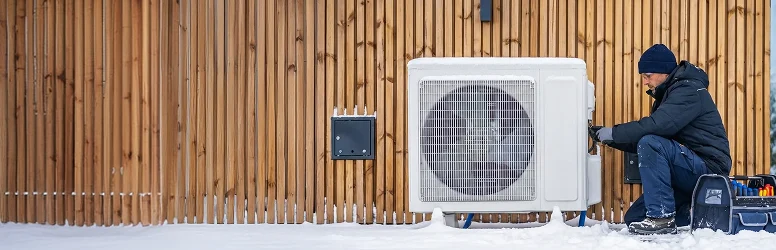
An obvious symptom of a malfunctioning circulator pump is a lack of heating, but heating and plumbing systems are complex, with multiple components that can develop issues of their own. So, how can you pinpoint the circulator pump as the culprit for your temperature troubles? Here are the key symptoms to look out for.
Symptom | Likely Cause |
Sporadic or Inconsistent Heating | Impeller damage, partial airlock, or miscalibrated pump settings |
Water Leaks Near the Pump | Loose fittings, corroded joints, or worn seals and gaskets |
Sputtering or Uneven Water Flow | Trapped air (airlock) or partial blockage in the line |
Unusual Noises | Airlock (hissing/gurgling),motor or mechanical failure (grinding),mineral blockage (high-pitched whine) |
Pump Hot to the Touch | Overworking motor, seized impeller, or insufficient flow rate |
Cold Pipes Leading Away from Pump | Pump motor failure, complete airlock, or loss of power to the pump |
Pump Running Constantly | Stuck relay, thermostat signal fault, or failed zone valve |
Depending on the nature of the malfunction, a faulty circulator pump could result in no heating whatsoever, but another possibility is inconsistent heating. Heat might come to your plumbing or heating appliances only sporadically, with no obvious rhyme or reason, or only certain appliances may get warm. Radiators nearer to the boiler and circulator pump, for example, might feel reasonably warmer than those at the far end of the system.
Pooling water around any home appliance is always a cause for concern. Even a small amount of water on or beneath your circulator pump suggests a faulty internal component. Unchecked leaks can also lead to water damage from leaks in surrounding areas.
A circulator pump should be predictable in its sustained flow of water. Listen for hisses of air, rushes of water, or intermittent flow. If you are hearing or otherwise sensing an inconsistent flow within the system in concert with heating problems, your circulator pump is the probable culprit.
Strange and unusual noises from pumps and other home system components is always a sign to attend to your maintenance checklist. Grinding, clanking, hissing, clicking, groaning, creaking -- these are noises that should get your attention and may suggest a problem with your circulator pump.
Your circulator pump should aid in the distribution of heat throughout your home, but the component itself should not be hot to the touch. Localized overheating suggests something is wrong -- often an overworking motor or a seized impeller preventing normal water flow.
Water pipes that lead from the circulator pump should feel warm due to the pump forcing hot water through them. If your boiler or other heat source is generating hot water but the pipes coming from the circulator pump are cold, the pump itself is probably faulty.
If your circulator pump never shuts off -- even when the thermostat is satisfied and the heat demand has been met -- the problem typically isn’t the pump motor itself. A pump that runs constantly is usually being told to run by a faulty signal. The most common causes are a thermostat that isn’t properly signaling the pump to stop, a stuck pump relay that stays closed, or a zone valve that has failed in the open position. Check the thermostat settings first and confirm the zone valve is closing fully when heat is not called for. If the relay is stuck, it will need to be replaced by a technician. Leaving a pump running indefinitely accelerates wear and increases energy costs.
Before diving into component-level repairs, confirm whether the pump is actually functioning. This 4-step physical check requires no tools and takes less than five minutes.
Step 1: Listen for a motor hum. With the system running, place your hand or ear near the pump housing. A functioning pump produces a low, steady hum. Silence usually means no power or a failed motor.
Step 2: Feel the pipe temperature. Touch the outlet pipe leading away from the pump. It should be noticeably warmer than the inlet pipe if water is circulating properly.
Step 3: Check the pressure gauge. Most residential hydronic systems operate between 12 and 25 PSI. A reading outside this range -- or a gauge that doesn’t move when the system fires -- points to a flow problem.
Step 4: Observe the bleed valve. With the pump running, briefly loosen the bleed screw slightly. If water (not just air) trickles out, the pump is moving fluid. Air only suggests an airlock; nothing at all may indicate a seized impeller.
Now you’re knowledgeable of the symptoms that faulty pumps can exhibit. Here’s Liberty Home Guard’s troubleshooting cycle to get the hot water flowing once again.
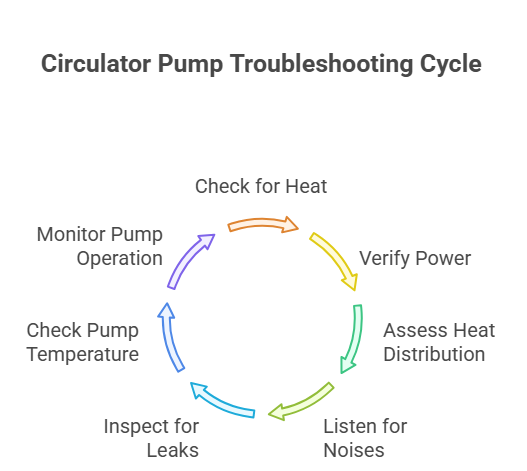
First, identify the probable source of the noise. Is it coming from the circulator pump itself or somewhere else in the system?
Grinding or grating noises localized to the pump indicate a likely problem with the circulator pump’s motor or mechanical components. Shut off power to the pump and consult your product’s documentation before inspecting yourself. Common residential pumps like the Taco 007, Bell and Gossett Series 100, and Grundfos UP series each have model-specific access points for motor inspection -- check your documentation for the correct procedure. Otherwise, reach out to the manufacturer or a professional to have the motor inspected.
Hissing, gurgling, rushing water, or other noises around the system’s piping and plumbing could be due to an airlock. If air is introduced to the system, the flow of water will be interrupted. Resolve an airlock using the following steps:
Safety Notice Turn off power to the circuit before proceeding. Never loosen the bleed screw or handle any pump components while the circuit is live.
High-pitched noises within your system could also be the result of blockages. If bleeding air from the system doesn’t resolve your problem, there could be an obstruction due to mineral buildup. In this case, it’s best to have a professional clear the lines.
Leaks on or near your circulator pump can result from loose or corroded fittings. First, try to determine where on the pump the water is trickling or dripping from. This can help you pinpoint which fitting, joint, seal, or gasket you need to attend to. Appliance water leaks follow a similar diagnostic process regardless of the appliance involved.
If you have a good idea of where the water is escaping, use a wrench or other appropriate tool to tighten any mechanical fittings. If there are visible gaskets or seals, inspect them for signs of warping or corrosion.
If you can’t determine the source of the leak, check all mechanical fittings to ensure they are tight and secure. Next, check the gaskets and seals to determine if any need to be replaced. These wear over time and may require periodic replacement.
A hot circulator pump suggests an overworking motor.
Safety Notice Turn off power to the circuit before proceeding. Do not touch internal pump components while the circuit is live.
Power down the circuit supplying electricity to the circulator pump before inspecting. One additional cause worth checking: a seized or obstructed impeller can prevent normal water flow, forcing the motor to work harder and generate excess heat. On many residential pump models, you can manually attempt to spin the impeller shaft by hand (with power off) to confirm it isn’t locked up. If the shaft won’t turn, the impeller may need cleaning or the pump may require replacement.
When to Call a Professional
HVAC technician note: If your pump continues to overheat after you’ve confirmed the impeller spins freely, system pressure is within the normal 12-25 PSI range, and there are no visible blockages, the motor itself has likely failed. At that point, DIY repair is not advisable. A licensed HVAC technician can test the motor windings, confirm the failure mode, and replace the pump with a correctly sized unit for your system. Attempting to run a repeatedly overheating pump risks damaging connected system components, including the boiler heat exchanger.
Consult with your product’s manufacturer or a professional to determine if the motor needs a new part or if it should be fully replaced.
Intermittent, sporadic, or insufficient heating could be the result of a few problems. If only one tap or appliance is affected, the problem may well be that piece of equipment and not your circulator pump. If multiple system components are affected, first check the pump’s settings to see if the system needs to be recalibrated.
If the pump’s settings are correct, there could be a problem with the pump’s propeller, motor, or other internal component. A partially damaged impeller can move some water but not enough to heat the full system uniformly. If you suspect impeller damage, contact the manufacturer or a professional repairperson to inspect the pump internally. For common HVAC problems that overlap with heating system issues, additional diagnosis may be warranted.
No heating whatsoever means the pump is either without power or the motor or circuitry has failed. Check the power supply and ensure the circuit is receiving power.
Safety Notice Turn off power to the circuit before proceeding. Use a multimeter to test voltage only if you are comfortable doing so safely. If you are unsure, contact a licensed electrician or HVAC technician.
If power is confirmed but the pump still isn’t circulating water, work through this diagnostic sequence:
A circulator pump not turning on after power is confirmed usually means the unit needs to be replaced.
If the pump runs without stopping even after the thermostat’s heat demand has been satisfied, the issue is almost always in the control circuit rather than the pump motor itself.
Safety Notice Turn off power to the circuit before inspecting the relay or zone valve wiring. If you are not comfortable working with low-voltage control wiring, contact a licensed HVAC technician.
Check the thermostat first: confirm it is set correctly and that it is actually signaling the system to stop. Next, inspect the pump relay -- a relay stuck in the closed position will keep the pump running regardless of thermostat input. Zone valve failure is another common cause; if the valve sticks open, the control circuit may interpret continuous heat demand. In hydronic systems with multiple zones, isolate the zone in question by closing its valve manually to determine if the pump shuts off. A technician will need to replace a failed relay or zone valve. Running a pump continuously without cause significantly shortens its service life.
Most residential circulator pumps are built to last. Grundfos, the world’s largest circulator pump manufacturer, states that the average pump lifespan is 10 or more years depending on model and maintenance conditions. In practice, pumps in well-maintained systems with treated water and consistent pressure often exceed that range, while pumps exposed to sediment, hard water, or deferred maintenance may fail well before 10 years.
The factors that most consistently shorten pump life are sediment accumulation on the impeller, hard water scale inside the pump housing, and extended periods of running without sufficient flow (including the constant-running scenario described above). Timely maintenance and early symptom response are the most reliable ways to reach or exceed the expected service window.
When a pump does reach end of life, replacement is often more cost-effective than repair. The U.S. Department of Energy’s 2024 final rule on circulator pump efficiency standards projects lifetime energy savings of 0.55 quadrillion Btu and reduced operating costs of $207.5 million per year across the residential sector -- a figure that underscores how much performance and running cost vary between aging and modern pumps. Upgrading to a current-model pump from the Grundfos UP series, Taco 007 line, or Bell and Gossett Series 100 family can meaningfully reduce energy consumption alongside improved reliability. For context on common HVAC problems that accompany aging heating systems, see our related guide.
A little maintenance goes a long way. Regularly monitor your pump for signs of wear and tear. Look for corrosion and moisture. Swap out gaskets, seals, and nuts that are past their prime.
Keep an eye on the pump’s pressure and rate of flow. Typical residential hydronic systems operate between 12 and 25 PSI. Readings consistently outside this range -- either too high or too low -- indicate an efficiency problem that can accelerate pump wear if left unaddressed.
Monthly Tasks
Annual Tasks
New energy conservation standards from the U.S. Department of Energy project a net societal benefit of $177 million per year from improved pump efficiency, with health and climate benefits exceeding $83 million annually. Timely replacement of aging, inefficient pumps is both a financial and environmental decision. If you want to extend the life of your pump and your broader heating system, pairing routine maintenance with a home warranty heating coverage plan ensures you’re protected when component failures do occur. You can also review sump pump maintenance practices for related water management guidance.
A circulator pump uses a motor to generate pressure and maintain a constant flow of heated water throughout a plumbing or hydronic heating system. It works alongside a boiler or other heat source to distribute warm water to taps, radiators, and heat exchangers throughout your home.
Grinding noises typically point to a problem with the pump's motor or mechanical components, while hissing or gurgling sounds often indicate an airlock in the system. Persistent high-pitched noises may signal a blockage caused by mineral buildup or debris in the lines.
Yes, including your circulator pump in a home warranty policy through Liberty Home Guard can help cover the cost of repairs or replacement if a mechanical component fails. You can learn more by calling (866)-700-5422or reviewing home warranty plan options.
Place a towel or bucket beneath the pump to catch any water, then shut off power to the pump's circuit. Loosen the bleed screw or valve to release trapped air, then retighten it and check whether the issue is resolved.
A pump that won't shut off is usually responding to a faulty control signal rather than a problem with the pump motor itself. The most common causes are a thermostat that isn't signaling the system to stop, a stuck pump relay, or a zone valve stuck in the open position. Inspect the thermostat settings and zone valve operation first; a failed relay will require technician replacement.
According to Grundfos, the average circulator pump lasts 10 or more years under normal conditions. Lifespan varies based on water quality, system pressure consistency, and how promptly maintenance issues are addressed. Hard water, sediment buildup, and running the pump continuously without demand are the factors that most commonly shorten service life.
Confirm voltage is actually reaching the pump terminals (not just the breaker),listen for a motor hum, and attempt to manually spin the impeller shaft with power off. A seized impeller due to scale or corrosion is a common cause of this scenario. If the impeller spins freely but no water moves, the pump body or internal components may need professional evaluation or replacement.
Stay Ahead of Potential
Home Mishaps!
Subscribe to our Liberty Home Guard Newsletter and gain access to exclusive content that ensures your peace of mind.

Subscribe to receive our emails & get
Have questions?
Call us: (833) 544-8273