





Contemplating coverage?
Subscribe to receive our emails & get
$200 OFF!
Have questions?
Call us: (833) 544-8273

Expert-Reviewed Content: Guided by Editorial Standards

Written By Angel Vallejo
Data from the National Fire Prevention Association (NFPA) show that there are approximately 15,000 home fires associated with clothes dryers every year in the United States. This makes dryers responsible for around 4–5% of home fires in the nation.
It’s important to regularly clean the lint trap and dryer vent to help prevent dryer fires. This guide will walk you through how to clean a dryer vent so that you can keep your risk of accidental fire to an absolute minimum.
There’s a reason Liberty Home Guard was rated the #1 Home Warranty
Service by U.S. News and World Report for 2021, 2022, 2023, and 2024. Check out our services.
The turbulence and heat of a dryer causes clothes to shed tiny fibers. These small bits of cotton, wool, and synthetic fabrics mix with hair and other fine particles, resulting in a dry mass of lint that is highly flammable. Lint traps catch the majority of this material, but some inevitably finds its way through or around the trap, where it can cling to the interior surfaces of the dryer vent, the duct that channels heated air outside the home.
Over time, the amount of lint inside the dryer vent accumulates. In sufficient quantities, it begins to inhibit the passage of heated air through the duct. Without adequate exhaust, the hot air the dryer produces becomes trapped inside the duct and dryer itself. The resulting increase in temperature can ignite the very dry and very flammable lint, causing a sudden and serious fire.
A dryer with a clogged vent usually presents other symptoms well before a fire starts. Here are some important clogged dryer vent signs to look for.
A clogged vent can inhibit a dryer’s performance. If it seems as though your dryer is not heating or cycles are taking longer and longer to produce dry clothes, it’s possible that a buildup of lint is impeding airflow through the vent.
As wet clothes tumble in a hot dryer, the resulting warm and humid air needs to escape the appliance. Vent clogs trap that steamy air in the dryer, so clothes will still be damp even if they feel warm.
Poor ventilation also leads to trapped heat, which can cause the dryer itself to feel unusually hot.
Hot, humid air that can’t escape through the dryer vent will probably release into the laundry room instead. Steamy, stifling air indoors points to a blocked vent.
Even if lint doesn’t smolder or ignite, it may get hot enough to give off the odor of something burning.
Lint deposits at the vent opening outside the home or increasingly large amounts of lint in the trap after every cycle might be due to a larger volume of lint inside the duct.
Some dryers have safety measures that trigger an automatic shutoff if the dryer begins to overheat. If your dryer has this feature and is routinely turning off on its own in the middle of a cycle, a clogged vent could be the root cause.
Removing lint from the lint trap and dryer vent is an important dryer maintenance safety measure. Clear the lint trap after every single laundry cycle, without exception. Clean the dryer vent at least once per year, though you may want to do so more frequently if you move through a large volume of laundry in your household.
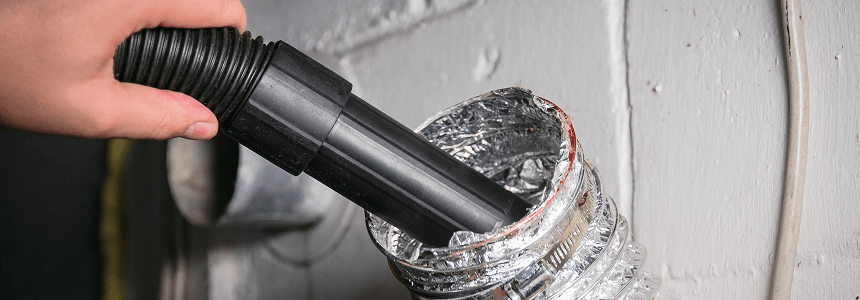
To thoroughly clear the vent and duct of lint, follow these steps:
Home warranty coverage is an excellent way to stay on top of appliance repairs within a budget. As a homeowner, you can maintain an active policy by paying a monthly premium. If your dryer is covered by your policy and breaks down unexpectedly from general wear and tear, your warranty provider can arrange to have the dryer repaired or replaced in short order. Though you pay a small service fee, you are otherwise spared the out-of-pocket expense.
The average cost of dryer repair ranges from around $150 to $400. If your warranty policy has a $75 service fee on a $200 repair, for example, then you’ve saved $125.
It’s easier to realize greater savings when you broaden your coverage to include multiple home appliances and systems. A modest increase in premium price yields huge potential savings when there’s a malfunction or breakdown in the home.
Assuming the vent is reasonably easy to access, cleaning a dryer vent doesn’t take much time at all. The average job can be completed in under an hour.
Yes, clogged dryer vents can cause damage to the dryer motor. A clogged vent inhibits airflow, which traps heat within the dryer and prevents humid air from escaping. This usually means the dryer has to run longer to get the clothes sufficiently dry, and longer run times mean increased wear and tear on the motor. Trapped heat can also cause the motor to overheat, further accelerating wear and tear.
Dryer-related fires are unfortunately common in American homes. NFPA data suggest that clothes dryers are responsible for around 15,000 home fires per year.
Yes, excess lint accumulation can impair a dryer’s energy efficiency. Lint buildup in the trap and vent prevents the dryer from channeling hot, humid air from the dryer to outside the home. That results in the dryer working overtime and consuming more energy to thoroughly dry a load of laundry.
The extent of coverage can vary by policy and provider, but home warranties generally cover any mechanical or electrical failures that result from the wear and tear of daily use. Faulty or damaged belts, pulleys, rollers, bearings, heating elements, drums, and other essential parts are usually protected under a comprehensive warranty. Components that may be outside the purview of warranty coverage include comparatively minor parts such as knobs, lint traps, and timers, which are often easily and inexpensively replaced.
You can better understand the ins and outs of dryer warranty coverage by speaking with the team of home professionals at Liberty Home Guard. We’ll explain in detail how you can effectively and affordably protect not just your dryer, but all the essential appliances and systems that keep your household running from day to day. Call (866)-950-6389.
Stay Ahead of Potential
Home Mishaps!
Subscribe to our Liberty Home Guard Newsletter and gain access to exclusive content that ensures your peace of mind.

Subscribe to receive our emails & get
Have questions?
Call us: (833) 544-8273