




Contemplating coverage?
Subscribe to receive our emails & get
$200 OFF!
Have questions?
Call us: (833) 544-8273

Expert-Reviewed Content: Guided by Editorial Standards

Written By Ally Sabatina
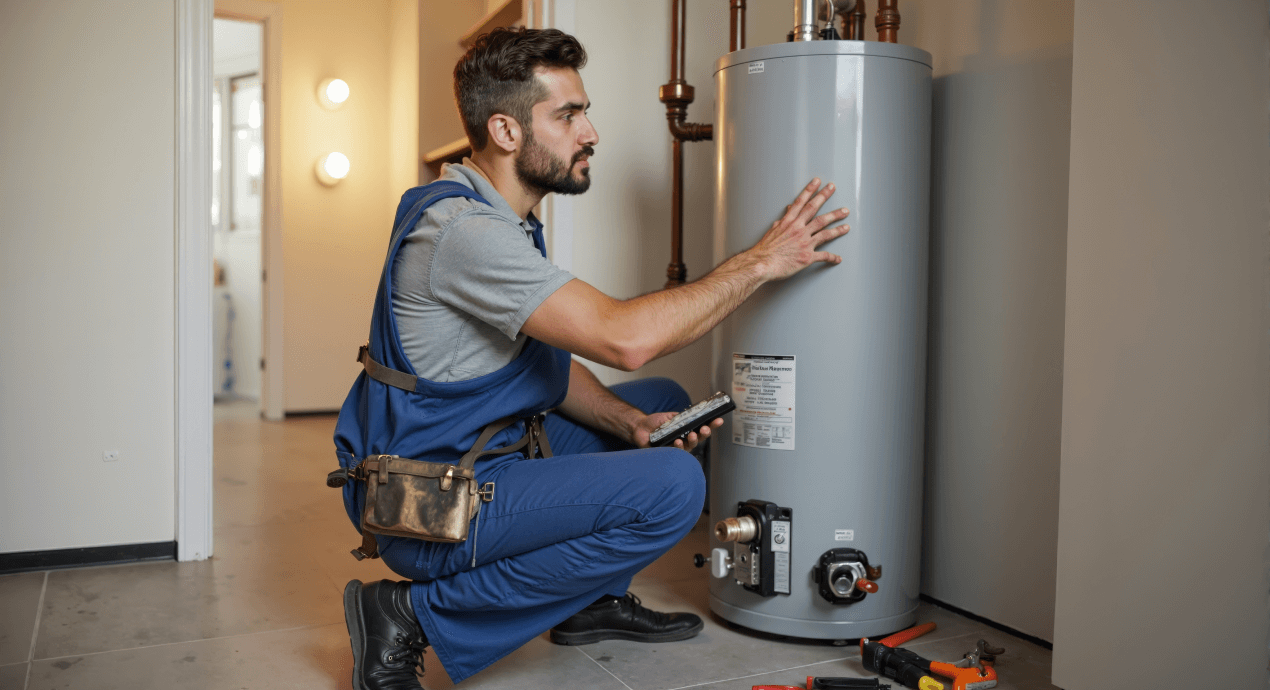
Replacing a 50-gallon water heater typically costs $1,200 to $2,500 installed, depending on fuel type, location, and installation complexity. Costs vary significantly across the different types of water heaters and from one region to the next, so comparing multiple quotes is the best way to confirm you’re getting a fair price.
Replacing a 50-gallon water heater costs between $1,200 and $2,500 fully installed. Electric models run $700 to $1,800 installed, while gas models typically range from $1,000 to $2,500 installed. Labor alone averages $150 to $500, and unit prices start around $500. Your final cost depends on fuel type, local permit fees, and installation complexity.
Josh Mitchell, owner of Plumbing Lab, shared that 50-gallon tank water heaters start at around $1,200 but may cost as much as $2,000 depending on where you live and installation difficulty. He added, "Prices are up about 15-20% compared to five years ago, primarily due to new energy efficiency requirements and rising labor costs." You may incur additional costs if you have to schedule an emergency repair.
Electric water heaters account for the lower end of this range, while gas-powered water heaters are more expensive. Hybrid water heaters, or those that use a combination of gas and electricity, are often much more expensive than these ranges due to the additional complexity of installation.
However, 50 gallons isn’t always the optimal size, so it can be helpful to shop around and heed expert opinions. Here’s a quick comparison of the different costs for water heaters, including installation, in 2026:
Water Heater Size (in Gallons) | Estimated Cost | Recommended Household Size |
30 | $700–$2,000 | 1–2 people |
40 | $800–$2,100 | 2–3 people |
50 | $800–$2,300 | 3–5 people |
75 | $1,100–$4,000 | 4–6 people |
Location is one of the key factors that affects the cost of water heater replacement, but it is multi-faceted.
New water heater installations and replacements often require permits, but the cost can vary tremendously based on your municipality and other local regulations. Permit fees typically range from $50 to $200 depending on your municipality. You can contact your local government for a breakdown of the fee schedule. For example, some areas will have a minimum fee for plumbing work, while others determine permit costs based on square footage.
If your existing water heater is hard to reach or needs to be relocated to a better area in your home, you may have to pay additional costs to install or update plumbing lines and a power source. A standard replacement takes 3 to 4 hours; complex jobs, such as relocating the unit or adding new gas lines, can run 6 hours or more. Labor costs can vary significantly depending on the cost of living and availability of qualified plumbers in your area, but they’re typically quoted hourly. The average hourly plumbing labor cost ranges from $75 to $200. In high cost-of-living markets like Chicago or the New York metro area, a 50-gallon gas water heater replacement can run $2,000 to $5,000 installed.
The energy source that supplies your water heater significantly affects installation costs. Gas water heaters are typically more energy efficient and cheaper to run, but you can expect to pay more upfront to accommodate gas lines and sufficient venting. On the other hand, electric water heaters are initially less expensive but may cost more in the long term.
Water heater replacement costs can best be understood in three parts: labor, materials, and disposal fees. Labor is your contractor’s fee for their time. Materials include the water heater and any parts needed to install it, and disposal fees are the costs to pick up, transport, and appropriately recycle or dispose of the water heater.
A replacement covered under Liberty Home Guard’s Systems and Total Home Guard plans can offset many of these out-of-pocket costs.
The average lifespan of a storage tank water heater is 10 to 15 years; units older than 10 years tend to lose efficiency and can fail without warning, making proactive inspection a cost-effective move. (The U.S. Department of Energy estimates storage tank water heaters last 10 to 15 years.)
If your water heater is 10 years or older, it can be helpful to schedule an inspection and request quotes for a replacement to determine if the time is right. You can also request figures on your anticipated energy cost savings within the first few years of replacement. Keep in mind that last-minute and emergency replacements are often more expensive, so a proactive response can also save you money.
Rust-colored or cloudy water can indicate corrosion in your water heater and surrounding pipes. A foul smell or metallic taste when you run the hot water can also indicate your water heater is no longer operating effectively due to sediment or other wear.
Pools of water around your water heater or drips in the surrounding pipes can be a clear sign it needs repair. Cracks and rust are a frequent cause of leaks, so a visual inspection is usually enough to locate the source of the problem. If you’ve had to clean up water near your water heater more than once, it’s likely time to have a plumber assess the unit.
If you’ve had to repair your water heater several times, you may be spending money in excess compared to a new unit. Next time you have a plumber out to repair your water heater, ask them to investigate your replacement options so you can compare costs. As a general rule, if a repair quote exceeds 50 percent of the replacement cost, replacement is typically the better long-term investment.
As your system ages, it loses efficiency. If you’ve noticed a recent spike in your electric or gas bills and can’t identify a cause, it’s a good idea to look at your water heater as a potential culprit.
Look out for knocking, gurgling, or rumbling sounds, which can indicate you have sediment build-up in your water heater. Calcium and magnesium can reduce your water heater’s efficiency and potentially lead to other issues.
One of the tell-tale signs your water heater needs to be replaced is if it can no longer keep up with your needs. Running out of hot water while you shower or hand wash dishes can indicate a loss of efficiency and overall function.
You’ll need to keep a few things in mind to ensure you choose the right water heater for your needs:
Your household size directly informs your hot water needs. Larger households will have more robust hot water demands, as will those with small children and pets. If your current water heater is already struggling to keep up with your hot water needs, you may need to upgrade to a larger size. Fifty-gallon water heaters are optimal for 3–5 person households, which aligns with the typical American family size.
Smaller households typically pair well with the tankless water heater’s on-demand style.
You’ll have to shop for a water heater based on your home’s energy source. Gas-powered water heaters are often more expensive upfront, including the more complex installation costs, but they’re cheaper to run. Electric water heaters can be cheaper, but the energy costs are higher in the long-term. If you’re updating your fuel source, you can expect additional costs for that as well.
Not all water heaters are created equally. Shop around and compare different models from trusted brands like Rheem and A.O. Smith. Energy-Star rated water heaters are more cost-effective in the long run and can meaningfully reduce monthly operating costs. Qualified heat pump water heaters may also be eligible for a federal tax credit of up to $300 through the Energy Efficient Home Improvement Credit, according to EnergyStar.gov.
You’ll want to balance the cost of installation with ongoing maintenance. It can be tempting to DIY home repairs, but professional water heater installation and maintenance can be a core part of ensuring it reaches its full lifespan. You may have to have a professional inspection after installation to comply with regulations.
Deciding between a tank and tankless water heater system is nuanced. Tank water heaters are more affordable to install and work well for families, but they have the major downside of energy waste. Tank-style water heaters will heat regardless of demand, so you’re paying for it whether you use it or not.
Tankless water heaters are more expensive to purchase and install, but they’re much less wasteful from an energy perspective. They’re also ideal for smaller footprint homes that don’t have the square footage for a traditional water heater. According to the U.S. Department of Energy, tankless water heaters can be 24 to 34 percent more energy efficient than conventional storage tank models for lower-usage households.
Dan Oppedisano, owner of Bedrock Plumbing and Drain Cleaning, says the energy source matters a lot here too. Gas tankless water heaters are known to be more efficient than their electric counterparts, which translates to a longer lifespan.
Heat pump and hybrid water heaters represent a third option that sits between standard tank and tankless systems. These units pull heat from surrounding air rather than generating it directly, which makes them significantly more efficient. The DOE notes that heat pump models can be up to three times more efficient than standard electric tank water heaters.
Installed costs for heat pump and hybrid water heater models range from $2,300 to $4,400, with unit prices typically falling between $1,200 and $2,000 before labor. That higher upfront cost can be offset by a federal tax credit of up to $300 through the Energy Efficient Home Improvement Credit, according to EnergyStar.gov. For households in moderate climates with adequate surrounding space, the long-term energy savings and available incentives often make the investment worthwhile.
While many water heater installation companies and manufacturers will supply an initial warranty, it’s unlikely to cover the life of your water heater. Purchasing a home warranty for a water heater outside its initial warranties can provide additional peace of mind without much added cost. However, it’s important to hold on to all maintenance records and to file claims promptly to avoid pre-existing claims issues.
Our Systems and Total Home Guard plans cover water heater repairs and replacements for all mechanical parts up to $2,000, as long as they aren’t the result of sediment build-up. Even more, we have a massive network of qualified technicians who can respond and assess your water heater issues, often much quicker than you could locate and schedule a contractor on your own. Call (833) 547-3728 today or request an online quote to learn more about your coverage options.
Protect What’s Most Important With
Get A Free Quote
America’s #1 Home Warranty
Permit requirements, labor costs, and accessibility vary significantly by geographic location, so water heater replacement costs vary accordingly. You may have extra expenses if you have to bring your water heater up to code.
When replacing a 50-gallon water heater, a reputable plumber will provide a detailed quote of the specific costs and what you can expect. In general, professional water heater replacements include the cost of the water heater, plus installation/labor and potential permits.
If your current water heater is about to expire, you plan on selling your home soon, or you want to improve your home’s energy efficiency, it may be worth upgrading to a tankless water heater in 2026.
Most 50-gallon storage tank water heaters last between 10 and 15 years. Units older than 10 years typically lose efficiency and carry a higher risk of unexpected failure. Scheduling a proactive inspection before your unit hits that threshold can help you avoid the higher costs of an emergency replacement. The U.S. Department of Energy estimates the average lifespan at 10 to 15 years for storage tank models.
Plumbers must carry state licensing, specialized tools, liability insurance, and code compliance knowledge for every job. A standard water heater replacement takes 3 to 6 hours, and complex installs involving gas line work or relocation add time and risk. In high cost-of-living areas, hourly rates can reach $150 to $200. Choosing one of Liberty Home Guard's home warranty plans can help cap your out-of-pocket exposure on covered repairs and replacements.
Electric models are less expensive to install, running $700 to $1,800 fully installed, compared to $1,000 to $2,500 for gas models. Gas units cost more upfront because of gas line and venting requirements, but they typically deliver lower monthly energy costs over time. The right choice depends on your existing fuel infrastructure and long-term energy priorities.
Stay Ahead of Potential
Home Mishaps!
Subscribe to our Liberty Home Guard Newsletter and gain access to exclusive content that ensures your peace of mind.

Subscribe to receive our emails & get
Have questions?
Call us: (833) 544-8273