








Contemplating coverage?
Subscribe to receive our emails & get
$200 OFF!
Have questions?
Call us: (833) 544-8273

Expert-Reviewed Content: Guided by Editorial Standards

Written By Angel Vallejo
Kitchen upgrades can feel overwhelming, especially when the options involve new technology. If you’ve been researching modern cooking appliances, chances are you’ve stumbled into the debate over induction cooktop pros and cons. Induction cooking has been growing rapidly in popularity, and homeowners across the country are asking whether it’s time to make the switch. The short answer: it depends on your lifestyle, kitchen setup, and budget.
At Liberty Home Guard, we help homeowners make smart decisions about their homes every day. Whether you’re renovating a kitchen or simply replacing an aging appliance, understanding what you’re buying before you commit is always the right move. Let’s break down everything you need to know about induction cooking.
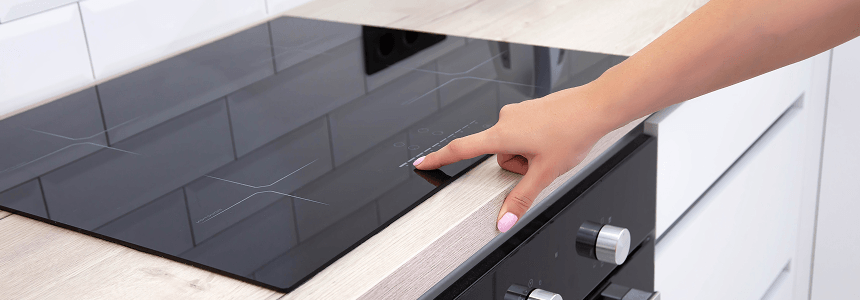
Before diving into induction cooktop pros and cons, it helps to understand the technology behind it. Unlike gas burners that produce an open flame or electric coils that radiate heat, induction cooktops use electromagnetic energy to heat cookware directly. Beneath the smooth glass surface sits a coil that generates a magnetic field. When a compatible pot or pan is placed on the surface, that magnetic field creates electrical currents within the cookware itself, and those currents generate heat.
The result is a cooking surface that heats your food without heating the surface itself. Touch the glass while the pot is boiling and you’ll find it barely warm. Remove the pan and the heat disappears almost instantly. It’s a fundamentally different cooking experience, and for many homeowners, a better one.
One of the most celebrated induction cooktop benefits is raw speed. Because heat is generated directly in the pan rather than transferred through a burner or heating element, induction brings water to a boil significantly faster than gas or standard electric. Independent tests have consistently shown induction outperforms every other cooking method in time-to-boil comparisons. For busy households trying to get dinner on the table, that matters.
Precision is equally impressive. Temperature adjustments on an induction cooktop are nearly instantaneous. Turn down the heat and it responds right away — a game changer for delicate tasks like melting chocolate or holding a sauce at a gentle simmer without the risk of scorching.
Induction is among the most energy-efficient cooking technologies available to homeowners. Because heat goes directly into the cookware, very little energy is lost to the surrounding air or the cooktop surface. Compared to traditional electric smoothtop stoves, induction wastes considerably less energy per cooking session. And compared to gas stoves, the efficiency advantage is even more dramatic. For homeowners focused on reducing utility bills or environmental impact, this is a meaningful induction cooktop benefit.
Induction cooktops have a built-in safety advantage that stands out immediately: the surface itself doesn’t get dangerously hot. Since the glass isn’t the heat source, there’s no risk of a burner staying scalding hot after you’ve finished cooking. Brushing against the surface shortly after use is far less likely to cause a burn compared to traditional electric or gas cooktops.
Another key safety feature is that if no compatible cookware is detected on the surface, the cooktop simply won’t activate. For families with young children, or anyone who’s ever absent-mindedly left a dish towel on a hot burner, this peace of mind is significant.
The smooth, flat glass surface of an induction cooktop is a breeze to wipe down. Because the surface stays relatively cool during cooking, spills don’t bake on the way they do with gas or traditional electric burners. A damp cloth after dinner is usually all it takes.
There’s also the matter of indoor air quality. Gas stoves release combustion byproducts into your home during cooking which is an increasingly documented concern, particularly for households with children or anyone with respiratory sensitivities. Induction produces no combustion at all, making it a healthier option for your kitchen environment.

There’s no getting around one of the primary induction cooktop disadvantages: price. Induction models typically cost more upfront than comparable gas or electric options, particularly at the entry level. Budget-conscious homeowners may find the initial investment hard to justify, especially if their current stove is still functional.
That said, it’s worth factoring in long-term savings. Greater energy efficiency can translate into lower monthly utility bills over time, and the absence of open flames or super-hot surfaces can mean fewer kitchen accidents and related costs. Depending on your usage, the economics may be more favorable than they first appear.
This is the induction cooktop disadvantage that surprises homeowners most often. Induction only works with magnetic cookware including cast iron, enameled steel, and most stainless steel pans. Copper, aluminum, and glass cookware, however, will not work. If your kitchen is stocked with any of these, you’re looking at replacing some or all of your pots and pans on top of the appliance cost.
A quick test: Hold a magnet to the bottom of your existing pots. If it sticks, you’re compatible. If it doesn’t, you’ll need new cookware. The good news is that induction-ready cookware is widely available at a range of price points, and many newer non-stick pans are now manufactured with a magnetic base.
Switching to induction from gas involves more than just unplugging one appliance and plugging in another. Induction cooktops require a 240-volt electrical circuit which is the same type used by electric dryers. If your kitchen is currently wired for gas only, you may need an electrician to run a new dedicated circuit, which can add meaningfully to the total installation cost. In some older homes or apartment buildings, the electrical infrastructure may not support the upgrade at all without more substantial work.
Some homeowners report a faint humming or buzzing sound from induction cooktops, particularly at higher heat settings. It’s not loud, and many people adapt quickly or don’t notice it at all, but it’s worth knowing about in advance.
There’s also a modest learning curve. Touch-based controls, while sleek, can feel less intuitive than a physical knob, especially for anyone accustomed to gas cooking. Dialing in your preferred heat levels takes a little adjustment. For most people, this becomes second nature within a few weeks.
After weighing the induction cooktop pros and cons, the decision really comes down to your priorities as a homeowner. An induction cooktop is an excellent investment if you cook frequently, value speed and precision, have young children at home, or want to improve indoor air quality by moving away from gas. The efficiency gains and safety features alone make a compelling case for most households.
On the other hand, if you have a full set of non-magnetic cookware you love, a gas-only kitchen that would require significant electrical work, or a tight renovation budget, those induction cooktop disadvantages deserve serious consideration. In that scenario, a high-quality electric smoothtop or a gas range upgrade may deliver better value for your specific situation.
Practical tip: Before committing, check whether your existing circuit panel can support a 240V appliance. A quick consultation with a licensed electrician can tell you exactly what you’d need and what it would cost. That single step removes one of the biggest unknowns from the decision.
Whether you decide to make the leap to induction or stick with your current setup, one thing every homeowner benefits from is protection against unexpected appliance failures. Kitchen appliances are among the most heavily used systems in any home, and when they break down, repairs can be costly and inconvenient.
At Liberty Home Guard, we offer robust home warranty coverage designed to protect your major home systems and appliances—from cooktops and ovens to HVAC systems, plumbing, and beyond. Whether you’re a first-time homeowner or a seasoned property owner, having the right coverage in place means you’re never caught off guard by repair bills.
Explore our coverage options and homeowner resources at Liberty Home Guard, and learn how a home warranty can give you greater peace of mind no matter what appliances are powering your kitchen.
There’s a reason Liberty Home Guard was rated the #1 Home Warranty Service by U.S. News and World Report for 2021, 2022, 2023, and 2024. Check out our services.
Learn MoreInduction cooktops use electromagnetic energy to heat cookware directly rather than heating a burner or coil. A magnetic field beneath the glass surface creates electrical currents within compatible pots and pans, generating heat instantly without making the cooktop surface itself dangerously hot.
Induction cooktops offer significantly faster cooking times, greater energy efficiency than gas or electric, a safer cool-to-touch surface, better indoor air quality with no combustion byproducts, easy cleaning on a flat glass surface, and precise temperature control.
Only magnetic cookware works with induction, including cast iron, enameled steel, and most stainless steel pans. Copper, aluminum, and glass cookware are not compatible unless they have a magnetic base—you can test compatibility by holding a magnet to the bottom of your pots.
The main drawbacks include higher upfront costs compared to gas or standard electric models, the need to replace non-magnetic cookware, potential electrical upgrades requiring a 240-volt circuit (especially when switching from gas),and a modest learning curve with touch controls.
Yes, induction cooktops are among the safest options because the surface stays relatively cool during cooking, reducing burn risks. They also won't activate without compatible cookware detected, and they produce no combustion byproducts, improving indoor air quality.
Stay Ahead of Potential
Home Mishaps!
Subscribe to our Liberty Home Guard Newsletter and gain access to exclusive content that ensures your peace of mind.

Subscribe to receive our emails & get
Have questions?
Call us: (833) 544-8273