
Inground Pool
Liberty Home Guard

Expert-Reviewed Content: Guided by Editorial Standards

Angel Vallejo

Written By Angel Vallejo

Published 01/26/26
Home Maintenance

Winterizing Your InGround Pool for Maximum Longevity: Expert Tips

Key Takeaways:

  • Fully draining a pool for the winter is not advisable. You can lower the water level by several inches, but leaving the pool mostly filled protects the pool’s structure and liner.
  • Properly balancing the pool chemistry is critical to preventing corrosion, discoloration, and residue, all of which can damage your pool equipment and delay next season’s reopening.
  • Drain the pool’s equipment and blow out the lines to protect them from freezing. You may need to add pool-grade antifreeze for additional protection.
  • A durable and appropriately fitted pool cover can both provide insulation and protect against debris and UV rays.
  • Use outdoor temperatures as a gauge for when to close a swimming pool for winter. The sweet spot is when the weather consistently dips below 65°F.

We might use our home pools only in the heat of the summer, but caring for them is a year-round concern. This guide will walk you through the process of closing and winterizing your in-ground, with actionable steps to include in your fall or winter maintenance checklist. Let’s dive in.

Why Proper Winterizing Determines Your Pool’s Lifespan

Careless maintenance and poor winterizing techniques expose your pool’s structure and equipment to unnecessary environmental stress. This stress tends to generate small to moderate problems that compound over time. You may not notice significant issues from one season to the next, but you’ll eventually need to repair expensive equipment earlier than you otherwise would have. Primary ways in which the elements take their toll include:

  • Damage from repeated freezing and thawing 
  • Corrosion and calcium scale buildup from improperly balanced water chemistry
  • Staining from algae, bacteria, and other organic growth

Attending to these problems as soon as they arise keeps your pool healthy and functional, almost certainly delaying the need for repair.

The Best Home Warranty Service

There’s a reason Liberty Home Guard was rated the #1 Home Warranty
Service by U.S. News and World Report for 2021, 2022, 2023, and 2024. Check out our services.

Learn More

Chemical Balance: The Most Critical Step Before Closing the Pool

Any pool owner knows that maintaining the appropriate chemical and pH balance is the foundation of pool maintenance. Balancing the pH, calcium hardness, and alkalinity is obviously important when the pool is in use in the summer, but it is no less critical in the dead of winter, despite the lack of activity in the pool. Follow these steps when closing your swimming pool for winter:

  1. Raise the pH.

    As water stagnates, the pH level tends to drop over time. Compensate for this drop by aiming for a pH slightly higher than your typical summer range. If you maintain a pH range of 7.2 to 7.6 in the summer, opt for 7.6 to 7.8 for the winter.
     
  2. Increase the alkalinity.

    Alkalinity likewise tends to drop in stagnant water. To prepare for a long winter, set the alkalinity level to somewhere between 140 to 175 ppm.
     
  3. Increase the calcium level.

    If a pool’s calcium level is too low, the water may encourage minerals to leach from pool surfaces, ultimately resulting in corrosion, staining, or other kinds of damage. Protect your pool by adding more calcium for the winter. A minimum of 200 or 250 ppm is a good rule of thumb. 
     
  4. Clean and shock the pool.

    Use the pool vacuum and skimmer to remove any debris from the water, then apply a chlorine shock to eliminate any lingering bacteria, algae, and chloramines. Wait a day or two before installing the pool cover to avoid staining or damaging it.
     
  5. Apply algaecide. 

    As extra protection against algae growth over the winter, you can add algaecide before installing the pool cover and winterizing the equipment. Note that algaecide isn’t a substitute for properly balanced water.
     
  6. Retest the chemical balance.

    Before officially closing the pool, retest the chemical levels to ensure all are within the target ranges, making fine adjustments as necessary. You may not have a chance to adjust again until the spring.

Protecting Pool Plumbing from Ice Expansion Damage

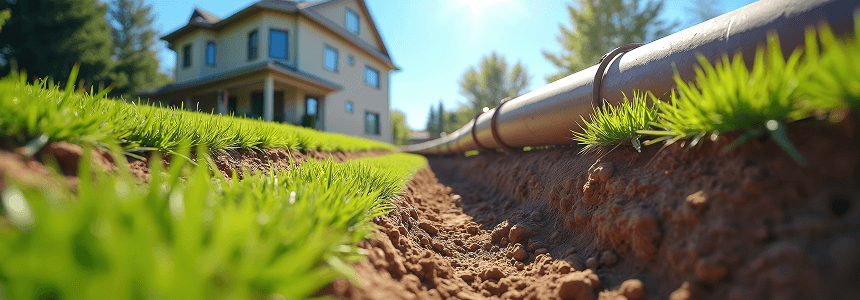
Damage from ice expansion in the winter can be the root cause for numerous problems with the pool pump, plumbing, and other system components. When water freezes, it takes up a greater volume. If the ice has no room to expand, it exerts pressure on the surrounding material, potentially causing a crack or fissure. In pool systems, these cracks can occur in the lines, skimmers, returns, pumps, and anywhere else where water collects or flows.

Protect your pool equipment from ice damage by keeping vulnerable components free of water. Follow the steps below, but only after you have balanced the pH and chemical levels for the winter season.

  1. Lower the pool’s water level. 

    Draining the pool entirely isn’t economical or good for the pool’s structure, but you should lower the water level to about 5 inches below the skimmers and return jets to ensure they won’t be damaged if the water freezes.
     
  2. Drain the pool equipment and adjust the filter valve.

    Remove plugs from the basket housing, filter tank, heater, and other system components to drain the equipment of water. Set the multiport  filter valve to its winter setting.
     
  3. Drain and blow out the lines.

    Draining alone isn’t enough. Residual water in the lines that freezes when the temperature plummets can still cause damage. Use a compressor or blower for pool systems to blow out the lines, and insert expansion plugs while continuing to move air through the system.
     
  4. Add pool-safe antifreeze as needed.

Long pool lines or ones that are otherwise hard to fully drain may need to be supplemented with antifreeze to help prevent residual water from freezing within. Be sure to use antifreeze designed for pools, and more antifreeze is not necessarily better. Be careful to not overfill the lines.

Choosing the Right Cover for an Inground Pool

There are several types of pool covers for inground pools, each with their pros and cons. Choosing the best cover depends on your location and needs.

  • Mesh covers are lightweight and easy to install and remove, and they allow for rain and snowmelt to drain into the pool. Because sunlight and fine debris can penetrate the cover, they may make for a more time-consuming spring cleaning.
     
  • Solid covers are more effective at blocking out debris, but water that pools on top leads to sagging and often needs to be pumped out before you can remove the cover in spring. Solid covers are also more cumbersome and harder to install and remove.
     
  • Safety covers are wise choices for families with small children or pets. They are firmer and can support greater weight. Safety covers tend to be more expensive, but may last quite a while. Some models are automatic.
     
  • Solar covers collect heat and can reduce pool heating costs, but they require more careful pool maintenance to keep algae in check. They may also require more frequent replacement. 

How to Prevent Algae Growth During Months of Inactivity

Algae growth is one of the most common pool problems, but some basic strategies can keep it in check. Remember that algae requires nutrients and sunlight to proliferate, so you want to limit those as much as possible.

Make sure you thoroughly clean the pool before closing and use a chlorine shock to kill off any organic growth. Ensure the water’s chemistry is properly balanced, and add an algaecide for added insurance.

If your pool is prone to algae, opt for a pool cover that is effective at blocking out as much sunlight as possible. That means forgoing mesh or solar covers. If possible, check the pool periodically over the course of the winter season to monitor the water’s condition.

Protect What’s Most Important With
America’s #1 Home Warranty

Get A Free Quote
  • Comprehensive Plans
  • Highly Competitive Rates
  • 24/7/365 Claims
  • Online Portal

Frequently Asked Questions

  • What month should I typically close my inground pool?

    The right month to close your pool is dependent on your location. Instead, keep an eye on the weather when determining when to close pool for winter. The sweet spot is when the temperature consistently dips below 65°F.
     

  • Do all pools need antifreeze in the lines during winter?

    No, a pool probably doesn’t need antifreeze if the weather doesn’t get too cold and the lines are properly blown out. Antifreeze is extra protection for cold climates and long pool lines.
     

  • Should I remove all accessories before covering the pool?

    Yes, before covering a pool, you should remove ladders, hoses, vacuums, pool toys, and other objects that are not permanently installed.
     

  • How tight should a winter pool cover be secured?

    A pool cover should be as taut as a drum, which translates to around 50% to 75% compression of the cover springs. The cover should be loose enough to avoid straining anchor points, and it should sag a bit under a heavy snowload so that the weight of the snow rests on and is supported by the water.
     

  • Can a home warranty cover pool equipment damaged over winter?

    Depending on the nature of the problem, a home warranty with pool coverage may help you repair damage sustained over the winter. Pool coverage is usually limited to accessible above-ground plumbing and equipment. Policies are unlikely to cover underground plumbing, cracked casings, and non-permanent accessories.

    If you’d like to explore Liberty Home Guard’s offerings for home pool protection, call (833)-545-6630.


Liberty Home Guard
Need help?

Talk to our Liberty Home Guard Agents 24/7.

(866) 225-7958(866) 225-7958
Liberty Home Guard
Special Offer
GET QUOTE
Liberty Home Guard
Need help?

Talk to our Liberty Home Guard Agents 24/7.

(866) 225-7958