



Contemplating coverage?
Subscribe to receive our emails & get
$300 OFF!
Have questions?
Call us: (833) 544-8273

Expert-Reviewed Content: Guided by Editorial Standards

Written By Ryan Merchant
Safety Warning: Always unplug your freezer from the wall outlet before touching any internal components, moving the unit, or cleaning coils or fans. Never work on a plugged-in appliance.
A freezer works by cycling refrigerant through a closed loop. A compressor pressurizes the refrigerant, which moves through condenser coils (releasing heat),then through evaporator coils inside the unit (absorbing heat and creating cold air),and back to the compressor. An evaporator fan circulates that cold air throughout the compartment, and a thermostat tells the compressor when to run.
When any one of those components fails or gets restricted, the whole system suffers. The good news is that in my experience, the majority of freezer problems stem from a handful of simple, fixable causes. The most common freezer problems I see are:
We will go through each of these in detail. But first, let’s make sure your freezer is running at the right temperature to begin with.
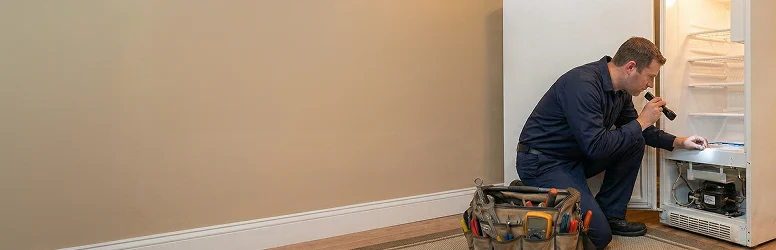
The ideal freezer temperature is 0 degrees Fahrenheit (-18 degrees Celsius). This is the standard recommended by the FDA for keeping food safely frozen and preventing bacterial growth. Anything above 10 degrees F means your food may begin to thaw. Anything below negative 10 degrees F is colder than necessary and wastes energy.
The single most common reason I get called out for a ’broken freezer’ is a thermostat dial that was accidentally bumped. Someone reaches in to grab something, nudges the dial, and a few days later the freezer is not freezing properly. Before you call anyone or order any parts, take these steps:
seasonal home maintenance checklist that includes verifying appliance temperature settings twice a year is one of the easiest ways to catch this before it becomes a problem.
If your freezer is running but not freezing, and you have already verified the thermostat is set correctly, work through this diagnostic sequence before assuming you need a technician.
This is the most underrated cause of a freezer that runs but does not cool. I see it constantly. The evaporator fan inside the freezer compartment circulates cold air, but it cannot do its job if the unit is packed too tightly. Boxes shoved against the back wall, items stacked to the ceiling, bags stuffed in every corner, all of these block airflow.
In my experience, dirty condenser coils are the single most common fixable cause of poor freezer performance. These coils release heat, and when they are clogged with dust and pet hair, the unit cannot shed heat efficiently, so it runs constantly but never gets cold enough.
Safety Warning:Unplug the freezer before cleaning the coils.
average appliance repair costs for a service call, and the math for regular maintenance is obvious.
A damaged or worn door gasket lets warm air seep into the compartment, making the compressor work overtime and preventing the unit from reaching target temperature. Test it with the dollar bill method:
If the bill slides out easily at any point, the gasket seal is weak. You can often restore a minor seal by applying a thin coat of petroleum jelly to the gasket. For a cracked or torn gasket, replacement is straightforward and inexpensive, and most manufacturer parts are available online for $20 to $50.
Some frost inside a freezer is normal. A thin layer coating the walls is expected. The problem starts when you see thick frost or ice buildup, especially if it appears suddenly or accumulates faster than usual.
When warm, humid air gets into the freezer through a failing gasket, that moisture immediately freezes on contact with the cold interior surfaces. If you notice frost concentrated near the door edges or the front of the compartment, a failing door seal is almost always the cause. Refer to the gasket inspection steps above.
Modern frost-free freezers run a defrost cycle automatically several times per day, using a small heater to melt any frost off the evaporator coils. When the defrost heater or the defrost thermostat fails, frost accumulates unchecked on the coils until the unit can no longer cool properly.
Warning signs include:
home appliance warranty, this type of covered repair is exactly what it is designed for.
If you have confirmed heavy ice buildup and want to test whether the coils are the issue, try a manual defrost. Empty the freezer, unplug it, and leave the door open for 24 to 48 hours with towels on the floor to catch meltwater. If the unit cools properly for a week or two afterward and then stops again, you almost certainly have a failed defrost component.
Not every freezer noise signals a problem, but some noises are worth paying attention to. Here is how I categorize them:
If you hear a clicking sound every few minutes, it is usually the start relay. The start relay is a small component that helps the compressor start up. When it fails, the compressor tries to start, fails, clicks off, and tries again in a loop. This is a relatively inexpensive fix, typically $10 to $30 for the part, and you can often confirm it by removing the relay (it plugs into the side of the compressor),shaking it next to your ear. A rattling sound means it is bad.
A low hum is completely normal. It is the compressor and evaporator fan running. A loud, unusual hum or buzzing can indicate a failing condenser fan motor, an evaporator fan that is iced over, or a compressor working harder than it should due to dirty coils. Clean the coils first, and if the sound persists, have the fan motors inspected.
A hissing or gurgling sound is almost always refrigerant moving through the system, which is completely normal. You may hear this more when the unit starts or stops a cooling cycle. It is not a cause for concern.
Squealing or high-pitched sounds during the defrost cycle are often caused by ice buildup against the evaporator fan blade. A manual defrost (as described above) will usually resolve this. If it happens consistently after defrosting, the evaporator fan motor bearings may be wearing out.
If you find a puddle of water under or in front of your freezer, the cause is almost always a clogged defrost drain. Here is why: during the defrost cycle, water from melted frost drains through a small tube into a drip pan under the unit, where it evaporates. When that drain tube gets clogged with ice, debris, or mold, the water overflows and leaks onto the floor.
In my experience, this is the culprit about 90 percent of the time. Here is how to clear it:
Safety Warning: Unplug the freezer before starting.
If leaking continues after clearing the drain, check whether the drip pan itself is cracked or overflowing. The pan is located underneath the unit and can usually be slid out from the front or rear.
Most freezer problems are fixable. But some are not worth fixing, and knowing the difference saves you from throwing good money after bad.
Consider replacing rather than repairing your freezer if:
whether a home warranty is a good investment before calling a technician will help you evaluate your options with a clear head. A home warranty can also significantly change the repair vs. replace calculation.
Most of the service calls I go on could have been avoided with simple, periodic maintenance. Here is what I recommend to every homeowner:
how to schedule routine home maintenance.
Even with diligent maintenance, freezers and refrigerators do fail. When they do, repair bills add up fast. A home warranty can cover the cost of parts and labor for covered appliance failures, turning an unexpected $400 repair call into a manageable service fee.
learn more about appliance insurance and what it covers. And if you are trying to decide whether the investment makes sense, this breakdown on whether a home warranty is a good investment is a good starting point.
Most freezer problems are not disasters. Work through the basics first: check your thermostat, clean your condenser coils, verify your door seal, and make sure the unit is not overpacked. These four steps resolve the vast majority of freezer complaints without a single service call.
When a problem is beyond a DIY fix, knowing the signs of a compressor failure or sealed system leak will help you have a more informed conversation with a technician and avoid unnecessary repair costs on an appliance that is past its prime.
how to decide when to replace a refrigerator helpful. And if appliance repair costs are a recurring concern, exploring a home warranty plan may be worth your time.
Protect What’s Most Important With
Get A Free Quote
America’s #1 Home Warranty
The most common causes, in order of likelihood, are a thermostat set too low, dirty condenser coils, a blocked evaporator fan from overpacking, or a failing door gasket. Work through those checks in order before calling a technician. If none of those resolve the issue, the start relay or compressor may be at fault.
A freezer should be set to 0 degrees Fahrenheit (-18 degrees Celsius). Use a standalone appliance thermometer to verify, as built-in displays are not always accurate.
A sudden increase in frost usually indicates a problem with the door seal (letting in warm, humid air) or a failed component in the defrost system, specifically the defrost heater or defrost thermostat. Check the door gasket first using the dollar bill test described above.
A clogged defrost drain is the cause roughly 90 percent of the time. Flush the drain with warm water using a turkey baster. If clearing the drain does not stop the leak, inspect the drip pan beneath the unit for cracks.
If the unit is under 10 years old and the repair costs less than half the price of a new unit, repair usually makes sense. If the compressor has failed on an older unit, or if multiple components are failing, replacement is typically the better financial decision.
In my experience, dirty condenser coils and a bumped thermostat dial account for the majority of 'broken freezer' service calls. Both are free or nearly free to fix and take less than 30 minutes.
Stay Ahead of Potential
Home Mishaps!
Subscribe to our Liberty Home Guard Newsletter and gain access to exclusive content that ensures your peace of mind.

Subscribe to receive our emails & get
Have questions?
Call us: (833) 544-8273