

Contemplating coverage?
Subscribe to receive our emails & get
$200 OFF!
Have questions?
Call us: (833) 544-8273

Expert-Reviewed Content: Guided by Editorial Standards

Written By Angel Vallejo
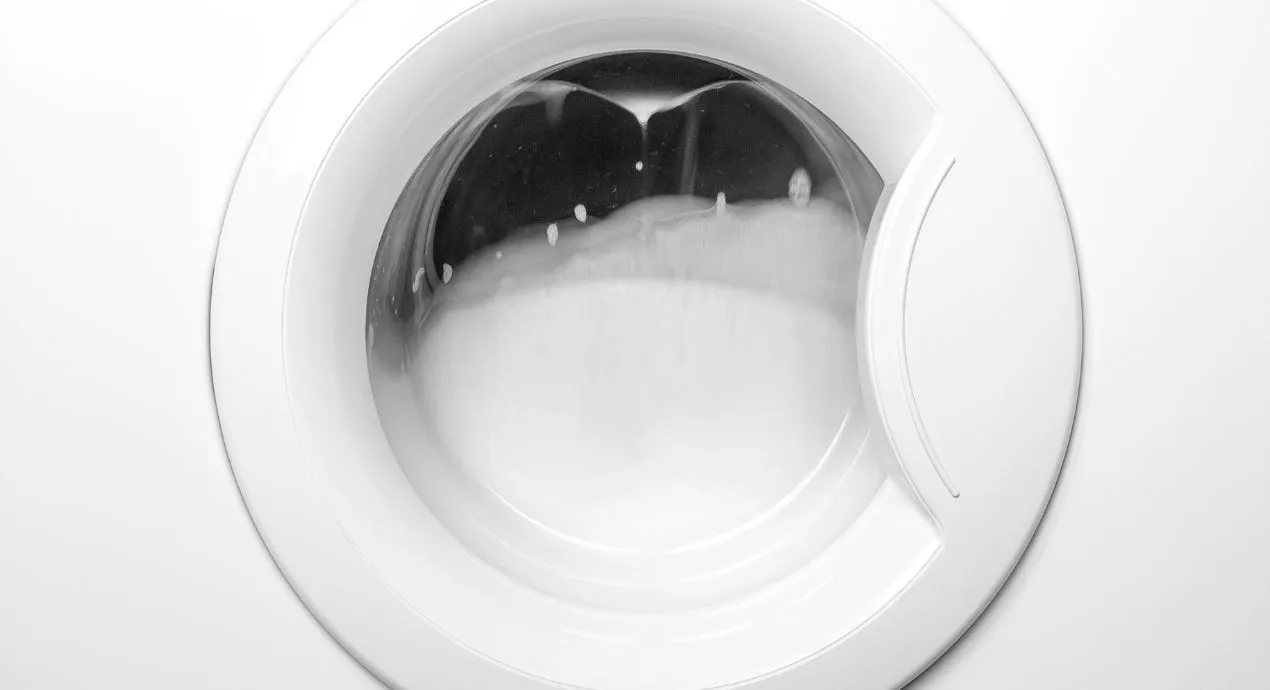
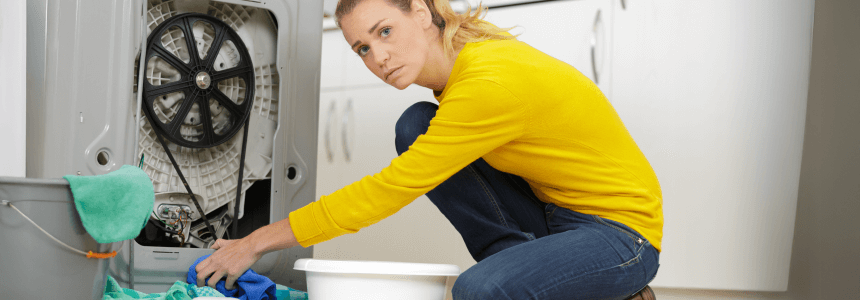
A washer that won’t stop filling can flood your laundry room fast. Household water damage claims from washing machines average more than $5,300 per incident, according to the Insurance Information Institute. Act immediately: unplug the machine, shut off the water supply, then work through this guide. Most causes come down to a handful of components you can inspect yourself.
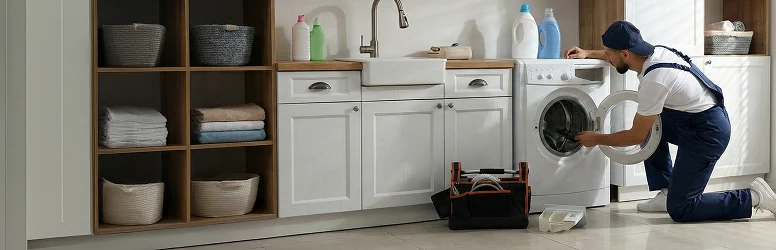
Overfilling is among the most common problems with washing machines, partly because the issue can stem from a variety of causes.
Some Samsung and LG models display an OF or oF error code when overfill is detected. Check your manual to confirm the code before troubleshooting. If the drum is overflowing, do not reach inside; shut off the water supply first.
To fix a washer that won’t stop filling, work through these steps in order.
Many inlet valves are mechanical and do not need an electrical signal to close. If water continues to fill the drum when the unit is unplugged from a power source, that is a strong indication the inlet valve is faulty.
Signs of a failing water inlet valve:
You can check the water level switch by detaching the pressure hose and blowing into the end connected to the switch. If you hear a click, the switch is likely functional. If there is no click, the switch has probably failed.
Confirm the result with a multimeter: set it to continuity mode and test the switch terminals. A working switch will show continuity when triggered; a failed switch will show none. Replace the switch if it does not click or fails the continuity test.
The core causes of overfilling are the same across machine types, but the components differ slightly.
Top load washers most commonly use a mechanical pressure switch connected to an air dome tube. When a top load washer won’t stop filling, the pressure switch or its hose is the first place to look. Access to these components is typically straightforward from the top or rear panel.
Front load washers more commonly use electronic pressure sensors. These sensors are more precise but can also fail in ways that are harder to diagnose without error codes. Check for an OF or oF error code on Samsung and LG models, or consult your manual for equivalent codes on other brands.
The troubleshooting steps in this guide apply to both types. Access points and component locations vary; consult your owner’s manual or model-specific documentation for exact locations.
If you’ve already gone through the troubleshooting guide and still have a washing machine filled with water, try running a drain-and-spin cycle. Otherwise, you may need to bail the water out with a bucket or use an emergency siphon.
Contact a professional if you suspect an electrical issue. You should also call a technician if you see water leaking from the appliance and onto the floor. That suggests you’re up against a washing machine drain overflow, which can be complicated to resolve.
You can stay ahead of overfilling and other problems by keeping up with regular maintenance tasks. Periodically clean your washing machine and inspect the component parts for wear and tear. But if a malfunction does arise, take advantage of home warranty coverage to save on your repair bill. Learn more about Liberty Home Guard’s appliance coverage by calling (833)-545-3434.
If your washer keeps filling when it's turned off, the water inlet valve is likely stuck open. A failed inlet valve allows water to flow through regardless of electrical signals. The pressure switch, pressure hose, or air dome can also be responsible if they prevent the valve from receiving a close signal.
You can typically find a water shut-off valve behind your washing machine. There may be one valve or two, one for hot water and one for cold. Turn both fully clockwise to stop the flow.
Yes, in many cases. Examine the valve screen for debris or mineral buildup and check for obstructions. If the valve body is damaged or the solenoid has failed, replacement parts are widely available and the job is manageable without professional help on most models.
As water flows into the drum, air pressure inside the pressure hose increases. When pressure reaches the correct threshold, it triggers the water level switch to cut the inlet valve. A clog, kink, or crack in the hose disrupts this signal and prevents the water from shutting off.
A control board malfunction can cause overfilling problems, but the inlet valve, water level switch, and pressure hose are the more common culprits.
In some circumstances, low water pressure can cause overfilling issues. Water flowing into the machine too slowly may cause the switch to time out, or it may fail to trigger a mechanism that shuts off the water.
A washing machine gets stuck on fill mode when it cannot detect that the drum has reached the correct water level. The most common causes are a failed water inlet valve, a faulty water level pressure switch, or a blocked pressure hose that prevents accurate level sensing.
Stay Ahead of Potential
Home Mishaps!
Subscribe to our Liberty Home Guard Newsletter and gain access to exclusive content that ensures your peace of mind.

Subscribe to receive our emails & get
Have questions?
Call us: (833) 544-8273