Wait Before You Go…
Cover all your home appliances under one
simple plan.
$200 OFF
+2 FREE Bonus Months
Your free quote is just a click away..
Have questions? Call us: (833) 543-7582
Exit
50% of reported issues are the
Faulty Lid Switch Assembly
35% of reported issues are the
Worn or Broken Drive Belt
13% of reported issues are the
Damaged Motor Coupling
2% of reported issues are the
All Other Causes
A Liberty Home Guard Appliance Guard plan caps your out-of-pocket costs. Covers washers, dryers, refrigerators, and more under one annual fee.
Get My Free QuoteIs your GE washer not spinning? This step-by-step guide breaks down the most common causes—from a faulty lid switch to a worn-out drive belt—and offers practical solutions to restore your washer’s spin cycle and performance.

Step 1:
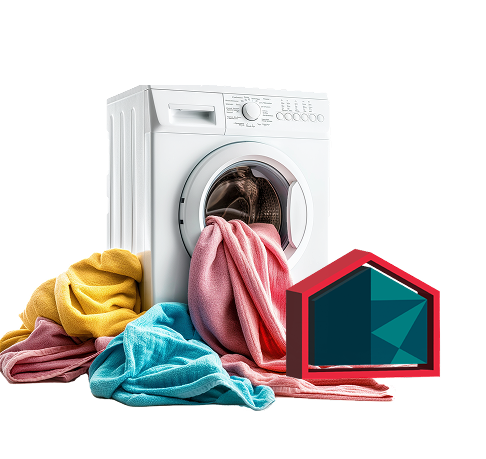
Check for Unbalanced Loads or Overloaded Drum
Step 2:
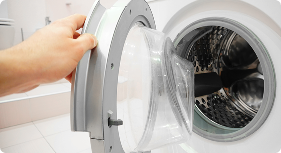
Inspect the Lid Switch or Door Lock
Step 3:
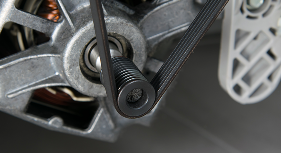
Examine the Drive Belt and Motor Coupling
Step 4:
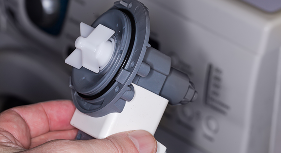
Clear the Drain Pump
Step 5:
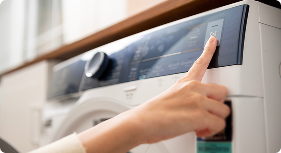
Reset the Control Board

Step 6:
Get a Home Warranty to Avoid Emergency Repair Fees

Before you call a technician or decide to replace the machine, here's what each repair typically runs, including parts and labor in most U.S. markets.
If your washer drains normally but won't spin, the problem is almost always upstream of the drain system. The most likely culprits are a failed lid switch (top-load) or door lock (front-load) that prevents the spin phase from engaging, a broken drive belt that disconnects the motor from the drum, or a snapped motor coupling. Inspect those components in order with the lid switch first, since it accounts for about half of all spin-failure diagnoses.
Unplug the washer completely and leave it unplugged for a full 10 minutes. This gives capacitors time to discharge and the control board time to fully reset. Plug back in and run a spin-only cycle. If your model has a "Signal" button, some GE machines support a button-hold reset sequence: consult your model's user manual for the specific sequence. If the same error code reappears after a reset, the underlying component (not the board) needs attention.
Yes. GE washers are programmed to skip the spin cycle if they detect standing water in the drum, since spinning with water present can damage the motor and bearings. A clogged pump filter traps water, triggering this safety lockout. On most GE front-loaders, the filter is behind a small door at the lower front and cleaning it takes about 10 minutes and requires no tools.
The clearest signs are a drum that won't rotate at all when you manually try to turn it (with the power off),a burning rubber smell during operation, or a visible frayed or snapped belt when you remove the back panel. On some models you'll hear a loud squealing or slapping noise just before the belt fails completely. Belts typically cost $15–$40 and are one of the most straightforward appliance repairs.
Yes, if you have the right plan. Liberty Home Guard's Appliance Guard plan covers repair or replacement of your washing machine, including the components most likely to cause spin failures: the lid switch, drive belt, motor coupling, and drain pump. Coverage applies to failures from normal wear and tear which is the type of gradual breakdown that causes most spin issues. If repair isn't possible, the plan covers replacement up to the covered limit. Intentional damage or pre-existing conditions that existed before coverage began are typically excluded, so enrolling before a failure occurs is important.
A useful rule of thumb is that if the repair cost exceeds 50% of the cost of a comparable replacement washer, replacement is often smarter, especially if the machine is over 8–10 years old. GE washers have an average lifespan of 10–14 years. A $150 belt replacement on a 4-year-old machine is a clear repair. A $450 control board on a 12-year-old machine is a closer call. Also factor in reliability: if this is the second or third significant repair in two years, that pattern is likely to continue.
Yes, if you have the right plan. Liberty Home Guard's Appliance Guard plan covers repair or replacement of your washing machine, including the components most likely to cause spin failures: the lid switch, drive belt, motor coupling, and drain pump. Coverage applies to failures from normal wear and tear which is the type of gradual breakdown that causes most spin issues. If repair isn't possible, the plan covers replacement up to the covered limit. Intentional damage or pre-existing conditions that existed before coverage began are typically excluded, so enrolling before a failure occurs is important.
Homeowners across the country recommend Liberty Home Guard Home Warranty above all
others.
Don’t just take our word for it—Liberty Home Guard Reviews speak for themselves!
Jayden did a great job explaining the process for filing my claim. . This is the first time I’m filing one and he explained ever...
Joseph S.

same day responsive to claim. technician assigned very quickly. also follow up after completion!
Vince A.
I have used this service for three years and while their timeline can be slow they absolutely deliver. Today the service represent...
Alist G.
Talked with Brad Spelling and Lucas Marin. They were cordial and explained the details of the plan very well.
Rohit N.
Franklin A. Was great! Knowledgeable and provided me with the resources that I need to serve customers correctly and professionall...
Aaron Silva Solutions
Albert Cendejas, the technician who installed my HVAC, was very professional and thorough with his work. His attention to detail a...
Barb R.
Service request was dispatch quickly. Technician arrived on time. Technician explained the issue and the resolution.
Kenyetta B.
Rocky Phillips called us to accept a plumbing job. It was easy and quick to accept. We enjoy working with Liberty Home Guard and t...
Diamond Plumbing
I am impressed with the service I received from Keith Gordon. He explained extensively and clearly what in included in the warrant...
Exie R.
This is review is for Kato Nunez. He was a great in resolving my issue. I really appreciate his patience and excellent customer se...
Mohammad K.