


Contemplating coverage?
Subscribe to receive our emails & get
$200 OFF!
Have questions?
Call us: (833) 544-8273

Expert-Reviewed Content: Guided by Editorial Standards

Written By Angel Vallejo
Signs You’re Low, What Causes Leaks & What to Do Next
If your air conditioner isn’t cooling like it used to, AC Freon may be part of the problem. Many homeowners hear the term but aren’t quite sure what it does, why it matters, or what happens when levels run low. Understanding how refrigerant works, and recognizing early warning signs, can help you avoid costly breakdowns and keep your home comfortable during peak cooling season.
In this guide, we’ll explain what AC Freon is, common refrigerant leak symptoms, what causes leaks, and what steps to take next if you suspect an issue.
AC Freon is a common term used to describe the refrigerant inside your air conditioning system. Refrigerant is the chemical compound that absorbs heat from inside your home and releases it outside, allowing cool air to circulate indoors.
While “Freon” was once a brand name, it’s now used generically to refer to several types of Freon for AC, including modern alternatives that are safer for the environment.
Without the proper refrigerant level, your AC system simply can’t do its job. Low refrigerant doesn’t just affect comfort—it can also strain components and lead to system failure if left unaddressed.
Unlike fuel in a car, refrigerant doesn’t get “used up” under normal conditions. If levels are low, it usually means there’s a leak. Recognizing the warning signs early is key.
Some of the most noticeable refrigerant leak symptoms include:
If you notice one or more of these signs, your AC may be low on Freon and needs professional attention.
Refrigerant leaks don’t happen overnight. They’re usually the result of wear and tear or physical damage over time.
Even a small leak can grow worse over time, which is why addressing refrigerant issues early is so important.
Low AC Freon levels are primarily a comfort and efficiency issue, but they can also cause long-term damage to your system. When refrigerant is low, the compressor must work harder, increasing the risk of overheating or failure—one of the most expensive AC repairs homeowners face.
Additionally, refrigerant exposure can be harmful if inhaled in enclosed spaces, making professional handling essential.
One of the most searched homeowner questions is: can you add Freon yourself? The short answer is no—and for good reason.
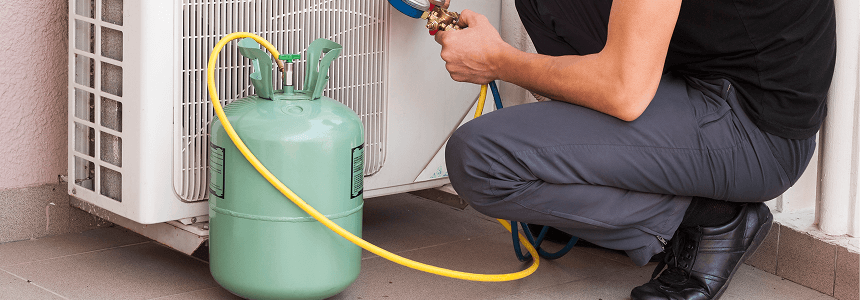
Licensed HVAC technicians are trained to locate leaks, repair them properly, and recharge the system with the correct type and amount of Freon for AC.
If you’re wondering if you can add Freon yourself to save money, it often ends up costing more in the long run due to improper repairs or system damage.
If your system shows refrigerant leak symptoms, taking the right steps can prevent further damage.
Avoid running your AC continuously if you suspect low refrigerant—it can make repairs more expensive.
Costs vary depending on the severity of the leak, the type of refrigerant, and your system’s size and age.
Typical costs may include:
Older systems using phased-out refrigerants may face higher costs, which sometimes makes replacement a more practical option.
While you can’t always prevent leaks, regular maintenance goes a long way.
Proactive care helps extend the life of your system and reduces the risk of refrigerant-related problems.
Unexpected AC issues, especially those involving refrigerant, can be stressful and expensive. A home warranty can help cover eligible repairs, giving homeowners added peace of mind during peak cooling months.
Liberty Home Guard supports homeowners by helping manage the cost and complexity of home system repairs, including air conditioning components that may fail over time.
AC Freon plays a critical role in keeping your home cool and comfortable. Recognizing refrigerant leak symptoms, understanding what causes leaks, and knowing that you can’t add Freon yourself helps you make smarter decisions when problems arise.
For more expert guidance on home systems, maintenance tips, and protection options, explore additional resources from Liberty Home Guard. When it comes to homeownership, having the right knowledge and the right coverage can make all the difference.
There’s a reason Liberty Home Guard was rated the #1 Home Warranty Service by U.S. News and World Report for 2021, 2022, 2023, and 2024. Check out our services.
Learn MoreAir conditioning systems use several types of refrigerants depending on the unit’s age and design. Older systems commonly use R-22 (Freon), which has been phased out due to environmental concerns. Newer systems typically use R-410A (Puron), a more environmentally friendly option that does not deplete the ozone layer. Emerging refrigerants like R-32 and R-454B are also gaining popularity for their improved energy efficiency and lower environmental impact.
Freon works by continuously cycling through your AC system, changing between liquid and gas states. As it evaporates inside the evaporator coil, it absorbs heat from indoor air. The refrigerant then travels to the compressor and condenser, where it releases that heat outside. This heat-transfer process is what allows your AC to cool your home effectively.
Certain types of Freon, especially R-22, can harm the environment by contributing to ozone layer depletion and global warming. Because of this, the U.S. has phased out the production of R-22. Even newer refrigerants, while safer for the ozone, can still have a global warming potential (GWP), which is why the HVAC industry is moving toward more eco-friendly alternatives.
Modern HVAC systems use alternatives like R-410A, R-32, and R-454B, which are designed to be more energy-efficient and environmentally friendly. These refrigerants do not deplete the ozone layer and often improve system performance. As regulations evolve, newer low-GWP refrigerants will continue to replace older options.
Freon must be handled by EPA-certified HVAC professionals due to its chemical properties and environmental impact. When servicing a system, technicians use specialized equipment to recover, recycle, or properly dispose of refrigerant. This prevents harmful emissions and ensures compliance with environmental regulations. Refrigerant is often cleaned and reused when possible, reducing waste and environmental harm.
Stay Ahead of Potential
Home Mishaps!
Subscribe to our Liberty Home Guard Newsletter and gain access to exclusive content that ensures your peace of mind.

Subscribe to receive our emails & get
Have questions?
Call us: (833) 544-8273