

Contemplating coverage?
Subscribe to receive our emails & get
$200 OFF!
Have questions?
Call us: (833) 544-8273

Expert-Reviewed Content: Guided by Editorial Standards

Written By Roger Marx
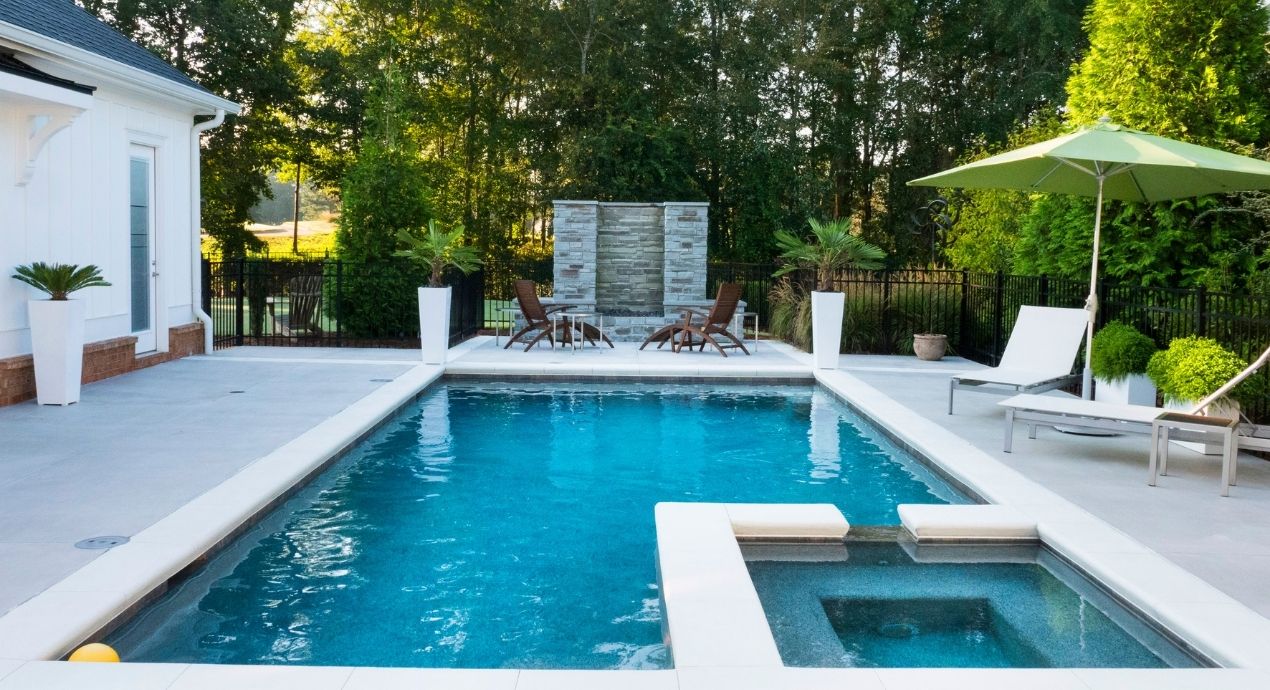
Yes, you can convert a chlorine pool to saltwater, and most homeowners can complete the process in a single weekend without draining the pool. The conversion centers on installing a salt chlorine generator, which uses electrolysis to produce chlorine from dissolved pool-grade salt. According to Hayward, nearly two million salt chlorine generating systems have already been installed across the United States, making this one of the most mainstream pool upgrades available.
This guide covers every stage of salt water pool conversion: which pools qualify, what it costs, how to size your equipment, and how to handle the most common problems after the switch.
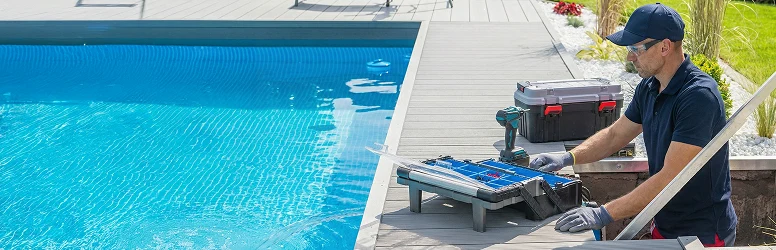
Yes. Almost any existing chlorine pool can be converted to a saltwater system. You do not need to drain the pool or replace the shell. The primary requirement is a compatible salt chlorine generator and properly balanced water chemistry, with a target salt level of 2,700 to 3,400 ppm. Both inground and above ground pools qualify, though there are a few material and structural considerations to review before you start.
Inground pools are the most straightforward candidates for saltwater conversion. Whether your pool is concrete, vinyl-lined, or fiberglass, a salt chlorine generator can be plumbed inline after your existing filter and heater with minimal disruption. The main compatibility check is your current plumbing and equipment: heaters with copper heat exchangers and older galvanized metal fixtures may need upgrading before you run a saltwater system.
Above ground pools can absolutely be converted to saltwater, and a number of salt chlorine generators are designed specifically for smaller above ground volumes (typically 5,000 to 20,000 gallons). The process is the same as for inground pools, but there are two practical differences to keep in mind.
First, above ground pool frames are often made of aluminum or steel, both of which are vulnerable to accelerated corrosion in a saltwater environment. Inspect your frame and any metal ladder hardware before converting and replace galvanized components with saltwater-compatible alternatives. Second, above ground pools tend to have lower-capacity pumps and filters, so confirm your existing circulation equipment can run the generator’s recommended daily cycle of 8 to 12 hours before you purchase a unit.
Saltwater pools use a salt chlorine generator to continuously convert dissolved sodium chloride into free chlorine through a process called electrolysis. The result is consistent, automated sanitation without the sharp chemical smell or skin irritation that comes from handling and adding traditional chlorine.
According to Hayward, nearly two million salt chlorine systems have been installed in the U.S., reflecting the mainstream shift toward this sanitation method. For most homeowners who use their pool frequently and want to reduce hands-on maintenance, converting a chlorine pool to salt is a straightforward and worthwhile upgrade.
According to Swim University, most saltwater pool conversions cost between $1,000 and $2,500 in total, depending on pool size, generator quality, and whether you hire a professional for electrical and plumbing work. You can find the full Swim University cost breakdown at swimuniversity.com/salt-water-pool-conversion/.
Cost Item | DIY Cost | Professional Cost |
Salt chlorine generator | $500 to $2,000 | $500 to $2,000 |
Pool-grade salt (20,000 gal pool) | $50 to $250 | $50 to $250 |
Electrical installation (240V) | $0 (if existing outlet) | $200 to $500 |
Plumbing adjustments | $0 to $150 | $100 to $300 |
Compatibility upgrades (fixtures, etc.) | $50 to $200 | $100 to $400 |
Total estimate | $600 to $2,600 | $950 to $3,450 |
The wide range reflects real variation in generator quality. Entry-level units for above ground pools start around $150 to $300. Mid-range units for 20,000 to 40,000-gallon inground pools run $500 to $1,000. Premium units with variable output and self-cleaning cells can exceed $1,500.
For comparison, replacing major home equipment often runs into similar or higher territory; understanding the cost of replacing home equipment helps put a one-time pool upgrade in financial perspective.
A motivated homeowner can handle most of the conversion independently: balancing chemistry, adding salt, and connecting the generator cell to the return plumbing. The one task that typically requires a licensed professional is the 240V electrical connection. Most salt chlorine generators require a dedicated 240V outdoor circuit, and the National Electrical Code requires a licensed electrician for 240V outdoor installations in most jurisdictions. Budget $200 to $500 for that work and get it permitted if your municipality requires it.
Everything else, including chemical balancing, generator mounting, and cell installation, is DIY-friendly if you are comfortable with basic plumbing and pool chemistry.
The single most important spec on a salt chlorine generator is its rated pool volume capacity. An undersized generator will struggle to maintain adequate chlorine levels during heavy swim loads or hot weather. Always size up, not down.
Pool Size (gallons) | Minimum Generator Output | Recommended Models (by type) |
Up to 15,000 | 1.0 to 1.5 lbs chlorine/day | Small above ground units |
15,000 to 25,000 | 1.5 to 2.0 lbs chlorine/day | Mid-range inground units |
25,000 to 40,000 | 2.0 to 3.0 lbs chlorine/day | Full-size inground units |
40,000 and above | 3.0+ lbs chlorine/day | Commercial-grade or dual-cell units |
Not sure of your pool’s volume? Multiply length x width x average depth x 7.5 for a rectangular pool. Add about 20 percent capacity buffer for pools in hot climates or with heavy bather loads.
Converting from chlorine to saltwater takes five steps. Here is the complete process in order: (1) test and balance your pool chemistry, (2) choose and size your salt chlorine generator, (3) install the salt cell and control box, (4) add pool-grade salt, (5) start the system and monitor. Most conversions are completed within one to three days from start to finish.
Before installing any equipment, test your water for pH, total alkalinity, calcium hardness, cyanuric acid (stabilizer),and free chlorine. Bring all levels into the correct range before adding salt or running the generator.
Target chemistry for saltwater pool startup:
If the pool has been recently treated with algaecide or clarifier, wait 24 to 48 hours and retest before proceeding. Adding salt to unbalanced water delays the calibration process and can trigger false low-salt readings from the generator.
This step applies equally to above ground pools. Because above ground pools are smaller, chemical adjustments take effect faster, but precision matters more since there is less water volume to buffer errors.
With your pool volume confirmed and chemistry in range, select a generator rated for at least your pool’s volume, ideally 20 to 30 percent above it. Refer to the sizing table in the "How to Choose a Salt Chlorine Generator" section above.
Confirm that the generator is compatible with your existing filter system (sand, cartridge, or DE),your heater type, and any existing automation system. Most modern generators are plug-and-play with standard plumbing; a few older automation systems require an adapter module.
The salt cell is installed inline on the return line, after the filter and heater but before the water re-enters the pool. This placement ensures the cell sanitizes clean, heated water before it reaches swimmers.
Most installations require cutting the return pipe and adding two unions to allow the cell to be removed for cleaning. Follow your generator’s specific instructions for flow direction; installing the cell backward will prevent chlorine production and may void the warranty.
The control box mounts on a wall or post near the equipment pad and connects to the cell via a low-voltage cable. The power cord from the control box requires a dedicated 240V outdoor electrical outlet. This is not a standard household outlet. The National Electrical Code requires a licensed electrician for 240V outdoor circuit installations in most states. Do not attempt this wiring yourself unless you are a licensed electrician. Budget $200 to $500 for a permitted electrical installation.
Use high-purity (99 percent or higher) sodium chloride, sold as pool salt, solar salt, or water softener salt in 40-pound bags. Do not use table salt, rock salt, or iodized salt.
According to Hayward, the target salt concentration for most generators is 2,700 to 3,400 ppm. For an average 20,000-gallon pool starting from zero, you will need approximately 400 to 500 pounds of salt to reach that range. Use your pool’s salt requirement chart (typically included with the generator) or an online calculator to calculate the exact amount for your volume.
Pour the salt directly around the perimeter of the pool with the pump running. Do not pile it in one spot. Brush it off the floor to speed dissolving. Salt fully dissolves and distributes within 24 to 48 hours with the pump circulating.
Do not run the generator until the salt has fully dissolved. Most generators will display an error or fail to produce chlorine if the salt concentration reads below threshold, which commonly happens if the system is powered on before the salt has circulated.
After 24 to 48 hours, test the salt level with a digital salt meter or test strips. Once the reading falls in the 2,700 to 3,400 ppm range, turn on the generator. Set the output level to approximately 50 percent as a starting point and adjust over the following days based on your free chlorine test results.
Target free chlorine: 1 to 3 ppm (Hayward). Test daily for the first week. If chlorine is reading low, increase the generator output setting. If it is too high, reduce output or shorten the daily run time.
Run the system 8 to 12 hours per day during swim season. Most homeowners set a timer so the system runs during off-peak hours.
According to Hayward, the conversion can be completed in just one day, referring to the physical installation steps (sourced from hayward.com/blog/post/essential-equipment-to-convert-your-chlorine-pool-into-a-salt-water-oasis). In practice, the full process spans three days:
If your water chemistry is already well-balanced and a licensed electrician is available on day one, you can realistically complete the conversion and have the system running within 48 hours.
Saltwater pools require less hands-on chemical management than traditional chlorine pools, but they are not maintenance-free. Consistent monitoring protects your salt cell, extends equipment life, and keeps water chemistry stable.
Test the following on a weekly basis during swim season:
Test the following monthly or after heavy rain or heavy bather loads:
A digital salt meter gives the most accurate salt readings. Test strip salt readings can drift and should be cross-checked with a meter at least once per month. Keeping a log of your readings makes it easier to spot trends before they become problems.
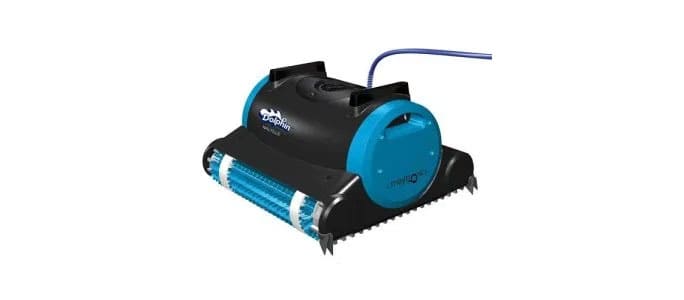
Pairing your salt system with quality automation equipment helps maintain clean, healthy water throughout the season. For additional upkeep tools, see our guide to the best automatic pool cleaners.
Inspect the salt cell every 3 to 6 months. Calcium scale deposits on the titanium plates reduce chlorine output and shorten cell life. If you see white or gray deposits on the plates, clean the cell using a diluted muriatic acid solution: typically one part acid to ten parts water. Soak the cell for 15 minutes, rinse thoroughly, and reinstall.
Generators with a self-cleaning (reverse polarity) feature reduce scale buildup automatically, but they do not eliminate the need for periodic inspection entirely.
Salt cells have a finite lifespan of approximately 3 to 7 years, depending on usage, water balance, and maintenance frequency. Replacement cells typically cost $300 to $800 depending on the brand and model. Budget for this as a routine maintenance expense rather than a surprise repair.
During winter months in cold climates, remove and store the salt cell indoors to prevent freeze damage. Most generators have a "winter mode" or should be powered down entirely during pool closure.
Saltwater pools offer real long-term benefits, but converting is not the right choice for every homeowner. Here is an honest look at the downsides and how to mitigate them.
For more context on protecting your home systems from equipment wear and failure, visit our pool and home maintenance guides.
Most post-conversion issues fall into five categories. Each has a direct fix.
1. Cloudy water after adding salt Cause: Salt added before water chemistry was balanced, or salt not yet fully dissolved. Fix: Test pH and total alkalinity first and correct any imbalances. Run the pump 24 hours and retest. Do not run the generator until salt is fully dissolved and reads within the 2,700 to 3,400 ppm target range.
2. Salt level not rising after 24 hours Cause: Salt is still dissolving, or the generator’s salt sensor needs calibration. Fix: Give the pump 48 hours to fully circulate the salt before retesting. If the reading is still low after 48 hours, test with a separate digital meter to confirm whether the generator’s sensor is reading accurately. Add additional salt in small increments (one bag at a time) after 48 hours if still below 2,700 ppm.
3. Cell not producing chlorine Cause: Salt level below threshold, flow sensor tripped, cell plumbing installed backward, or cell past its useful life. Fix: Check salt level first; the generator will not produce chlorine below approximately 2,500 ppm. Confirm the flow sensor is not showing an error. Verify the cell is installed in the correct flow direction. Inspect the cell plates for heavy scaling and clean if needed.
4. Scale buildup on cell plates within 30 days of startup Cause: Calcium hardness or pH running high. Fix: Confirm calcium hardness is between 200 and 400 ppm and pH is between 7.4 and 7.6. Lower calcium hardness with a partial drain and refill if it is above 500 ppm. Clean the cell with diluted muriatic acid solution and rebalance before restarting.
5. Generator displaying a low salt warning after correct dosing Cause: Sensor calibration drift, or the reading was taken before salt fully dissolved. Fix: Wait the full 48 hours before trusting the generator’s salt reading. Test salt level with an independent digital meter. If the meter and the generator disagree by more than 200 ppm, the generator’s sensor may need recalibration or the electrode may have a calcium deposit affecting its reading. Clean the sensor port and retry.
Diagnosing common home equipment problems is a recurring theme across systems, from pool equipment to HVAC. For a broader look at how to handle equipment failures and when to seek professional help, see our guide on common home equipment problems.
A salt chlorine generator is a significant investment. The salt cell, control board, and plumbing connections are all mechanical components that can fail over time through normal use, even when maintained correctly.
Liberty Home Guard offers saltwater pool warranty coverage as an optional add-on to its home warranty plans. Coverage is designed specifically for the components of a saltwater system, including the salt chlorine generator and related equipment, so a failed cell or control board does not become a full out-of-pocket expense.
Our home warranty plans that cover pool equipment also extend to pumps, heaters, and filtration systems, giving you comprehensive protection across your entire pool setup.
Converting to saltwater is a smart upgrade. Protecting the equipment you install is what keeps that investment working for years. Get a free home warranty quote to see what coverage costs for your home.
Written by Roger Marx for Liberty Home Guard. Technical parameters in this article are sourced from Hayward installation guidance and Swim University cost research.
For most homeowners, yes. Saltwater systems produce chlorine automatically, deliver softer-feeling water, and reduce the cost and hassle of buying and handling pool chemicals each season. The upfront cost of $1,000 to $2,500 is offset over time by lower annual chemical expenses. The conversion is best suited for homeowners who use their pool regularly and can commit to consistent water testing and maintenance.
The main drawbacks are: higher upfront equipment cost ($500 to $2,000 for the generator alone),salt cell replacement every 3 to 7 years at a cost of $300 to $800, corrosion risk to copper heat exchangers and galvanized metal fixtures, ongoing electricity use from the generator and pump, and the need for regular water testing. Saltwater pools are lower maintenance than traditional chlorine pools, but they are not maintenance-free. To protect your investment from unexpected repair costs, consider a saltwater pool warranty as part of your home protection plan.
According to Swim University, total conversion costs typically fall between $1,000 and $2,500 for most residential pools. The salt chlorine generator is the largest expense at $500 to $2,000. Pool-grade salt for an average 20,000-gallon pool adds $50 to $250. If you hire a professional for electrical installation, budget an additional $200 to $500 for that work. DIY installation of everything except the 240V electrical connection is feasible for most homeowners and can reduce the total cost significantly.
Stay Ahead of Potential
Home Mishaps!
Subscribe to our Liberty Home Guard Newsletter and gain access to exclusive content that ensures your peace of mind.

Subscribe to receive our emails & get
Have questions?
Call us: (833) 544-8273