

Contemplating coverage?
Subscribe to receive our emails & get
$200 OFF!
Have questions?
Call us: (833) 544-8273

Expert-Reviewed Content: Guided by Editorial Standards

Written By Ally Sabatina
An LG ice maker not working is one of the most common refrigerator complaints homeowners face. Whether your LG fridge stopped making ice overnight or never worked properly after installation, the cause is almost always one of a handful of fixable problems. This guide covers every major LG model type, including Craft Ice, ThinQ, French door, side-by-side, and bottom freezer configurations, so you can pinpoint the issue and resolve it fast.
When an LG ice maker is not working, the cause is usually one of six common problems. Most of them can be checked and fixed without any special tools.
The six most common causes:
The sections below cover each cause in detail along with step-by-step fixes.
Here is a detailed breakdown of each cause and what to do about it.
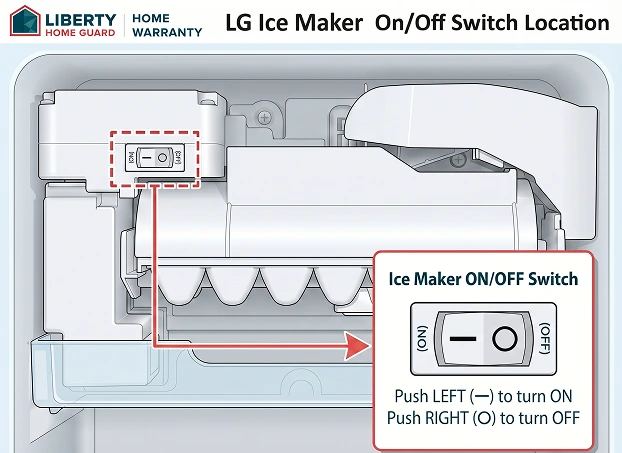
The on/off switch is the first thing to check when your LG refrigerator is not making ice. On top-freezer and side-by-side models, the switch is typically a lever or wire arm that you lift to turn off and lower to turn on. On French door and bottom freezer models, it is often a button on the ice maker unit itself or accessible through the control panel. Switch the ice maker on and wait a few hours to confirm production has resumed.
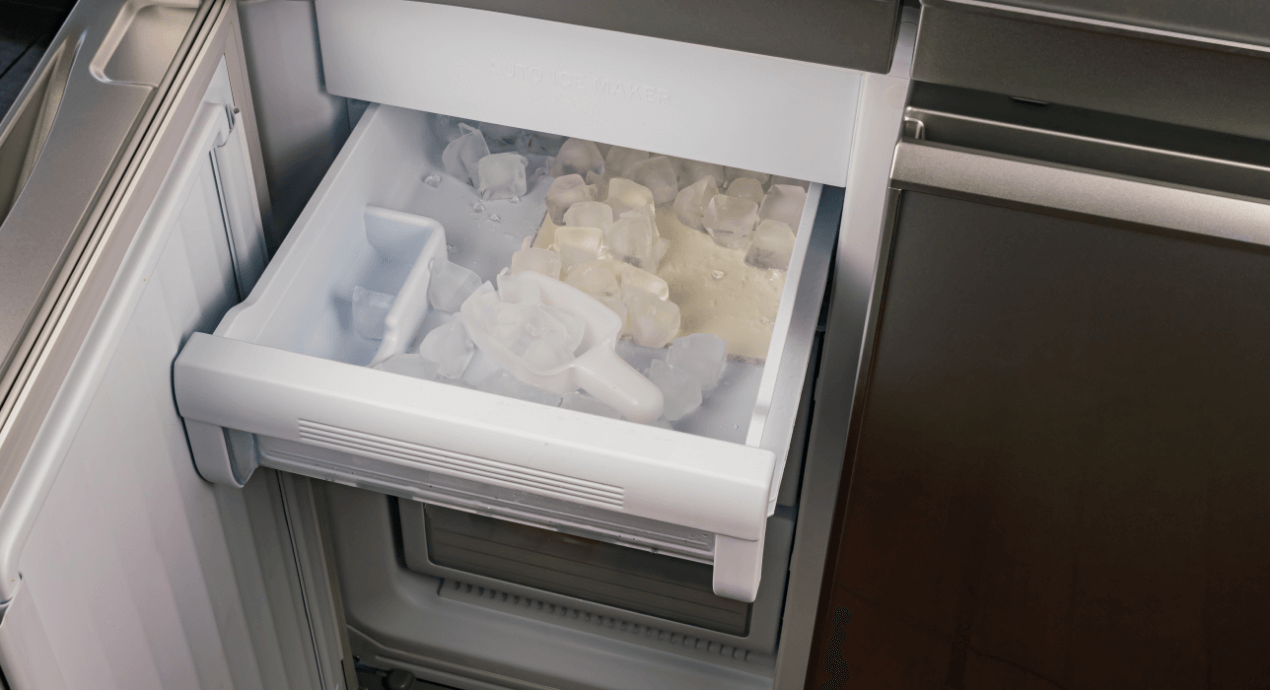
Ice can build up around the bucket, knock it out of alignment, or block the dispenser chute. Remove the ice bucket, inspect it for ice clumps or buildup, thaw any frozen sections, and reinstall it correctly. The bucket must click firmly into its housing for the ice maker to operate.
According to Angi, an ice maker generally needs at least 20 PSI of water pressure to work properly. Below that threshold, water flow to the ice mold becomes restricted and ice production slows or stops entirely. You can test your household water pressure with an inexpensive gauge attached to any faucet.
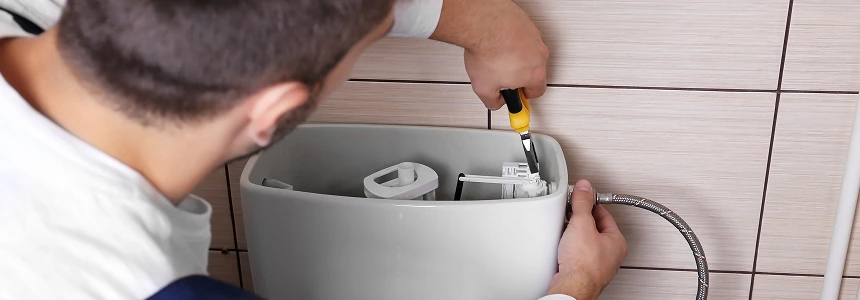
The water supply line runs from the shut-off valve behind the refrigerator to the ice maker. A frozen section blocks water entirely, while a kinked line restricts flow. Pull the refrigerator away from the wall, inspect the line for kinks, and feel along it for hard or frozen sections. Thaw a frozen line using a hair dryer set to low heat, keeping it moving to avoid damaging the line.
The water filter supplies water to both the dispenser and the ice maker. According to LG’s official guidance, corroborated by LGParts.com, the filter should be replaced every 6 months. In hard water areas, Angi recommends replacing it twice a year. A clogged filter reduces flow to the ice mold and can cause slow production or complete failure. See the refrigerator cleaning and maintenance guide for full filter replacement instructions and general upkeep tips.
According to LG’s official troubleshooting guidance, the ice maker shuts off production when the freezer reaches 10 degrees F or warmer. The optimal freezer temperature for ice production is between -4 and 0 degrees F. A freezer running at 20 to 30 degrees F will stop making ice entirely. Check the temperature setting on the control panel and give the freezer 4 to 6 hours to stabilize after any adjustment. For related issues, see this resource on common freezer problems.
The water inlet valve is a solenoid-operated valve that opens to allow water into the ice maker. If the ice-maker-specific port on the valve fails, water will still reach the dispenser but not the ice mold. This is the most common hardware explanation for why water works but ice does not form. Replacing a water inlet valve requires disconnecting the appliance from power and the water supply; a certified technician should handle this repair if you are not experienced with appliance disassembly.
Most LG ice makers use a sensor-driven system, as noted by LGParts.com. If the sensor arm or optical sensor is blocked by ice buildup or a misplaced item in the freezer, the system reads the bin as full and halts production. Clear any obstructions around the sensor arm and confirm nothing in the freezer is pressing against it.
The auger motor moves ice from the storage bin through the dispenser chute. A defective motor will prevent ice from dispensing even when the ice maker is producing normally. This issue typically requires professional repair or a full motor replacement.
Problem | Possible Cause | Quick Fix |
Ice maker not running | Switch turned off | Turn on and wait a few hours |
Ice bucket jammed | Ice buildup or misalignment | Remove, thaw, and reinstall |
No ice, low water flow | Pressure below 20 PSI | Test with gauge; fix supply line |
No water reaching ice mold | Frozen or kinked supply line | Thaw or straighten line |
Slow or no production | Clogged water filter | Replace filter every 6 months |
Production stopped | Freezer above 10 degrees F | Lower temp to -4 to 0 degrees F |
Water works but no ice | Faulty inlet valve | Repair or replace inlet valve |
Bin reads as full | Blocked sensor or arm | Clear obstructions |
Ice not dispensing | Defective auger motor | Repair or replace motor |
When an LG refrigerator is not making ice but water works from the dispenser, the problem is isolated to the ice-making circuit rather than the main water supply. The most likely causes, in order of likelihood, are:
The water inlet valve is the most common culprit. Confirming this diagnosis before calling a technician can save time and money, since a multimeter test of the valve takes minutes. Homeowners with other brands experiencing the same symptom can refer to this guide on ice maker not making ice but water works for additional diagnostic context.
Resetting the ice maker clears electronic glitches and forces the unit through its production cycle. This resolves the majority of software-related failures.
Note: If the test cycle runs but ice production still fails after 24 hours, the issue is likely hardware rather than software, per LGParts.com guidance.
Note: LG introduced Craft Ice in 2019 as a feature that produces slow-melting round ice spheres. The Craft Ice maker is a separate system from the standard cube maker. Both must function independently.
New LG refrigerators require 24 to 48 hours after installation before producing the first batch of ice, according to LG’s official support documentation. If your LG refrigerator is not making ice within that window, allow the full 48 hours before concluding there is a problem.
LG produces several refrigerator configurations, and each has a distinct ice maker system with different locations, access points, and reset procedures. Use the section below that matches your model.
French door LG refrigerators typically house the ice maker inside the refrigerator section in the upper left, not in the freezer. This is the SpacePlus or Slim SpacePlus Ice System configuration. Because the ice maker sits in the fresh food compartment, door seal integrity is especially important. A worn gasket on a French door model allows warm air in and can stop ice production entirely. Check the door gasket and clean it with warm soapy water if it looks dirty or misshapen.
Bottom freezer LG refrigerators place the ice maker inside the freezer drawer at the bottom of the unit. Accessing the test button requires opening the freezer drawer and locating the ice maker module at the back. If you have an LG fridge not making ice in a bottom freezer configuration, check for ice buildup around the fill tube and the back wall of the freezer drawer, as these models are particularly prone to fill tube freezing due to their lower position. For a broader look at the same brand, see common LG refrigerator problems and fixes.
On LG side by side refrigerator ice maker not working situations, the ice maker is located in the upper left section of the freezer compartment. The dispenser is built into the door, which means a door switch failure can stop both ice and water dispensing at the same time. If neither ice nor water comes out of the door but the ice maker appears to be running, check the door switch first before assuming an ice maker component has failed.
If your LG ThinQ refrigerator is not making ice, open the app and run Smart Diagnosis before any manual troubleshooting. The app can identify error codes that pinpoint whether the failure is in the water supply, temperature regulation, or ice maker assembly itself. The EID error code on LG refrigerator display panels typically indicates a freezer compartment ice maker sensor failure, per Beaconsaves.com repair guidance. Use the app to capture the code before contacting LG support.
LG introduced Craft Ice in 2019 as a premium feature available on select French door and side-by-side models. A Craft Ice-equipped refrigerator produces three ice types: Craft Ice spheres, standard cubes, and crushed ice. The Craft Ice maker operates as a separate system and produces approximately 3 ice spheres per day. Common Craft Ice issues include the sphere mold freezing up, jamming inside the mold, or the unit entering a fault state after a power interruption. It is worth noting that some customers have reported Craft Ice failures within the first year of purchase, which has been the subject of class action complaints per Milberg Law reporting. The recommended first step for most Craft Ice failures is the 10-minute unplug reset described above. If the unit fails repeatedly, contact LG support and reference your warranty status before paying for a repair.
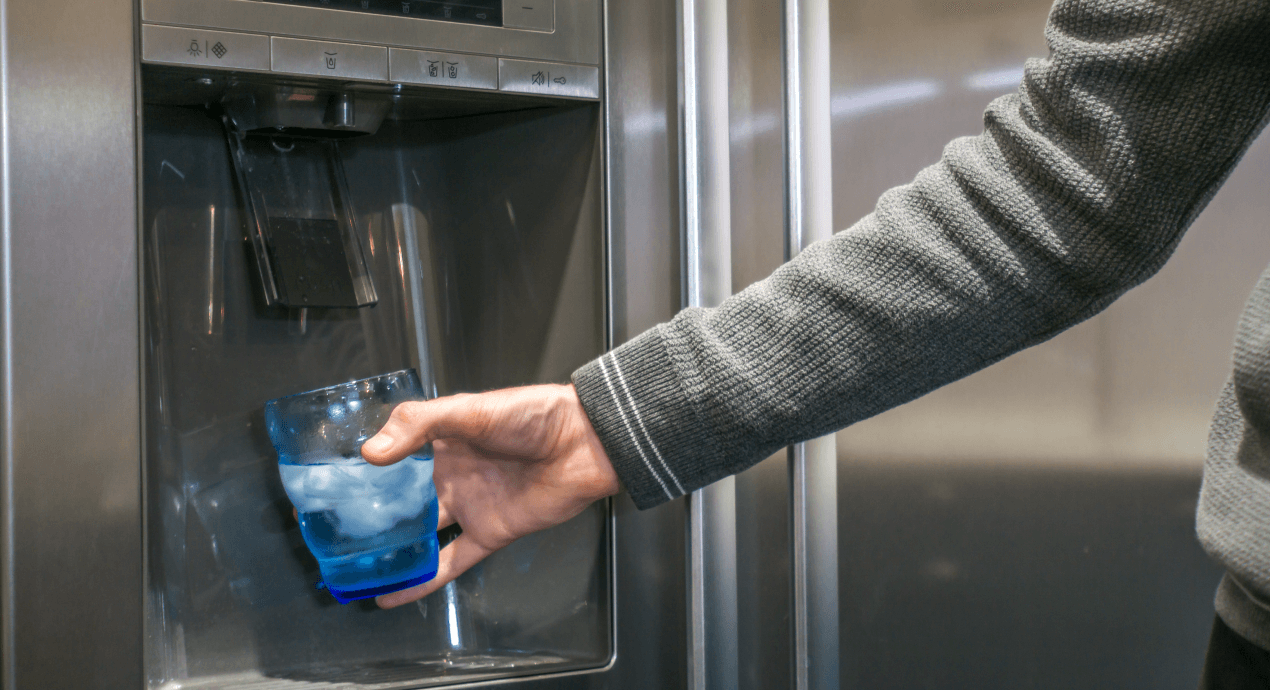
"Not dumping ice" is a different problem from "not producing ice." If the ice maker is running and filling with water but ice is not dispensing into your glass, the issue is in the dispensing system rather than the production system.
Common causes of ice not dispensing:
Remove the ice bucket, break up any clumped ice, reinstall it firmly, and press the dispenser lever. If ice flows normally after this, clumping was the cause. Clumping usually results from the freezer being opened frequently or the temperature being set slightly too warm.
There’s a reason Liberty Home Guard was rated the #1 Home WarrantyThe Best Home Warranty Service
Service by U.S. News and World Report for 2021, 2022, 2023, and 2024. Check out our services.
Work through this checklist in order before calling a technician.
Safety Note: Before inspecting internal components or moving the refrigerator, disconnect it from the power outlet. Water supply lines carry live water pressure. If you are not comfortable with any step, contact a licensed appliance technician.
To find your LG refrigerator model number, check the sticker inside the left door jamb. Having the model number ready before contacting LG support or a technician will speed up diagnosis.
Under ideal conditions, a standard LG refrigerator produces approximately 100 ice cubes per 24-hour period, according to LG’s official support documentation. The Craft Ice maker produces approximately 3 ice spheres per day. If your unit is producing ice but at a lower rate than expected, check the freezer temperature and water pressure before concluding there is a malfunction.
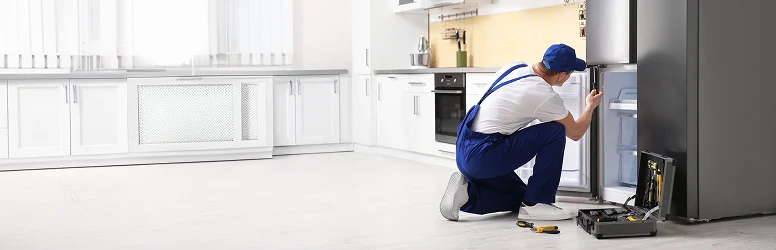
If the troubleshooting checklist above has not resolved the issue, a professional technician visit is the next step. Some LG ice maker problems go beyond DIY repair.
Issues that require a professional:
Repair cost estimates (source: Angi):
Repair Type | Estimated Cost |
Reset or minor software fix | DIY / $0 |
Water filter replacement | $30 to $60 |
Water inlet valve replacement | $150 to $300 |
Full ice maker assembly replacement | $200 to $450 |
Professional diagnostic visit | $75 to $150 |
According to Angi, ice maker repairs average $100 to $600 depending on the issue and labor costs in your area.
LG’s manufacturer warranty covers parts and labor for one year from the date of purchase. Parts coverage extends to 7 years, and linear compressor parts are covered for up to 10 years, though labor is the owner’s responsibility after the first year. See details on LG appliance warranty coverage through Liberty Home Guard to understand what protections you may already have.
If the refrigerator was purchased secondhand, came with the home, or is past its manufacturer warranty period, the owner is responsible for repair costs unless a home warranty is in place.
Repair costs add up fast, especially for major appliances like refrigerators. Liberty Home Guard home warranty plans protect your household budget when covered appliances and systems break down from normal wear and tear.
The Appliance Guard plan covers major kitchen appliances, including refrigerators. The Total Guard home warranty plan adds whole-home systems coverage on top of appliances for comprehensive protection. An optional ice maker warranty coverage add-on is available for a nominal monthly fee and directly covers ice maker repair and replacement.
Liberty Home Guard handles technician sourcing, scheduling, and coordination so you do not have to vet repair companies during an already stressful situation. Liberty Home Guard has processed thousands of ice maker and refrigerator claims, giving us direct insight into the most common LG ice maker failure patterns our customers experience.
Ready to stop paying out of pocket for appliance repairs? Get a free Liberty Home Guard quote today.
Remove the ice bucket and locate the test and reset button on the front face or underside of the ice maker module. Press and hold the button for 3 to 5 seconds until the unit begins its test cycle. Replace the bucket when the cycle completes and wait 24 hours for production to resume. For LG Craft Ice makers, unplug the refrigerator for 10 minutes, then plug it back in and allow 24 hours.
When water dispenses normally but ice does not form, the problem is isolated to the ice-making circuit. The most common causes are a faulty water inlet valve port specific to the ice maker, a frozen fill tube between the supply line and the ice mold, a failed ice mold thermostat, or a broken ice maker assembly. A technician can test the inlet valve with a multimeter to confirm which component has failed.
On most LG models, the reset and test button is located on the front face or underside of the ice maker module inside the freezer. On bottom freezer models, open the freezer drawer and look at the back wall where the ice maker is mounted. The button is typically small, round, and recessed. Press and hold it for 3 to 5 seconds to initiate a test cycle.
LG Craft Ice makers are a separate system from the standard cube maker and produce approximately 3 round ice spheres per day. Common failures include the sphere mold freezing up, jamming, or the unit entering a fault state after a power interruption. Start with the 10-minute unplug reset. If failures continue, contact LG support and reference your warranty status. Some Craft Ice refrigerators have been the subject of customer complaints regarding premature failure.
Open the freezer drawer and locate the ice maker module at the back of the drawer. Press and hold the test button on the module for 3 seconds. The ice maker will run through its three production stages: water fill, freezing, and harvest. If the test cycle completes but ice production does not resume normally within 24 hours, the issue is likely a frozen fill tube or faulty inlet valve rather than a software problem.
A new or freshly reset LG refrigerator requires 24 to 48 hours before producing its first batch of ice, according to LG's official guidance. Once running normally, a standard LG ice maker produces approximately 100 ice cubes per 24-hour period under ideal conditions. The LG Craft Ice system produces approximately 3 ice spheres per day. If your unit is producing less than expected, check freezer temperature and water pressure first.
Set your LG freezer to -4 degrees F (-20 degrees C) for optimal ice production. LG's troubleshooting guidance states that the ice maker shuts off production at temperatures of 10 degrees F or warmer. A freezer running between 20 and 30 degrees F will stop producing ice entirely. After adjusting the temperature, allow 4 to 6 hours for the freezer to stabilize before expecting ice production to resume.
This symptom means the main water supply line to the refrigerator is working correctly, but water is not reaching the ice mold specifically. The most likely cause is a failed water inlet valve port that serves the ice maker circuit independently. A frozen fill tube or failed ice mold thermostat are also common explanations. Because the water dispenser shares a different port on the inlet valve than the ice maker, one can fail while the other continues working normally.
Stay Ahead of Potential
Home Mishaps!
Subscribe to our Liberty Home Guard Newsletter and gain access to exclusive content that ensures your peace of mind.

Subscribe to receive our emails & get
Have questions?
Call us: (833) 544-8273