

Contemplating coverage?
Subscribe to receive our emails & get
$200 OFF!
Have questions?
Call us: (833) 544-8273


Expert-Reviewed Content: Guided by Editorial Standards

Written By Clint Bird
Few things disrupt a busy household like a microwave that suddenly stops working. Whether you rely on it for reheating leftovers, defrosting meat, or cooking a quick meal, losing access to this appliance is a real inconvenience. According to the U.S. Bureau of Labor Statistics, more than 90% of U.S. households own a microwave oven, which speaks to just how essential the appliance has become. The average microwave lasts 9 to 10 years, so at some point, most homeowners will face a breakdown.
In this article, we cover nine of the most common microwave problems, from a unit that won’t turn on to a turntable that refuses to spin. We also explain when to call a professional, when to replace the unit entirely, and how a home warranty can protect you from unexpected repair costs.
Before diving into troubleshooting, you need to understand one critical safety fact: microwave ovens contain a high-voltage capacitor that can store a lethal electrical charge of 2,000 volts or more, even after the unit has been unplugged. This charge can cause serious injury or death. Any repair that involves opening the microwave casing or touching internal components should be handled exclusively by a licensed appliance repair technician.
The Consumer Product Safety Commission (CPSC) has documented approximately 7,800 people treated in hospitals for microwave oven injuries over a recent multi-year period. That number underscores the real danger of attempting DIY repairs on this appliance.
The troubleshooting steps in this article focus entirely on safe, external checks that homeowners can perform without opening the microwave casing. When a repair calls for anything beyond that, we will say so clearly and direct you to a professional.
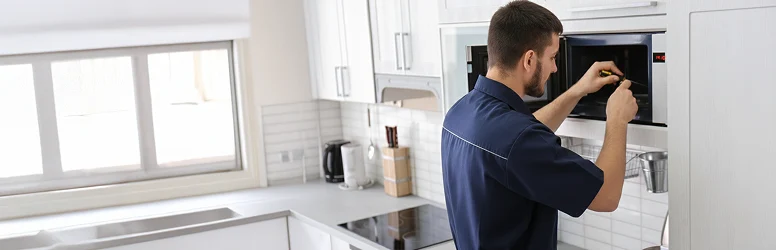
Microwave problems can look mysterious from the outside, but most failures trace back to a handful of known causes. The nine issues below cover the most common scenarios homeowners encounter, along with safe steps you can take before calling a technician.
If your microwave won’t turn on at all, the most common causes are a tripped circuit breaker, a blown thermal fuse, or a faulty door switch.
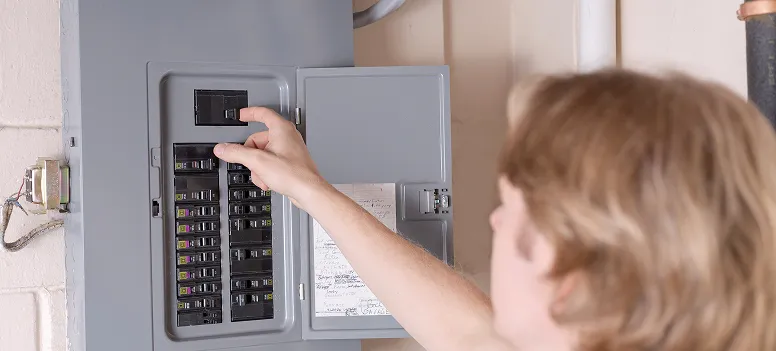
Start with the simplest explanation: check your home’s electrical panel for a tripped breaker and reset it if needed. Next, confirm the microwave is plugged in securely and that the outlet itself is working (test it with another small appliance). If the outlet and breaker are both fine, the problem is likely internal.
A blown ceramic fuse or a failed thermal cutout (a safety component that shuts the unit down if it overheats) can also prevent the microwave from turning on. Both of these components are located inside the casing and require professional replacement. Do not attempt to access them yourself given the high-voltage capacitor risk described above.
A microwave that runs but does not heat food almost always has a failed magnetron or a burned-out high-voltage diode.
The magnetron is the core component that generates the microwave energy responsible for heating food. The high-voltage diode converts power from the transformer into the extremely high voltage the magnetron needs to operate. When either component fails, the microwave will appear to run normally (the light comes on, the turntable spins, the timer counts down) but the food inside stays cold.
Both the magnetron and the high-voltage diode are located directly adjacent to the high-voltage capacitor. These components require professional repair, and attempting to replace them yourself carries a serious risk of electrocution even with the unit unplugged. Contact a licensed technician for this diagnosis and repair.
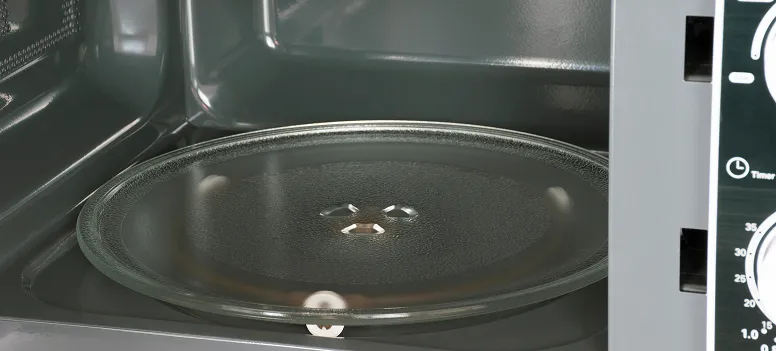
A non-spinning turntable is usually caused by a failed turntable drive motor, a broken drive coupler bushing, or a misaligned glass tray.
Start with the easiest check: remove the glass tray and roller ring, then reseat them carefully according to your owner’s manual. A tray that isn’t seated correctly will wobble or stop spinning. Next, inspect the plastic drive coupler (the small, three-pronged piece that connects the tray to the motor) for cracks or breaks. A cracked coupler is an inexpensive part that is straightforward for a technician to replace.
If the tray and coupler both look fine, the issue is likely the turntable drive motor itself. This is a relatively affordable repair, typically falling in the lower range of microwave service costs, and a technician can confirm the diagnosis with a simple power test.
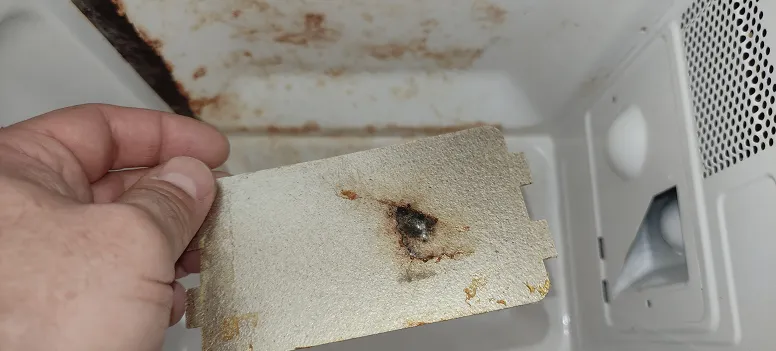
Sparking inside a microwave is almost always caused by metal objects inside the cavity, a damaged or dirty waveguide cover, or chipped interior paint.
The waveguide cover is the small, flat panel (usually made of mica or plastic) mounted on the interior wall of the microwave. It protects the opening where microwave energy enters the cooking cavity. When food residue builds up on this cover, it can absorb energy and cause arcing. Inspect it for grease buildup or burn marks, and clean it gently with a damp cloth. Replacement covers are inexpensive and widely available for most models.
If the interior paint is chipped or flaking, the exposed metal underneath can also cause sparking. Always remove any metal utensils, foil, or non-microwave-safe containers before cooking. Sparking should never be ignored: it can damage the magnetron and, in serious cases, cause a fire. If cleaning the waveguide cover and removing metal objects does not resolve the issue, stop using the microwave and call a technician.
An unresponsive touchpad is typically caused by a failed membrane switch or a faulty main control board.
The membrane switch is the thin, flexible layer beneath the buttons of the touchpad. It registers each button press and sends that signal to the control board. Over time, membranes can wear out or develop dead zones, causing some or all buttons to stop responding. On many models, the membrane switch is a serviceable part that a technician can replace independently of the full control board.
If the membrane switch is intact, the problem may lie with the main control board itself. Control board replacement can be expensive, often approaching $150 to $200 or more for parts and labor. For older countertop microwaves, this cost may tip the repair-versus-replace calculation toward buying a new unit rather than fixing the old one.
Microwave doors use a system of mechanical door switches (also called interlock switches) that must engage properly for the microwave to operate. A broken door latch or a failed door switch will prevent the microwave from starting, by design, as a safety measure to prevent microwave energy from being emitted with the door open.
Inspect the door latch hooks (the small plastic tabs that insert into the frame when the door closes) for visible damage or breakage. Also check whether the door closes flush with the frame or whether it sits slightly open on one side. A door that doesn’t close flush may indicate a bent hinge or a warped frame.
Door switch replacement is a professional repair. The switches are located inside the door frame, which means accessing them requires opening the casing and working near the high-voltage capacitor. Call a licensed technician rather than attempting this repair yourself.
Not all microwave noises point to the same problem, and identifying the type of sound is the first step in diagnosing the cause.
A grinding noise during operation typically indicates a worn stirrer motor (which rotates the antenna inside the microwave that helps distribute energy evenly across the food) or a damaged turntable drive motor. A loud humming or buzzing that is noticeably louder than normal during heating may indicate a failing magnetron. These are professional repairs.
Rattling, on the other hand, is often benign: check that the glass tray is seated properly, that nothing has been left inside the cavity, and that the microwave itself is sitting on a stable, level surface. If the unusual noise is accompanied by burning smells, visible sparks, or smoke, stop using the microwave immediately and unplug it.
Over-the-range microwaves include a built-in exhaust fan designed to vent cooking fumes and steam from the stovetop below. When this fan stops working, it is usually due to a clogged charcoal filter, a failed fan motor, or a faulty control board.
The charcoal filter (present on models that recirculate air rather than vent to the outside) should be replaced every 6 to 12 months under normal use. A severely clogged filter can restrict airflow enough to make the fan seem inoperative. Replacing the charcoal filter is a homeowner-accessible maintenance task: check your owner’s manual for the correct filter part number and replacement instructions.
Also verify that the correct fan setting is selected on the control panel, as some models have multiple speed settings and a dedicated on/off control that can be accidentally switched off. If the filter is clean and the settings are correct but the fan still doesn’t work, the fan motor has likely failed and requires professional service.
A burned-out interior light is one of the few microwave repairs a homeowner can safely perform on certain models, making it worth checking before calling a technician.
Start by consulting your owner’s manual to identify the correct replacement bulb type and wattage. On many countertop microwaves, the bulb is accessible via a small panel on the side or back of the unit (with the microwave unplugged). Replace the bulb, restore power, and test. On over-the-range models, bulb access varies by manufacturer.
On some models, especially newer ones with LED lighting, the interior light is not user-accessible and must be serviced by a technician. The manual will indicate whether this is the case for your specific unit.
The general rule in appliance repair is straightforward: if the cost to fix the appliance exceeds 50% of what it would cost to replace it, replacement is usually the better financial decision. For a basic countertop microwave that costs $100 to $150 new, that math often favors replacement when any significant internal component fails. For a built-in or over-the-range model, the calculation shifts, because the installation labor for a replacement unit can add $150 to $300 or more on top of the appliance cost.
Use the table below as a quick guide:
Scenario | Recommended Action |
|---|---|
Microwave is less than 5 years old and repair costs under $150 | Repair |
Microwave is 5 to 9 years old and repair costs $100 to $200 | Evaluate: consider repair for built-in models, replace countertop models |
Microwave is over 9 to 10 years old | Replace, regardless of repair cost |
Magnetron or control board failure on a countertop model | Replace (repair cost often approaches or exceeds replacement cost) |
Built-in or over-the-range microwave with any major failure | Repair or use home warranty coverage (installation cost makes replacement expensive) |
According to 2026 data from Angi, microwave repairs typically range from $100 to $200, with magnetron replacement reaching up to $250. For context on what other household appliances cost to repair, see our guide on average appliance repair costs.
A home warranty provides financial protection against the unexpected cost of appliance failures, including microwave breakdowns. Rather than facing a surprise repair bill, you contact Liberty Home Guard, a licensed technician is dispatched to your home, and covered repairs are handled with no additional cost beyond your service call fee.
This coverage is especially valuable for built-in and over-the-range microwaves. Because these units are integrated into your cabinetry or mounted above the range, replacing one involves both the cost of the new appliance and a separate installation fee. A home warranty absorbs those costs so you don’t have to.
Liberty Home Guard’s home appliance warranty covers the mechanical and electrical components of major appliances, including your microwave. For comprehensive coverage designed around your appliances, the Appliance Guard plan is a strong option worth exploring. Take a few minutes to review LHG’s available plans and find the coverage level that fits your home and budget.
Most microwave problems have identifiable causes, and many can be diagnosed without touching a single internal component. But when a repair is needed, the high-voltage components inside a microwave make professional service the only safe path forward, and those repairs can come with a significant price tag.
A home warranty from Liberty Home Guard gives you the peace of mind that comes from knowing a licensed technician will handle covered repairs without unexpected out-of-pocket costs. Whether your microwave is built into your cabinetry or sitting on your countertop, coverage means one less thing to worry about when something goes wrong. Explore Liberty Home Guard’s home warranty plans today and find the right level of protection for your home.
A microwave that runs but doesn't heat food almost always has a failed magnetron or a burned-out high-voltage diode, both of which require professional repair. The magnetron generates the energy that heats food, and when it fails, the microwave will appear to function normally in every other way. Do not attempt to diagnose or replace these components yourself due to the lethal voltage stored in the high-voltage capacitor.
Most internal microwave repairs are not safe for DIY because the high-voltage capacitor inside can store a charge of 2,000 volts or more even after the unit is unplugged. Safe homeowner tasks include cleaning the waveguide cover, replacing a charcoal filter on over-the-range models, and swapping out the interior light bulb on models where the bulb compartment is externally accessible. Any repair requiring you to open the casing should be performed by a licensed appliance repair technician.
The average microwave oven lasts 9 to 10 years with normal use, though some units last longer with proper maintenance. Countertop models toward the end of this range are often more economical to replace than repair when a major component fails. Built-in and over-the-range microwaves are typically worth repairing even near the end of their service life due to the high cost of installation labor for a replacement.
Yes, home warranty plans from Liberty Home Guard can cover microwave repairs, including failures caused by normal wear and tear. When a covered component fails, you contact LHG, a licensed technician is dispatched, and the repair is handled at no additional cost beyond the service call fee. Coverage details vary by plan, so it's worth reviewing the terms of your specific plan or exploring LHG's options before a breakdown occurs.
Stay Ahead of Potential
Home Mishaps!
Subscribe to our Liberty Home Guard Newsletter and gain access to exclusive content that ensures your peace of mind.

Subscribe to receive our emails & get
Have questions?
Call us: (833) 544-8273