```
Coupons & Promotions

Frigidaire Refrigerator Ice Maker Not Making Ice But Water Works

Unlike Samsung, which has a well-documented freeze-up design flaw, Frigidaire ice maker failures are more evenly distributed across the assembly. Matching your specific symptom pattern to the right scenario is the fastest path to the correct, least expensive repair.

Stopped after a temperature event or door left open

The freezer was left open, the fridge was moved, or power was out briefly. Ice that partially melted may have refrozen inside the fill tube, jamming it solid. This is a free fix in most cases. Simply thaw the fill tube with a hairdryer or turkey baster of warm water, then reset the ice maker. No parts needed.

Gradually less ice, then none — over days or weeks

Production slowed before stopping entirely. This gradual decline points to the mold thermostat or water inlet valve ice-side port nearing end of life. The thermostat stops signaling the ejection cycle at the right temperature; the valve's ice port delivers insufficient water. Both are inexpensive parts.

Stopped suddenly with no obvious trigger

Ice production stopped without warning, no temperature event, no gradual decline. Check first whether the control arm was accidentally bumped to the offposition. If the arm is down and the machine is on, the ice maker assembly itself has likely failed and needs replacement.


Use the diagnostic triage table below to match your specific observations to the most likely cause before starting any repair. 
Quick Diagnostic Triage


What You’re Seeing

Most Likely Cause

Recommended First Step

Control arm (wire bail) is raised / up position

Ice maker switched off — arm bumped or ice bin overfull

Lower the arm to the on position. Empty the ice bin if it's packed to the brim. Wait 24 hours for production to resume before further troubleshooting.

Ice maker makes no sound, no movement, no ice — arm is down

Failed ice maker assembly — motor, ejector, or internal wiring

Press the ice maker's Test/Reset button and hold for 3 seconds. If the tray rotates through a cycle, the assembly is functional — look upstream. If nothing happens, the assembly likely needs replacement.

Ice maker cycles but produces very small, hollow, or misshapen cubes

Mold thermostat not signaling ejection at correct temperature

Test the mold thermostat for continuity with a multimeter at room temperature. A failed thermostat shows open/infinite resistance. Replace if failed.

Ice maker tries to cycle but no water enters the mold

Ice-side port of water inlet valve clogged or failed

Locate the dual-port inlet valve at the back of the refrigerator. Test the ice-side solenoid for continuity. If failed, replace the valve. Note: the water-dispenser port can work perfectly while the ice port fails — this is a dual-solenoid valve.

Small amount of water visible in mold, then freezes solid in the fill tube

Frozen fill tube — freezer too cold or fill tube not insulated adequately

Thaw the fill tube with a hairdryer on low heat or a turkey baster with warm water. Confirm freezer is set at 0°F to -5°F — a freezer that's too cold can freeze the fill tube before water reaches the mold. If it recurs, the fill tube heater may have failed.

Freezer temperature above 10°F / -12°C

Freezer too warm to form ice — door seal, condenser coils, or fan issue

Set freezer to 0°F (-18°C) and confirm with an independent thermometer. Check door seals and vacuum condenser coils. Allow 24 hours to stabilize before testing ice production.

No ice after replacing the water filter

Air pocket in supply line post-filter installation

Dispense 2–3 gallons of water through the dispenser to purge air from the line. Confirm the filter is fully seated and clicked in place. Reset the ice maker after purging.

Ice maker produces ice occasionally but not consistently

Intermittent mold thermostat failure or loose wiring connection

Inspect the wiring harness connections at the ice maker assembly for looseness or corrosion. Re-seat all connectors. If connections are secure, the mold thermostat is the next suspect — test for continuity at the expected cycle temperature.

Water drips into bin but doesn't freeze into cubes

Freezer temperature inconsistency — fan, door seal, or condenser coil issue 

Monitor freezer temp with a thermometer over 24 hours. Temperature swings above 10°F between cycles indicate a fan, seal, or refrigerant issue that must be addressed before the ice maker will work correctly.


⚠ Model-Specific Note

Most Commonly Affected Frigidaire Models For This Symptom

Based on Frigidaire (Electrolux) service documentation, technician field data, and CPSC complaint records, these models have the highest reported rates of ice maker no-production failures while water continues to dispense normally:


  • FGHB2868T / FGHB2866P (French door, Gallery series) — mold thermostat failures are the dominant complaint on units 4–7 years old; the thermostat is an inexpensive and accessible DIY repair. Frigidaire issued a service pointer for this series noting elevated thermostat failure rates.
  • FFSS2615T / FFSS2625T (side-by-side) — water inlet valve ice-side port failures most frequently reported; the dual-port valve requires full replacement when either port fails. Units 5–8 years old are most affected.
  • FRMR1731AF / FRMR2533AS (French door, newer) — ice maker assembly motor failures reported at elevated rates; Frigidaire's modular ice maker design allows full assembly replacement without removing the freezer liner, simplifying this repair significantly.
  • LFHB2751TF / LGHB2869LF (LG-built Frigidaire Professional) — fill tube freeze-up complaints common; the fill tube heater on these models is a known weak point and is often the root cause of recurring freeze-ups even after a successful thaw.
  • FFHN2740PS / FFHN2740PE (French door, Frigidaire Stainless) — control arm (shutoff lever) misalignment reported frequently during installation and moving.


Frigidaire's model-specific service documentation is available on their website. Enter your model number to access technical service bulletins, parts diagrams, and diagnostic flowcharts.

Extend the Life of Your Appliance

Find Your Solution Here!

Learn More

Key reasons for the problem:

%

45% of reported issues are the

Ice Maker Assemblyquestion

%

30% of reported issues are the

Ice Maker Mold Thermostatquestion

%

20% of reported issues are the

Water Inlet Valvequestion

%

5% of reported issues are the

All Other Causesquestion

Frigidaire ice maker repairs running $110–$360? Your home warranty should cover that.

Liberty Home Guard's Appliance Guard plan covers Frigidaire refrigerators — ice maker assemblies, mold thermostats, inlet valves, fill tube heaters, and more — parts and labor under one flat annual cost.
 

See Appliance Guard

Diagnostic and Troubleshooting Steps

Work through these in order. Steps 1–4 resolve the majority of Frigidaire ice maker failures at zero cost or minimal parts expense. Always unplug before accessing internal components.
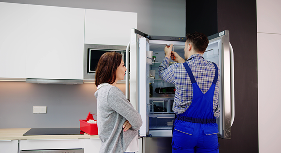
Diagnostic & Troubleshooting
Confirm the ice maker is switched on and the arm is down
Step 1:

Confirm the ice maker is switched on and the arm is down

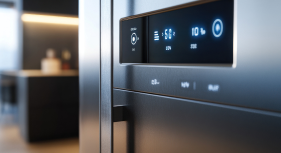
  • Before anything else, check the control arm. If it's in the raised position, the ice maker is switched off. Lower it to the down “on” position and wait 24 hours. Also, check your display panel for any "Ice Off" mode. This is the most frequently overlooked no-cost fix on Frigidaire models particularly after a move, installation, or overfilled ice bin.
Check and confirm freezer temperature

Step 2:

Check and confirm freezer temperature
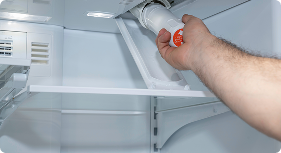
  • The Frigidaire ice maker requires a sustained freezer temperature between 0°F and -5°F (-18°C to -21°C) to form ice reliably. Temperatures above 10°F cause the water to cool but not freeze solid enough for the ejection cycle to work. Place an independent thermometer in the freezer for 4–6 hours to confirm actual temperature vs. set temperature. If they differ significantly, check door seals and condenser coil cleanliness before investigating the ice maker itself.
     
Thaw the water fill tube

Step 3:

Thaw the water fill tube

  • Locate the small fill tube at the back of the ice maker compartment where it enters the mold. If this tube is frozen solid, no water can reach the ice mold even though the dispenser works fine. Use a hairdryer on the lowest heat setting or a turkey baster with warm water to gently thaw the tube. Dry the area after thawing, then proceed to reset the ice maker. If freezing recurs within a few weeks, the fill tube heater has likely failed.
Replace the water filter and purge the line
Step 4:

Replace the water filter and purge the line

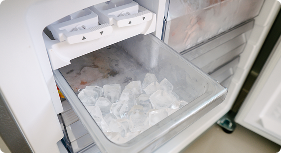
  • Frigidaire recommends replacing the water filter every 6 months. A clogged filter reduces water pressure to the ice maker's fill port even when the dispenser appears to work normally. After replacement, dispense 2–3 gallons of water to clear air pockets from the line. Confirm the filter is fully clicked into its housing. OEM Frigidaire filters and compatible aftermarket filters are widely available.
Test and reset the ice maker assembly

Step 5:

Test and reset the ice maker assembly
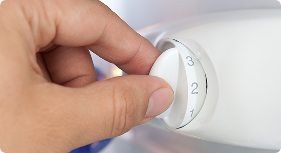
  • Locate the Test or Reset button on the ice maker unit. Press and hold for 3 seconds until the tray begins to rotate. Watch the full test cycle: the tray should rotate, attempt to fill with water, and complete an ejection pass. Grinding sounds, stopped mid-rotation, or no movement at all during the test cycle confirm assembly failure. Allowing 24 hours after a successful reset before concluding whether production has resumed is important because the first batch after a reset typically takes longer.
Test the Ice Maker Thermostat

Step 6:

Test the Ice Maker Thermostat
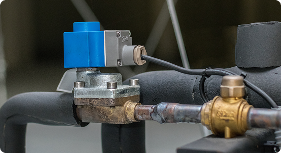
  • The mold thermostat monitors the temperature of the ice mold and signals the motor to eject cubes when the temperature drops to the correct level. A failed thermostat either never signals ejection or signals it too early, producing hollow or undersized cubes. Disconnect power, locate the thermostat, disconnect its wires, and test for continuity with a multimeter. At room temperature, a working thermostat should show continuity. Open/infinite resistance confirms failure.
Inspect and test the water inlet valve
Step 7:

Inspect and test the water inlet valve

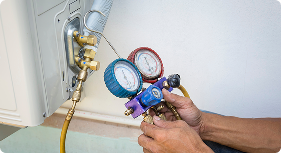
  • The inlet valve at the back of the refrigerator has two solenoid ports: one for the dispenser and one for the ice maker. The dispenser port can work perfectly while the ice port fails. Pull the refrigerator from the wall, locate the valve at the rear water connection point, and disconnect the ice maker water line. Test the ice-side solenoid terminals with a multimeter and it should show approximately 200–500 ohms resistance. Infinite resistance or a visible crack in the valve body means it needs to be replaced. Clean the filter screen at the inlet connection before concluding the valve itself has failed.
     
Check Water Pressure

Step 8:

Check Water Pressure

  •  Frigidaire ice makers require between 30 and 120 PSI of household water pressure to fill the mold adequately. Pressure below 30 PSI allows some water to reach the dispenser, but fails to fully fill the ice mold. Test your water pressure with an inexpensive gauge at a laundry hookup or garden hose bib. If pressure is low, the issue is plumbing-side and a plumber rather than an appliance technician is the right call.
Get a Home Warranty

Step 9:

Get a Home Warranty

  • Skip the stress of surprise appliance breakdowns with a warranty plan. Liberty Home Guard is one example to consider.


Key Actions for Homeowners:

  • Replace the water filter every 6 months or sooner if you notice a reduction in dispenser flow or slower ice production. Mark the installation date directly on the filter housing so it's never a guessing game.
  • Keep the freezer set at 0°F to -5°F (-18°C to -21°C). Ice makers on all brands, including Frigidaire, fail to produce reliably above 10°F. Check with an independent thermometer annually; display readings can drift from actual compartment temperature.
  • Empty the ice bin every 1–2 weeks if you use ice infrequently. Stale ice clumps and can jam the ejector arm or raise the arm to the off position automatically, which shuts off production entirely.
  • Vacuum the condenser coils twice per year. Dusty coils reduce the refrigerant system's ability to maintain proper freezer temperature, which directly impacts ice production.
  • Check door gaskets quarterly by closing the door on a dollar bill. If it slides out without resistance, the seal has degraded. Warm air infiltration causes temperature swings that are hard on the ice maker's thermostat and can cause fill tube freeze-ups.
  • After any move, installation, or power outage, always confirm the control arm is in the down (on) position before troubleshooting further.
  • If the fill tube freezes and you've already thawed it once, don't thaw and wait. Proactively replace the fill tube heater ($30–$60 part) before the cycle repeats and causes secondary damage to the mold or assembly.
     
Diagnostic & Troubleshooting

Most Common Repairs With Realistic Cost Ranges

Costs shown reflect parts plus professional labor. DIY parts-only costs are typically 50–70% lower. All figures are national averages and vary by region and technician.
 

    • Replace the water filter ($15-$55 DIY) — Frigidaire OEM filters cost $30–$55; compatible aftermarket options run $15–$25. Most Frigidaire filters are push-and-twist accessible from inside the refrigerator in under a minute. After replacement, purge 2–3 gallons of water through the dispenser before testing ice production.
    • Replace the water inlet valve (ice-side port) ($150-$280 with labor) — The dispenser port and ice maker port are controlled by separate solenoids. Access requires pulling the refrigerator from the wall and removing the rear access panel. Clean the inlet screen at the hose connection first as mineral scale on the screen is a common cause of restricted ice-side flow that can be resolved at no cost. Replace the full valve if the ice-side solenoid fails continuity testing.

Frequently Asked Questions

  • Why is my Frigidaire refrigerator ice maker not making ice, but the water works?

    Working water confirms the main supply line, filter pressure, and the inlet valve's dispenser port are all functional — the problem is isolated to the ice maker's own circuit. The most common causes on Frigidaire models are: a failed ice maker assembly (45%),a faulty mold thermostat (30%),or a failed ice-side port on the water inlet valve (20%). Before investigating any of those, confirm the control arm is in the down position, the freezer is at or below 0°F, and the fill tube isn't frozen solid. 

  • How can I tell if the water inlet valve is broken?

    The key diagnostic point is that the Frigidaire inlet valve has two separate solenoid ports (dual-valve). The water dispenser uses one port; the ice maker uses the other. They can and do fail independently. If water dispenses normally, the dispenser port is working but the ice port may have failed. To confirm, disconnect power, locate the valve at the rear of the refrigerator where the water supply line connects, and use a multimeter to test the ice-side solenoid terminals. A working solenoid reads approximately 200–500 ohms; an open (infinite) reading confirms failure. Before replacing the valve, clean the inlet screen as mineral scale frequently clogs it and restricts ice-side flow without the solenoid actually failing.

  • Can I fix a frozen water line on my own?

    Yes, and it's one of the easiest fixes on this list. Unplug the refrigerator, remove the ice bucket, and locate the fill tube where it enters the back of the ice maker compartment. Use a hairdryer on its lowest setting or slowly pour warm water from a turkey baster into the tube opening. Once thawed, dry the area and plug the unit back in. Reset the ice maker and wait 24 hours. If the tube refreezes within 2–4 weeks, the fill tube heater has failed and needs replacement. Simply rethawing without addressing the heater will create a repeating cycle.

  • How often should I replace the water filter to prevent ice maker issues?

    Frigidaire recommends every 6 months. In areas with hard water or heavy dispenser use, every 4–5 months is better practice. A clogged filter reduces water pressure to the ice maker fill port before it visibly affects the water dispenser — the ice-side inlet is smaller in diameter and feels the pressure drop first. Most Frigidaire models display a filter status light; don't wait for it to turn red. When replacing, always purge 2–3 gallons of water through the dispenser afterward to clear air pockets from the line, then reset the ice maker.

  • How much does it cost to fix a Frigidaire ice maker that won't make ice?

    The cost range varies significantly based on root cause. Free fixes include lowering the control arm, thawing a frozen fill tube, and exiting any ice-off mode. Low-cost repairs ($15–$55 DIY) involve water filter replacement and fill tube heater replacement. Mid-range repairs with labor may include mold thermostat replacement ($110–$210),water inlet valve replacement ($150–$280),and fill tube heater with labor ($100–$195). A higher-end repair is a full ice maker assembly replacement ($190–$360 with labor). Unlike the compressor on a refrigerator that isn't cooling, no Frigidaire ice maker repair is likely to reach the point where replacement of the entire appliance makes sense — even the most expensive ice maker assembly repair is a fraction of a new refrigerator's cost ($1,200–$2,500 for mid-range Frigidaire French door models).

  • Should I repair my Frigidaire ice maker or replace the refrigerator?

    For an ice maker failure alone, even a full assembly replacement at $190–$360, repair is almost always the right call on a refrigerator under 10 years old. Frigidaire French door refrigerators retail for $1,200–$2,500, and side-by-side models for $900–$1,800. A $360 ice maker repair represents at most 30% of replacement cost on the cheapest model in the line, and often far less. The repair-vs-replace calculation only changes meaningfully if the ice maker failure is accompanied by other significant issues like a failing compressor, a refrigerant leak, or multiple simultaneous component failures in which case the cumulative repair cost merits comparison against a new appliance with a fresh warranty.

  • Does a home warranty cover a Frigidaire refrigerator ice maker that won't make ice?

    Yes, ice maker repair is one of the most commonly used refrigerator benefits under home warranty plans. Liberty Home Guard's Appliance Guard plan covers Frigidaire refrigerators for mechanical and electrical failures including ice maker assemblies, mold thermostats, water inlet valves, fill tube heaters, solenoids, and related components, including both parts and labor. On a $190–$360 ice maker assembly replacement, for example, you'd pay only the service call fee rather than the full technician invoice. To see complete coverage details and get a personalized quote for your home, visit the Appliance Guard plan page.

Liberty Home GuardLiberty Home GuardLiberty Home GuardLiberty Home GuardLiberty Home Guard

The Most Consumer Centric
Home Warranty Provider.

Homeowners across the country recommend Liberty Home Guard Home Warranty above all others.
Don’t just take our word for it—Liberty Home Guard Reviews speak for themselves!

Jayden did a great job explaining th...

Jayden did a great job explaining the process for filing my claim. . This is the first time I’m filing one and he explained ever...

Joseph S.

Liberty home Guard
same day responsive to claim. techni...

same day responsive to claim. technician assigned very quickly. also follow up after completion! 

Vince A.

Liberty home Guard
I have used this service for three y...

I have used this service for three years and while their timeline can be slow they absolutely deliver. Today the service represent...

Alist G.

Liberty home Guard
Talked with Brad Spelling and Lucas ...

Talked with Brad Spelling and Lucas Marin. They were cordial and explained the details of the plan very well.   

Rohit N.

Liberty home Guard
Franklin A. Was great! Knowledgeable...

Franklin A. Was great! Knowledgeable and provided me with the resources that I need to serve customers correctly and professionall...

Aaron Silva Solutions

Liberty home Guard
Albert Cendejas, the technician who ...

Albert Cendejas, the technician who installed my HVAC, was very professional and thorough with his work. His attention to detail a...

Barb R.

Liberty home Guard
Service request was dispatch quickly...

Service request was dispatch quickly. Technician arrived on time. Technician explained the issue and the resolution.

Kenyetta B.

Liberty home Guard
Rocky Phillips called us to accept a...

Rocky Phillips called us to accept a plumbing job. It was easy and quick to accept. We enjoy working with Liberty Home Guard and t...

Diamond Plumbing

Liberty home Guard
I am impressed with the service I re...

I am impressed with the service I received from Keith Gordon. He explained extensively and clearly what in included in the warrant...

Exie R.

Liberty home Guard
This is review is for Kato Nunez. He...

This is review is for Kato Nunez. He was a great in resolving my issue. I really appreciate his patience and excellent customer se...

Mohammad K.
Liberty home Guard
Liberty Home Guard
Appliance Acting Up?
Get Covered Before the
Next Breakdown
Get My Free Quote
Liberty Home Guard
Need help?

Talk to our Liberty Home Guard Agents 24/7.

(855) 953-9695