Coupons & Promotions

LG Washer Is Leaking From the Bottom

A puddle under an LG washer almost always traces back to one of three components, and the specific moment in the cycle when water appears tells you which one. Before touching anything, take a minute to observe one full cycle and note exactly when the water shows up. That single observation is worth more than all the generic troubleshooting steps combined.

Leak only during drain — water at the front or side

The puddle appears when the machine is pumping water out or immediately after the drain phase ends. This is the most common LG washer leak and points directly to the drain pump: cracked housing, worn pump seal, or a clogged filter forcing water through pressure bypass paths.

Steady drip during agitation or spin, growing over weeks

The leak appeared gradually with small amounts at first, increasing in volume over laundry cycles. This slow-build pattern is the hallmark of tub seal deterioration. On LG's Direct Drive machines, the seal sits directly around the drum shaft bearing. Once it fails, wash water mixes with bearing grease, accelerating bearing wear and turning a $250 seal repair into a $400+ bearing-and-seal job.

Leak at the very start of the cycle, during fill

Water appears before the drum is even loaded, right as the machine begins filling. This timing window points to the water inlet valve or the supply hoses. Also, run one empty cycle first. If you've recently switched detergents or increased dosage, excess suds on LG front-load models can route out the bottom gasket area in a pattern that mimics a hardware leak exactly.


Cross-reference your timing observation with the triage table below for a precise component identification before spending any money.

Quick Diagnostic Triage


What You’re Seeing

Most Likely Cause

Recommended First Step

Large puddle only at drain phase; pump noise before leak

Cracked drain pump housing or worn pump seal

Access the pump filter. Clear all debris. Inspect the pump body for cracks or water staining around the body seam. If the housing is cracked, replace the pump assembly.

Clogged filter — water pools inside drum, slow drain

Blocked drain pump filter causing pressure bypass

Open the lower access panel. Place towels, then slowly unscrew the filter cap. Remove debris fully. Reinstall filter finger-tight. Run a drain cycle and confirm the leak is gone. Clean every 3 months to prevent recurrence.

Slow drip under machine during spin; growling or rumbling sound

Tub seal failing — bearing contamination likely 

Confirm by gripping the drum at 3 and 9 o'clock and checking for side-to-side play. Any detectable movement confirms bearing wear alongside the seal. Act quickly — continued use accelerates bearing damage and significantly increases repair cost.

Tub seal drip with no audible noise yet — early stage

Early tub seal failure — bearing still intact

Look for water staining or rust streaks on the drum shaft / lower drum area. If caught early, a seal-only replacement is possible. Don't delay — a few more cycles of water contamination will reach the bearing and double the repair cost.

Leak at start of cycle; water at back of machine

Loose or cracked supply hose / water inlet valve

Inspect both hot and cold supply hoses at the wall and at the machine connection. Hand-tighten loose fittings. Replace any hose with cracking, bulging, or discoloration. If connections are secure but the valve body drips with the machine off, replace the valve.

Excessive suds visible; front-load; leak at door base

Detergent overuse routing through door seal

Run an empty hot-water cycle with no detergent to clear residual suds. Switch to HE detergent and reduce dosage. LG front-load machines require HE detergent — regular detergent creates enough foam to route out through the door gasket drain hole at the bottom.

Water at front-bottom of front-load; door area wet

Torn or mold-degraded door boot seal (gasket)

Inspect the rubber door gasket for tears, pinholes, or pulled-out sections. Feel inside the gasket folds for trapped small items (underwire bra, sock) creating a leak path. Clean with diluted bleach solution. Replace if torn.

Water pooling only at rear of machine

Cracked tub-to-pump hose or loose hose clamp

Pull machine from wall (unplug first). Remove rear access panel. Inspect the hose running from the drum tub to the pump for cracks and the clamp for slippage. Tighten clamp or replace hose.

Machine overflows; water exits from multiple points

Faulty pressure switch or main control board causing overfill

Stop using the machine immediately — overfill creates electrical risk if water contacts the control board. Call a technician. Check the pressure switch air tube for kinks before the appointment — a kinked tube mimics pressure switch failure.


⚠ Model-Specific Note

Most Commonly Affected LG Models For Bottom Leaks

Based on LG Electronics service advisories, Consumer Product Safety Commission complaint data, and technician field reports, these models have the highest reported rates of bottom-leak failures:


  • WM3900HWA / WM3900HBA (front-load, 5.0 cu. ft.) — tub seal and bearing failures most frequently reported after 4–6 years; LG's Direct Drive shaft design on these models makes seal wear progress to bearing contamination faster than on belt-drive competitors. Early intervention is critical.
  • WM4000HWA / WM4500HBA (front-load, TurboWash 360) — drain pump housing cracks reported at elevated rates; the TurboWash spray nozzles create higher internal pressure cycles that stress the pump housing over time. LG issued a service pointer for these models advising pump filter cleaning every 60 days rather than the standard 3-month interval.
  • WM8000HVA / WM8500HVA (front-load, SteamWasher) — steam inlet line and door boot seal failures most common on units 5+ years old; the steam functionality adds additional water routing paths that can develop pinhole leaks at connection fittings.
  • WT7900HBA / WT7300CW (top-load, impeller) — tub-to-pump hose clamp failures and water inlet valve body cracks most reported on these models; the hose clamp design uses a worm-drive screw that can corrode in humid laundry rooms, loosening grip over time.
  • WM3488HW / WM3997HWA (combo washer-dryer) — drain pump failures and door gasket leaks dominate; the combo unit's condensation drain system adds additional hose connections compared to standard front-loads, creating more potential leak points. Condensation drain hose is a commonly missed source on this model.


LG's model-specific service documentation and technical service bulletins are available on their website. Enter your full model number to check for any open service advisories, recall notices, or repair programs that may apply.

Extend the Life of Your Appliance

Find Your Solution Here!

Learn More

Key Reasons for the Problem:

%

40% of reported issues are the

Drain Pumpquestion

%

35% of reported issues are the

Tub Sealquestion

%

20% of reported issues are the

Water Inlet Valvequestion

%

5% of reported issues are the

All Other Causesquestion

LG washer leak repairs running $155–$560? Your home warranty covers that range.

Liberty Home Guard's Appliance Guard plan covers LG washers — drain pumps, tub seals, door gaskets, inlet valves, internal hoses, and more — parts and labor under one flat annual cost.
 

See Appliance Guard

Diagnostic and Troubleshooting Steps

Always unplug the washer and close both water supply valves before accessing any internal components. Have towels and a shallow pan ready before opening the drain filter — water will flow out.
 

Diagnostic & Troubleshooting
Observe one cycle to pinpoint the timing of the leak
Step 1:

Observe one cycle to pinpoint the timing of the leak

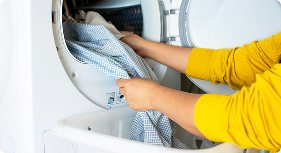
  • With the machine pulled slightly away from the wall and a towel on the floor, run a short wash cycle and watch from the side and rear with a flashlight. Note exactly when water appears: during fill (inlet valve or hose),during agitation or spin (tub seal or door gasket),or during drain (pump or drain hose). Water travels along surfaces before pooling and trace it back to its origin, not where it collects.
Rule out detergent overuse

Step 2:

Rule out detergent overuse

  •  LG front-load washers require high-efficiency detergent in the amount specified for your load size, typically 1–2 tablespoons for a standard load, not the fill line on the detergent cap. Regular detergent, or excess HE detergent, creates foam that routes through the drum cavity and exits at the door gasket drain hole at the bottom of the machine. Run one empty hot-water cycle with no detergent before investigating hardware. If the leak doesn't recur, detergent was the cause.
Clean and inspect the drain pump filter
Step 3:

Clean and inspect the drain pump filter

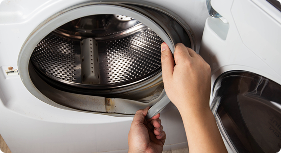
  • Open LG's lower front access panel. A small drain hose coiled behind the panel can be used to drain residual water before unscrewing the filter cap and use this if available. Remove the filter completely, clear all lint, coins, hairpins, and debris, and inspect the housing opening for cracks or the O-ring for flattening. Reinstall snugly. LG's TurboWash models should have this cleaned every 60 days, not quarterly.
Inspect the door boot seal

Step 4:

Inspect the door boot seal

  • Open the washer door and run your hand completely around the rubber gasket, checking the inner lip for tears, pinholes, or sections that have pulled out of their retaining groove. Pay particular attention to the bottom of the gasket where the drain hole is because debris trapped here creates a channeled leak path without tearing the gasket itself. Clean the gasket folds with a diluted bleach solution and a soft brush. Leave the door open after each wash to prevent mold growth that degrades the rubber.
     
Check supply hoses and the water inlet valve
Step 5:

Check supply hoses and the water inlet valve

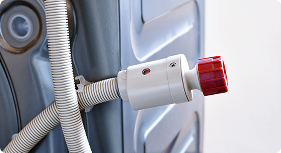
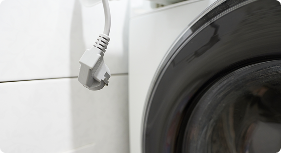
  • Pull the machine from the wall and inspect both supply hoses along their full length. Look for hairline cracks, bulging, or mineral encrustation around fittings. Hand-tighten any loose connections. Open the water supply valves and observe the inlet valve body with the machine off. A valve that drips without the machine running has a failed internal diaphragm and needs replacement. Clean the inlet screens at the hose connection points; clogged screens are a frequent cause of fill-phase leaks that resolve without valve replacement.
Test for tub seal and bearing wear

Step 7:

Test for tub seal and bearing wear
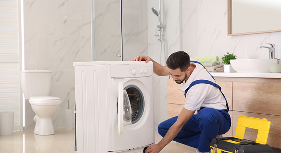
  • With the machine unplugged and the drum accessible, grip the drum at the 3 and 9 o'clock positions and push gently side to side. Any detectable play or roughness indicates bearing wear. On LG Direct Drive machines, this means the tub seal has been leaking long enough to contaminate and degrade the bearing. Also look for rust-colored water staining around the drum shaft area and listen for a low growl or rumble during spin that wasn't there before. Both confirm tub seal failure; act before the next cycle causes further bearing damage.
Check machine leveling

Step 8:

Check machine leveling

An unlevel LG washer vibrates excessively during spin, which works hose clamps loose and accelerates tub seal wear. Use a level across the top of the machine. It should sit within 1° of level in both directions. Adjust the four leveling feet by hand until level. LG's TrueBalance Anti-Vibration System helps minimize vibration but cannot fully compensate for an unlevel installation.

Get a Home Warranty to Avoid Financial Surprises
Step 9:

Get a Home Warranty to Avoid Financial Surprises
  • Don’t get blindsided by repair bills—consider providers like Liberty Home Guard for coverage options.


Key Actions for Homeowners:

  • Clean the drain pump filter every 3 months or every 60 days on LG TurboWash models. This one task prevents the majority of drain-phase leaks and takes under 10 minutes.
  • Use only high-efficiency detergent and follow the dosage guide for your load size. LG front-load washers are intolerant of regular detergent.
  • Wipe the door gasket dry after every wash and leave the door ajar between cycles to allow complete drying. Mold growth in the gasket folds degrades the rubber within 2–3 years, turning an otherwise long-lasting seal into a chronic leak source.
  • Replace rubber supply hoses with braided stainless steel hoses and swap all hoses every 5 years as preventive maintenance. A burst supply hose at full pressure delivers 4–8 gallons per minute and can cause thousands in floor damage in under an hour.
  • Act immediately at the first sign of a tub seal leak. On LG Direct Drive models, the tub seal sits directly adjacent to the drum bearing. Every additional wash cycle after the seal begins leaking drives contaminated water deeper into the bearing assembly. Catching it early can save $150–$200 in bearing replacement costs.
  • Check leveling every 6 months, particularly after delivery of new appliances or any moving of the machine. LG's TrueBalance system reduces vibration but can't fully compensate for an unlevel installation.
  • Inspect supply hoses, the drain hose connection, and the pump filter area during your quarterly filter cleaning. Catching a hairline crack or loosening clamp early costs nothing; ignoring it risks a major water event.
Diagnostic & Troubleshooting

Most Common Repairs With Realistic Cost Ranges

Costs reflect parts plus professional labor. DIY parts-only costs are 50–70% lower. All figures are national averages. 

Note on urgency: A tub seal leak that continues for even 5–10 additional cycles can progress from a $250 seal-only repair to a $400–$500 seal-plus-bearing repair. Early action is financially significant on LG Direct Drive models.

    • Switch to HE detergent / clear excess suds ($0) — LG front-load washers require high-efficiency detergent without exception. Regular detergent generates 5–10x more foam than the machine can handle, and the excess routes out through the door gasket drain hole at the cabinet bottom. This is a free fix that eliminates a surprising share of reported "bottom leaks" on LG front-load models. No parts needed. Run two empty hot-water cycles to flush residual suds from the tub and gasket folds before resuming laundry.
    • Clean the drain pump filter ($0 DIY) — A severely clogged filter creates back-pressure that forces water through bypass paths in the pump housing, appearing as a drain-phase leak. Cleaning takes 10 minutes and resolves a meaningful share of LG washer bottom leaks. No parts required unless the filter cap O-ring is flattened. LG TurboWash models should clean the filter every 60 days; all other LG models every 3 months.

Frequently Asked Questions

  • Why is my LG washer leaking from the bottom?

    The most useful first step is noting when in the cycle the leak appears. Drain-phase leaks (water only appears while pumping out) point to the drain pump or drain hose. Leaks during agitation or spin point to the tub seal or door boot seal. Leaks right at the start of fill point to the water inlet valve or supply hoses. Before investigating any hardware, run one empty cycle after confirming you're using high-efficiency detergent at the correct dosage.

  • How can I stop my LG washer from leaking from the door seal?

    First, confirm the leak is actually originating at the gasket and not routing from the drum area down to the front of the machine. If the gasket is the source, check the inner gasket lip carefully for trapped debris that could be creating a leak channel and remove the objects to resolve the leak. If the gasket is visibly torn or has areas where it has pulled out of its retaining groove, replacement is needed. Clean the gasket monthly with a diluted bleach solution, wipe dry after each wash, and leave the door ajar between cycles.
     

  • Can an unbalanced load cause my LG washer to leak from the bottom?

    Indirectly, yes, but not in a single cycle. An unbalanced load causes the machine to vibrate excessively during spin, which over many cycles loosens hose clamps, accelerates tub seal wear, and can crack the pump housing at its mounting bracket. LG's TrueBalance Anti-Vibration System reduces but doesn't eliminate this effect. If your machine vibrates significantly during spin, redistribute the load before running the cycle and check machine leveling, since an unlevel installation is the primary cause of persistent excessive vibration on LG washers.

  • How often should I inspect the hoses on my LG washer to prevent leaks?

    Inspect supply hoses every 6 months by looking for cracking, bulging, or corrosion around fittings. Replace rubber hoses every 5 years regardless of visible condition; rubber degrades internally before external cracking appears. Replace rubber supply hoses with braided stainless steel at the next replacement — they're more burst-resistant and the price difference is under $15 per pair. Also, inspect the tub-to-pump hose during your quarterly pump filter cleaning. You're already near the pump area, and catching a hairline crack early prevents a much larger leak.

  • How much does it cost to fix an LG washer leaking from the bottom?

    The cost range on this symptom is wide because the underlying cause varies so significantly. Free fixes include switching to high-efficiency detergent, cleaning the pump filter, and removing trapped debris from the door gasket. Low-cost repairs ($75–$165 with labor) involve supply hose or drain hose replacement. Mid-range repairs ($155–$330) may entail door boot seal replacement, water inlet valve replacement, or drain pump replacement. High-range repairs ($280–$560) include tub seal replacement or tub seal plus bearing replacement. An LG tub seal caught early can double in cost if bearing contamination is allowed to progress.

  • Should I repair my leaking LG washer or replace it?

    For most repairs on an LG washer under 8 years old, repair is the right call. LG front-load washers retail for $800–$1,500, so a $180–$330 drain pump repair or a $155–$290 door seal repair represents a fraction of replacement cost. The exception is a tub seal plus bearing repair on a machine 7–9 years old at $400–$560. At that cost and age, compare the repair price against a new machine with a full manufacturer's warranty. LG washers are generally considered durable, so a well-maintained unit at year 7 usually still has a meaningful remaining life worth protecting with a moderate repair. If the machine has had multiple prior repairs or shows other signs of wear, the calculus shifts.

  • Does a home warranty cover an LG washer leaking from the bottom?

    Yes, washer leak repair is one of the most commonly used appliance warranty benefits. Liberty Home Guard's Appliance Guard plan covers LG washers for mechanical and electrical failures including drain pumps, tub seals, water inlet valves, door boot seals, internal hoses, tub-to-pump hoses, and pressure switches, including both parts and labor. On a $280–$560 tub seal and bearing repair, for example, you'd pay only the service call fee rather than the full technician invoice. Given that LG Direct Drive tub seal failures are time-sensitive, having coverage in place means you can authorize service immediately without weighing repair cost against budget. Visit the Appliance Guard plan page for full coverage details and a personalized quote.

Liberty Home GuardLiberty Home GuardLiberty Home GuardLiberty Home GuardLiberty Home Guard

The Most Consumer Centric
Home Warranty Provider.

Homeowners across the country recommend Liberty Home Guard Home Warranty above all others.
Don’t just take our word for it—Liberty Home Guard Reviews speak for themselves!

Jayden did a great job explaining th...

Jayden did a great job explaining the process for filing my claim. . This is the first time I’m filing one and he explained ever...

Joseph S.

Liberty home Guard
same day responsive to claim. techni...

same day responsive to claim. technician assigned very quickly. also follow up after completion! 

Vince A.

Liberty home Guard
I have used this service for three y...

I have used this service for three years and while their timeline can be slow they absolutely deliver. Today the service represent...

Alist G.

Liberty home Guard
Talked with Brad Spelling and Lucas ...

Talked with Brad Spelling and Lucas Marin. They were cordial and explained the details of the plan very well.   

Rohit N.

Liberty home Guard
Franklin A. Was great! Knowledgeable...

Franklin A. Was great! Knowledgeable and provided me with the resources that I need to serve customers correctly and professionall...

Aaron Silva Solutions

Liberty home Guard
Albert Cendejas, the technician who ...

Albert Cendejas, the technician who installed my HVAC, was very professional and thorough with his work. His attention to detail a...

Barb R.

Liberty home Guard
Service request was dispatch quickly...

Service request was dispatch quickly. Technician arrived on time. Technician explained the issue and the resolution.

Kenyetta B.

Liberty home Guard
Rocky Phillips called us to accept a...

Rocky Phillips called us to accept a plumbing job. It was easy and quick to accept. We enjoy working with Liberty Home Guard and t...

Diamond Plumbing

Liberty home Guard
I am impressed with the service I re...

I am impressed with the service I received from Keith Gordon. He explained extensively and clearly what in included in the warrant...

Exie R.

Liberty home Guard
This is review is for Kato Nunez. He...

This is review is for Kato Nunez. He was a great in resolving my issue. I really appreciate his patience and excellent customer se...

Mohammad K.

Liberty home Guard
Liberty Home Guard
Appliance Acting Up?
Get Covered Before the
Next Breakdown
Get My Free Quote
Liberty Home Guard
Need help?

Talk to our Liberty Home Guard Agents 24/7.

(855) 953-9695