Coupons & Promotions

Samsung Washer Leaking From Bottom

With washer leaks, timing is your most valuable diagnostic clue. A puddle that appears at a specific point in the cycle — during fill, during the wash, or only when the machine drains — directly identifies which component is failing. Matching your observation to the right scenario now can save a misdiagnosis and a wasted service call.

Leak only during or right after the drain cycle

Water appears on the floor specifically when the washer is draining or just finished draining. This timing pattern points directly to the drain pump — it’s either a cracked pump housing, clogged filter forcing a pressure bypass, or a failed pump-to-hose connection. Also, check the drain hose itself for cracks or a loose clamp at the pump connection.

Steady leak throughout the wash, especially during agitation

Water seeps or streams from under the machine during the wash or spin phase, often getting worse with load size or spin speed. This pattern strongly points to the tub seal — a worn seal around the main bearing that allows water from the drum to escape into the cabinet and out the bottom. It often develops gradually with small amounts at first and leads to larger leaks over weeks.

Leak at the start of the cycle, during fill

Water appears at the very beginning of the cycle, before the drum is fully loaded. This timing implicates the water inlet valve or the hoses connecting it to the tub. Too much detergent is also worth ruling out first because excess suds bypass the door seal or overflow the drum and route to the bottom of the cabinet, mimicking a hardware leak perfectly.


Use the diagnostic table below to cross-reference your timing observation with the specific symptoms you're seeing for a precise component identification.

Quick Diagnostic Triage


What You’re Seeing

Most Likely Cause

Recommended First Step

Large puddle only during drain; pumping sound before leak

Cracked or failed drain pump housing 

Access the pump filter and clear any debris. Inspect the pump body for visible cracks. If cracked or leaking at the body, replace the pump assembly.

Slow drip throughout wash; worsens at higher spin speeds

Worn tub seal / main bearing seal 

Confirm by looking for water staining or rust streaks on the underside of the drum shaft area. Listen for a grinding or rumbling sound during spin — this confirms bearing wear alongside the seal. This repair requires drum disassembly; call a technician.

Leak right at fill; clear water at front or side of machine

Loose or cracked inlet hose / water inlet valve

Inspect both hot and cold supply hoses at the back of the machine for loose connections, cracking, or pinhole leaks. Hand-tighten loose fittings. Replace cracked hoses.

Excessive suds visible; leak during wash or rinse

Too much or wrong-type detergent causing overflow

Run an empty hot-water cycle with no detergent to clear residual suds. Switch to HE detergent and use only the amount recommended for your load size. Samsung front-load models are particularly susceptible to suds-induced leaks.

Water at back of machine near hose connections

Loose drain hose clamp or cracked tub-to-pump hose

Pull the washer from the wall (unplug first). Inspect the drain hose where it connects to the pump and tighten the hose clamp with a screwdriver. Replace the hose if cracked.

Leak at bottom front; door gasket looks dirty or torn (front-load)

Worn or clogged door boot seal (gasket) 

Inspect the rubber door gasket for tears, debris, or small holes. Clean thoroughly with a mold-removing solution. If torn, replace the boot seal. Water appearing at the very front bottom of a front-load machine often routes from the door seal down the front panel.

Leak from center-bottom on top-load; no noise during spin

Tub seal beginning to fail — early stage

Confirm timing (leak worsens during agitation, not during drain). Small amounts of water at the base of the drum shaft indicate early tub seal failure. Address promptly before bearing damage escalates the repair cost significantly.

Machine overflows; water exits all around the base

Faulty pressure switch or control board causing overfill

If the machine is clearly filling beyond normal levels before leaking, this is not a seal or hose issue — it's the pressure switch or control board. Stop using the machine immediately and call a technician. Repeated overfill can cause secondary water damage and electrical risk.

Water inside the drum after cycle ends; drain very slow

Clogged drain pump filter blocking full drainage

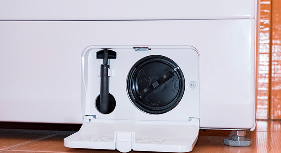
Open the lower front access panel and unscrew the pump filter cap slowly (have towels ready, water will flow out). Remove lint, coins, and debris. Clean the filter and reinstall. A clogged filter forces water to find alternate exit paths, appearing as a bottom leak.


⚠ Model-Specific Note

Most Commonly Affected Samsung Models For Bottom Leaks

Based on Samsung service bulletins, CPSC complaint data, and technician field reports, these models account for a disproportionate share of bottom-leak complaints:


  • WF45R6100A / WF45R6100AW (front-load, 4.5 cu. ft.) — drain pump housing cracks reported at elevated rates on units 3–6 years old; Samsung issued a service notice advising pump inspection at 3-year intervals on high-frequency-use units.
  • WF42H5000A / WF45H6300A (front-load) — tub seal and bearing seal failures most frequently reported after 5 years of use; the seal wear is accelerated by overloading, which Samsung's documentation specifically warns against on these models.
  • WF50R8500AV / WF50R8500AW (front-load, 5.0 cu. ft.) — door boot seal (gasket) tears reported at higher rates due to the larger drum diameter creating greater flex stress on the seal during high-speed spin cycles.
  • WA50R5400AW / WA54R7600AW (top-load) — tub-to-pump hose clamp failures most common; the hose clamps on these models use a spring-clamp design that can slip over time, particularly after the unit has vibrated significantly. Inspect and retighten annually.
  • WF210ANW / WF328AAW (older front-load series) — water inlet valve body cracks and tub seal failures dominate; parts sourcing can be challenging on these older models, so confirm availability before committing to repair on units older than 10 years.


Samsung's service documentation and model-specific repair notices are available on their website. Enter your full model number to check for any open service bulletins or repair programs that may apply to your unit.

Extend the Life of Your Appliance

Find Your Solution Here!

Learn More

Key Reasons for the Problem:

%

45% of reported issues are the

Drain Pumpquestion

%

35% of reported issues are the

Tub Sealquestion

%

15% of reported issues are the

Water Inlet Valvequestion

%

5% of reported issues are the

All Other Causesquestion

Samsung washer leak repairs running $150–$550? Your home warranty covers that.

Liberty Home Guard's Appliance Guard plan covers Samsung washers — drain pumps, tub seals, inlet valves, door gaskets, and more — parts and labor under one flat annual cost.

See Appliance Guard

Diagnostic and Troubleshooting Steps

Always unplug the washer and turn off both water supply valves before inspecting internal components. Lay old towels around the base before opening access panels because residual water will drain out.
 

Diagnostic & Troubleshooting
Rule out detergent overuse first

Step 1:

Rule out detergent overuse first
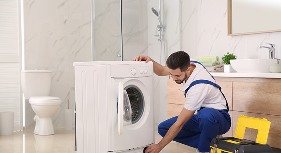
  • Before touching any components, confirm you're using high-efficiency detergent and only the dose recommended for your load size. Samsung front-load washers are highly sensitive to excess suds. Even a modest overuse of regular detergent generates foam that routes past the door seal, through the drum cavity, and appears as a bottom leak indistinguishable from a mechanical failure. Run one empty hot-water cycle with no detergent to flush residual suds. If the leak doesn't recur, detergent was the cause.
Check machine leveling

Step 2:

Check machine leveling

  • An unlevel washer rocks during spin cycles, which can work hose clamps loose over time and cause water to pool in one corner before appearing as a bottom leak. Confirm all four leveling feet contact the floor evenly. Use a level across the top of the machine and aim for within 1° of level in both directions. Tighten the locking nuts on the leveling feet once adjusted.
     
Inspect the Drain Pump and Filter

Step 3:

Inspect the Drain Pump and Filter
  • Open the lower front access panel. Place towels and a shallow pan under the filter cap before unscrewing — 1–2 quarts of water may drain out. Remove the filter completely and clear all lint, coins, hair ties, and debris. Inspect the filter housing opening for cracks. Reinstall the filter finger-tight, then run a drain cycle and observe whether the leak recurs. A clogged filter is one of the most common causes of bottom leaks and the easiest fix.
     
Inspect the drain hose and supply hoses
Step 4:

Inspect the drain hose and supply hoses

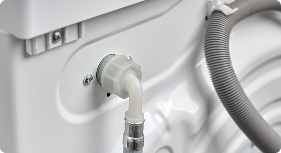
  • Pull the washer away from the wall. Inspect the drain hose along its entire length for cracks, kinks, or loose connections at the pump end and at the standpipe or laundry sink. Check both hot and cold supply hoses at the wall valve and at the back of the machine. Look for hairline cracks, bulging, or loose fittings and hand-tighten any loose connections. Replace cracked hoses rather than taping them as hose failures under pressure cause much larger water events.
Examine the Door Seal (For Front-Load Washers)
Step 5:

Examine the Door Seal (For Front-Load Washers)

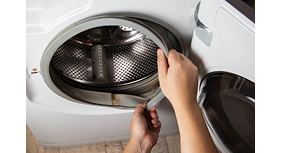
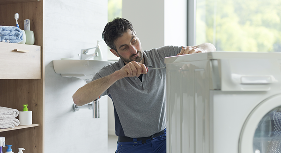
  • Open the washer door and carefully run your hand around the entire rubber gasket, feeling for tears, pinholes, or areas where the seal has pulled away from its groove. Also, check the bottom of the gasket's inner lip for accumulated debris or objects because a trapped sock or bra underwire can create a leak path without tearing the gasket. Clean mold and detergent buildup from the gasket's folds with a diluted bleach solution and a small brush. A clean, undamaged gasket will often reseat itself; a torn gasket needs replacement.
Inspect internal hoses with the rear access panel removed
Step 6:

Inspect internal hoses with the rear access panel removed

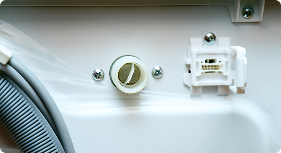
  • With the machine unplugged and pulled from the wall, remove the rear access panel. Using a flashlight, trace all visible internal hoses: the tub-to-pump hose, the circulation hose (on models with a wash circulation pump),and the pressure switch hose. Look for loose hose clamps, cracks, or areas where hoses contact sharp edges and have been abraded over time. Tighten loose clamps with a screwdriver; replace damaged hoses.
     
Check the Water Inlet Valve

Step 7:

Check the Water Inlet Valve

  • With the machine off and water supply valves closed, disconnect the inlet hoses and inspect the valve's inlet screens for mineral buildup or debris. Clean screens under running water with a small brush. Reconnect hoses and briefly open the water supply while the machine is off. Look for drips at the valve body. If the valve drips with the machine off, the internal diaphragm has failed and the valve needs replacement.
Run a Test Cycle

Step 8:

Run a Test Cycle

  • After inspecting all accessible components, run a short wash cycle with the machine pulled out from the wall slightly so you can observe from the rear and sides. Use a flashlight to watch for the exact origin point of any water. Watch at the start of fill, during agitation, and during drain. Trace the water back to its entry point rather than where it pools, since water travels along cabinet surfaces before reaching the floor. The origin point determines which component needs repair.
Get a Home Warranty for Hassle-Free Repairs

Step 9:

Get a Home Warranty for Hassle-Free Repairs
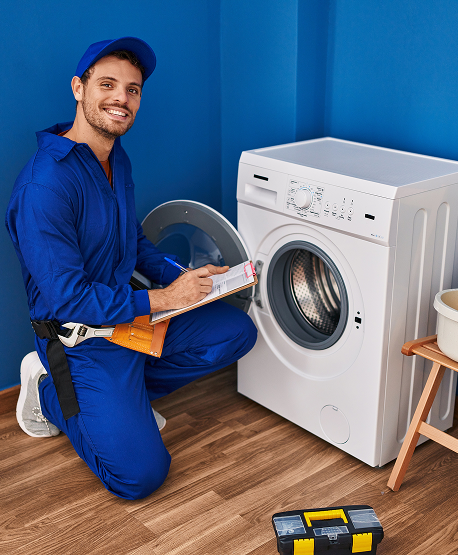
  • Enjoy smoother repairs through plans from providers such as Liberty Home Guard.


Key Actions for Homeowners:

  • Clean the drain pump filter every 3 months. This is the single most effective preventive action for Samsung washers and takes 10 minutes. A clean filter prevents the pressure buildup that cracks pump housings and forces water through bypass paths.
  • Use only HE (high-efficiency) detergent and strictly follow the dosage for your load size. Samsung front-load washers are exceptionally sensitive to suds.
  • Replace rubber supply hoses with braided stainless steel hoses and replace all hoses every 5 years. A burst supply hose under full pressure delivers 4–8 gallons of water per minute and can cause thousands of dollars in floor damage in under an hour.
  • Wipe the door gasket dry after every wash and leave the door slightly ajar between cycles to allow the seal to dry completely. Moisture trapped in the gasket's folds promotes mold growth that degrades the rubber and accelerates seal failure.
  • Avoid overloading the drum. Samsung specifies maximum load weights for each model. On front-load models, the drum should rotate freely when you push it by hand with laundry inside.
  • Check machine leveling every 6 months, particularly if you've noticed increased vibration during spin. An unlevel machine rocks back and forth, which loosens hose clamps and can eventually crack the pump housing on its mounting bracket.
  • Inspect supply hoses, the drain hose, and the pump filter area visually during your quarterly filter cleaning. Early detection of a hairline crack or loosening clamp costs nothing to fix and prevents a much larger water event.
Diagnostic & Troubleshooting

Most Common Repairs With Realistic Cost Ranges

Costs shown reflect parts plus professional labor. DIY parts-only costs are typically 50–70% lower. All figures are national averages and vary by region and technician.

Important: A leaking washer that continues to run can cause floor and subfloor water damage costing $500–$5,000+. The repair cost context for these washer repairs is small relative to the water damage risk of delayed action.

    • Switch to HE detergent / clear excess suds ($0) — Samsung front-load washers require high-efficiency detergent, and only the amount specified for the load size. Regular detergent, or even too much detergent, generates foam that routes through the drum cavity and exits at the bottom. No parts needed. Run two empty hot-water cycles to flush residual detergent from the drum and door seal folds before resuming normal use.
    • Clean the drain pump filter ($0 DIY) — A severely clogged pump filter forces water through bypass paths that exit at the cabinet bottom. Cleaning the filter is free, takes about 10 minutes, and should be done every 3 months regardless. If cleaning resolves the leak but debris is trapped in the filter housing groove, inspect the filter cap O-ring. A flattened or missing O-ring will cause a filter-area drip even after cleaning.

Frequently Asked Questions

  • Why is my Samsung washer leaking from the bottom during a wash cycle?

    The most useful diagnostic is timing — when in the cycle does the leak appear? A leak during fill points to the water inlet valve or supply hoses. A leak during agitation or spin points to the tub seal or door boot seal (front-load). A leak during drain points to the drain pump or drain hose. Before investigating any hardware, rule out detergent overuse as excess suds on Samsung front-load models route out the bottom of the cabinet in a pattern that looks identical to a mechanical leak.

  • Can I use my washer if it's leaking from the bottom?

    No, and this is more important than with most appliance failures. A washer leak that continues across multiple cycles can warp hardwood flooring in as little as 24 hours, damage subfloor materials, and create the humid conditions inside the machine cabinet that accelerate mold growth. There's also an electrical risk: water pooling near the motor or control board can cause a short circuit. Unplug the machine and turn off the water supply valves immediately, then diagnose before running another cycle.

  • How do I know if my Samsung washer’s drain pump is causing the leak?

    Three signs point specifically to the drain pump: the leak appears only during or immediately after the drain phase; you can hear the pump running right before water appears; and the water originates from the front-bottom area where the pump filter access panel is located. Access the filter compartment, remove the filter, and inspect the pump housing with a flashlight. Visible cracks, scoring on the pump body, or water staining around the pump-to-hose connection confirm pump failure. A clogged filter can also cause a drain-phase leak without the pump itself being cracked. Clean the filter first before concluding the pump needs replacement.

  • When should I call a professional to fix my leaking Samsung washer?

    Call a technician for any of the following: a tub seal leak (requires drum disassembly),an overfill-type leak that indicates a pressure switch or control board issue, a leak accompanied by a grinding or rumbling sound during spin (which indicates bearing failure alongside the seal),or any situation where you've checked all accessible components and cannot identify the source. For drain pump, door seal, hose, and filter repairs, a confident DIYer with model-specific guidance can handle the repair, but given the water damage risk of an incorrect repair, err toward professional service if you're uncertain. 
     

  • How much does it cost to fix a Samsung washer leaking from the bottom?

    The cost range on this symptom is wider than most washer repairs because the underlying causes vary so significantly. Free fixes include switching to HE detergent, cleaning the pump filter. Low-cost DIY ($10–$30) include supply hose or drain hose replacement. Mid-range with labor ($75–$320) usually involve supply hose replacement, door boot seal, drain pump replacement, or water inlet valve replacement. Lastly, high-end ($300–$550 with labor) repairs include tub seal and main bearing replacement. An additional consideration is that a leaking washer that continues to run creates water damage risk that can cost $500–$5,000+ to remediate.
     

  • Should I repair my leaking Samsung washer or replace it?

    For most leak repairs, repair is the right call on a machine under 8 years old. Samsung front-load washers retail for $700–$1,400, so a $175–$320 drain pump replacement or a $150–$280 door seal repair represents a small fraction of replacement cost. The exception is a tub seal plus a main bearing repair on a machine 7–10 years old: at $300–$550, you're comparing a significant repair against a machine that may need additional component replacements in the coming years. If the machine has had more than one prior repair, or if the tub seal failure has allowed the bearing to deteriorate significantly, the repair-vs-replace calculation shifts toward replacement. A technician can assess bearing condition before you commit to the repair.

  • Does a home warranty cover a Samsung washer leaking from the bottom?

    Yes, washer leak repair is one of the most commonly claimed washer benefits under home warranty plans. Liberty Home Guard's Appliance Guard plan covers Samsung washers for mechanical and electrical failures including drain pumps, tub seals, water inlet valves, door boot seals, internal hoses, and pressure switches, including both parts and labor. On a $300–$550 tub seal and bearing repair, for example, you'd pay only the service call fee rather than the full technician invoice. Given that washer leaks carry secondary water damage risk, having coverage in place before the next failure is particularly valuable. Visit the Appliance Guard plan page for full coverage details and a personalized quote.

Liberty Home GuardLiberty Home GuardLiberty Home GuardLiberty Home GuardLiberty Home Guard

The Most Consumer Centric
Home Warranty Provider.

Homeowners across the country recommend Liberty Home Guard Home Warranty above all others.
Don’t just take our word for it—Liberty Home Guard Reviews speak for themselves!

Jayden did a great job explaining th...

Jayden did a great job explaining the process for filing my claim. . This is the first time I’m filing one and he explained ever...

Joseph S.

Liberty home Guard
same day responsive to claim. techni...

same day responsive to claim. technician assigned very quickly. also follow up after completion! 

Vince A.

Liberty home Guard
I have used this service for three y...

I have used this service for three years and while their timeline can be slow they absolutely deliver. Today the service represent...

Alist G.

Liberty home Guard
Talked with Brad Spelling and Lucas ...

Talked with Brad Spelling and Lucas Marin. They were cordial and explained the details of the plan very well.   

Rohit N.

Liberty home Guard
Franklin A. Was great! Knowledgeable...

Franklin A. Was great! Knowledgeable and provided me with the resources that I need to serve customers correctly and professionall...

Aaron Silva Solutions

Liberty home Guard
Albert Cendejas, the technician who ...

Albert Cendejas, the technician who installed my HVAC, was very professional and thorough with his work. His attention to detail a...

Barb R.

Liberty home Guard
Service request was dispatch quickly...

Service request was dispatch quickly. Technician arrived on time. Technician explained the issue and the resolution.

Kenyetta B.

Liberty home Guard
Rocky Phillips called us to accept a...

Rocky Phillips called us to accept a plumbing job. It was easy and quick to accept. We enjoy working with Liberty Home Guard and t...

Diamond Plumbing

Liberty home Guard
I am impressed with the service I re...

I am impressed with the service I received from Keith Gordon. He explained extensively and clearly what in included in the warrant...

Exie R.

Liberty home Guard
This is review is for Kato Nunez. He...

This is review is for Kato Nunez. He was a great in resolving my issue. I really appreciate his patience and excellent customer se...

Mohammad K.

Liberty home Guard
Liberty Home Guard
Appliance Acting Up?
Get Covered Before the
Next Breakdown
Get My Free Quote
Liberty Home Guard
Need help?

Talk to our Liberty Home Guard Agents 24/7.

(855) 953-9695