

Contemplating coverage?
Subscribe to receive our emails & get
$200 OFF!
Have questions?
Call us: (833) 544-8273

Expert-Reviewed Content: Guided by Editorial Standards

Written By Rachel Cherem
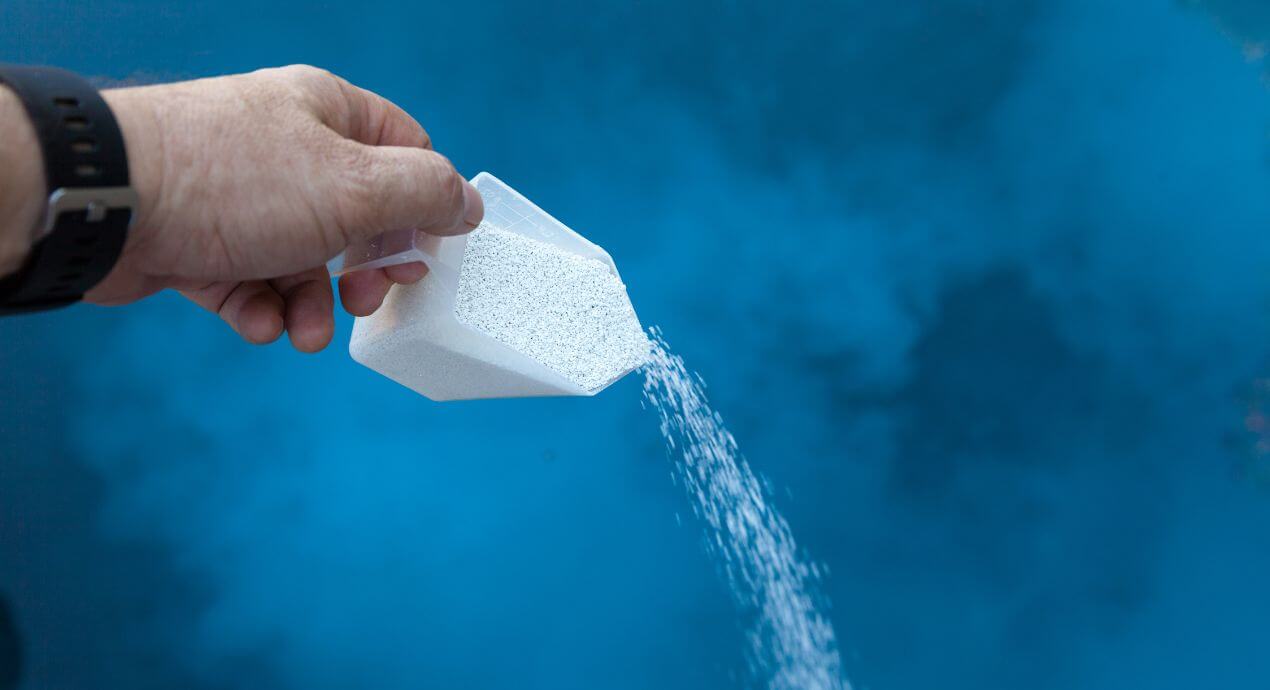
Pool shock is a concentrated oxidizing treatment, most commonly chlorine-based, that temporarily raises free chlorine levels well above normal maintenance range. It destroys bacteria, kills algae, breaks down chloramines, and clears cloudy water. Most pool owners shock their pool every one to two weeks during the swim season.
Routine chlorination keeps water balanced day to day, but it cannot handle every contaminant that accumulates over time. A proper pool maintenance routine includes periodic shock treatments to reset water chemistry and keep the pool safe for swimming.
This guide covers every aspect of pool shocking: what it is, which type to use, how to apply it correctly, and what to do when something goes wrong.
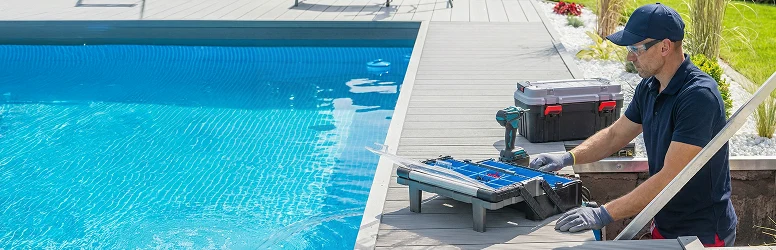
Pool shock is a concentrated dose of chlorine or an alternative oxidizer applied to pool water to rapidly raise sanitizer levels far beyond normal operating range. Regular maintenance chlorine keeps free chlorine at 1 to 3 parts per million (ppm). Pool shock drives that level to 5 to 10 ppm or higher, which is enough to break down contaminants that accumulate even in well-maintained pools.
Shocking is not a substitute for regular chlorination. It is a periodic reset that eliminates what routine treatment leaves behind.
Pool shock and chlorine are not the same thing, though most shock products contain chlorine. Regular chlorine maintains sanitizer levels at 1 to 3 ppm. Pool shock temporarily raises free chlorine to 5 to 10 ppm or higher to destroy contaminants, break up chloramines, and reset water chemistry. Think of chlorine as daily maintenance and shock as a deep clean.
Everyday chlorine levels strike a balance between disinfection power and a swimmer’s chemical tolerance. Keeping free chlorine at 1 to 3 ppm is safe for swimmers but leaves room for contaminants to gradually accumulate. Shocking addresses what routine treatment cannot.
Algae are photosynthetic organisms that colonize standing water rapidly. A backyard pool is an ideal environment. Green algae cloud the water and make surfaces slippery; mustard algae cling to pool walls and resist standard chlorination; black algae embed into plaster and are the hardest to eliminate. A chlorine-based pool shock treatment is the most effective way to eliminate an active bloom and prevent a new one from forming. Note that algal growth is often worsened by fertilizer runoff and heavy rain.
An under-maintained pool creates conditions where bacteria can thrive, introduced by swimmers, animals, or the environment. Of particular concern are cyanobacteria, which are frequently mistaken for algae and produce toxic blue-green blooms on the water’s surface. Regular pool shock treatment keeps bacterial populations below dangerous thresholds.
Chloramines form when free chlorine binds with ammonia or amines from a swimmer’s perspiration, saliva, or urine. Once bound, that chlorine becomes "combined chlorine," which is far less effective at disinfecting than free chlorine. The result: water that smells strongly of chlorine but is less sanitary than it should be.
That familiar "chlorine smell" around swimming pools actually comes from chloramines, not chlorine itself. A strong chemical odor is a sign that combined chlorine has built up and shocking is needed. Shocking the pool breaks apart chloramine compounds, restoring free chlorine levels and eliminating the irritation to eyes, skin, and respiratory systems that chloramines cause.
Cloudy water is one of the most common pool problems pool owners encounter. The cause can range from inadequate filtration to accumulated chloramines and organic debris. Chlorine-based shock is the standard corrective treatment; non-chlorine shock (potassium monopersulfate) can also improve clarity by oxidizing organic matter without affecting chlorine levels.
Not all pool shock products work the same way. The right choice depends on your pool type, the problem you are solving, and how quickly you need to swim again.
Type | Chlorine Content | Speed | Best Use Case | Saltwater Compatible | Predissolve Required |
Calcium Hypochlorite (Cal Hypo) | 65 to 75% | Moderate | General shocking, algae treatment | No | Yes |
Sodium Dichlor | 56 to 62% | Fast | Saltwater pools, routine shocking | Yes | No |
Non-Chlorine Shock (Potassium Monopersulfate) | 0% | Very Fast (15 min) | Oxidizing organics, improving clarity | Yes | No |
Liquid Chlorine | ~10 to 12% | Fast | Supplemental chlorination | With caution | No |
Lithium Hypochlorite | ~35% | Fast | Discontinued; limited availability | Yes | No |
Cal hypo is the most widely used chlorine shock for pool treatment. It contains 65 to 75% available chlorine, making it one of the most concentrated and cost-effective options on the market. It has been the standard for pool disinfection for nearly a century.
Cal hypo raises pH slightly, so retest water chemistry after application. It must be predissolved before adding to the pool. It is not recommended for saltwater pools or fiberglass surfaces, as it can cause scaling and surface damage.
Dichlor dissolves quickly and does not require predissolving, making it one of the more convenient chlorine shock options. It contains a built-in stabilizer (cyanuric acid),which helps protect chlorine from UV degradation. This also makes it one of the few chlorine-based shocks safe for saltwater pools.
Use dichlor in moderation. Because it adds stabilizer with every application, repeated use can raise cyanuric acid levels too high, reducing chlorine effectiveness over time.
Non-chlorine shock uses potassium monopersulfate as its active ingredient. It oxidizes organic contaminants, reduces chloramine levels, and improves water clarity without adding chlorine to the water. Swimmers can typically re-enter the pool in as little as 15 minutes after application.
Important: non-chlorine shock does not kill bacteria, viruses, or algae. If your pool has an active algae bloom or elevated bacterial contamination, a chlorine-based pool shock treatment is required.
Liquid chlorine is not technically a shock product. It contains roughly 10 to 12% available chlorine, far less concentrated than granular shock. It can be used to raise free chlorine levels quickly, but it does not deliver the oxidizing power needed to break down chloramines or kill a significant algae bloom. Think of it as a boost, not a shock.
Note: Lithium hypochlorite has been largely discontinued due to limited lithium availability and is no longer widely produced. It is included in the comparison table above for reference only.
Shocking a pool should be a standard part of your summer pool maintenance schedule. Follow these steps precisely to get the best results.
Gather these items before you begin:
Test your water first. The pH level should be between 7.4 and 7.6. Alkalinity levels should be between 100 and 150 ppm. Shocking outside these ranges reduces effectiveness.
Protect What’s Most Important With
Get A Free Quote
America’s #1 Home Warranty
The general guideline is one pound of shock per 10,000 gallons of pool water. For severe algae infestations, double or triple dosing is sometimes necessary; follow your product label for guidance.
Pool Size | Cal Hypo (1 lb bags) | Dichlor (1 lb bags) |
10,000 gallons | 1 bag | 1 bag |
15,000 gallons | 1.5 bags | 1.5 bags |
20,000 gallons | 2 bags | 2 bags |
25,000 gallons | 2.5 bags | 2.5 bags |
Note: Always check your specific product label. These figures reflect the standard 1 lb per 10,000 gallons guideline.
Important: Do not enter the pool until free chlorine has returned to 1 to 3 ppm.
Yes, you can over shock a pool, though it is rarely dangerous to the pool structure. Adding too much chlorine shock drives free chlorine levels so high that the water becomes unsafe for swimming and can damage pool surfaces and equipment.
In most cases, a heavily overshocked pool normalizes within 24 to 48 hours with the pump running and the cover off.
A common misconception is that saltwater pools do not need to be shocked. They do. A saltwater generator produces chlorine continuously, but it cannot keep up with heavy bather loads, algae blooms, or the chloramine buildup that shock treatment is designed to address.
The key difference is chemical compatibility. Calcium hypochlorite is not recommended for saltwater pools because it adds calcium and can cause scaling. The preferred options are:
Application steps for saltwater pool shock are the same as for traditional pools. Run the pump for 6 to 8 hours after treatment, test water chemistry before swimming, and verify that free chlorine has returned to 1 to 3 ppm. After a dichlor shock treatment, test cyanuric acid levels; if stabilizer rises above 80 ppm, partially drain and refill the pool to dilute it.
Timing matters for both when during the day you shock and how often you do it throughout the season.
Always shock your pool in the late afternoon or evening. UV rays from the sun degrade chlorine rapidly, especially unstabilized products like cal hypo. Shocking at night allows the treatment to circulate and work for 8 or more hours without UV interference, maximizing its effectiveness.
Shock frequency depends on pool usage, weather, and water conditions. Use the following as a guide:
Pool shock chemicals are powerful oxidizers. Improper handling is a genuine hazard. According to the CDC, about 4,500 emergency department visits occur each year in the U.S. from pool chemical injuries, and more than 73% happen at private residences.
Follow these safety practices every time you handle pool shock:
Note: Pool chemical guidance in this article reflects industry-standard dosing from manufacturer labeling. Always follow your specific product’s instructions.
Liberty Home Guard’s home warranty plans cover pool equipment, including pumps, filters, and motors, giving you one less thing to worry about when your pool system needs repair. Protecting the equipment that keeps your water circulating is just as important as keeping the chemistry right.
Pool problems are not always about chemistry. A failing pump, broken filter, or malfunctioning heater can compromise water quality just as quickly as a missed shock treatment. Liberty Home Guard’s home warranty plans cover major pool equipment so you can address mechanical failures without an unexpected repair bill. Get a free home warranty quote today.
Keeping your pool in top condition means protecting both the water and the equipment behind it. Learn more about our home warranty for pool equipment and what Liberty Home Guard covers.
Pool shock and chlorine are not the same thing, though most shock products contain chlorine. Regular chlorine maintains sanitizer levels at 1 to 3 ppm. Pool shock temporarily raises free chlorine to 5 to 10 ppm or higher to destroy contaminants, break up chloramines, and reset water chemistry. Chlorine is maintenance; shock is intervention.
No. After adding chlorine-based shock, wait at least 8 to 24 hours before swimming and retest the water first. Free chlorine must return to a safe range of 1 to 3 ppm. Non-chlorine shock acts faster; water may be safe in as little as 15 minutes, but always test before entering.
The standard guideline is 1 pound of shock per 10,000 gallons of pool water. A 20,000-gallon pool requires approximately 2 one-pound bags of cal hypo or dichlor under normal conditions. For a severe algae bloom, you may need to double or triple the dose. Always consult your product label for final guidance.
Shock your pool in these situations:
Calcium hypochlorite raises pH slightly with each application, which is why retesting water chemistry after shocking is essential. If pH rises above 7.6, add a pH decreaser before the next shock treatment. Dichlor is slightly acidic and may lower pH minimally. Non-chlorine shock has a minimal effect on pH.
Yes. Saltwater pools need shock treatment just like traditional pools. The saltwater generator cannot keep up with heavy bather loads or algae blooms on its own. Use sodium dichlor or non-chlorine shock; avoid calcium hypochlorite, which can cause scaling and disrupt salt cell function.
Stay Ahead of Potential
Home Mishaps!
Subscribe to our Liberty Home Guard Newsletter and gain access to exclusive content that ensures your peace of mind.

Subscribe to receive our emails & get
Have questions?
Call us: (833) 544-8273