






Contemplating coverage?
Subscribe to receive our emails & get
$300 OFF!
Have questions?
Call us: (833) 544-8273

Expert-Reviewed Content: Guided by Editorial Standards

Written By Angel Vallejo
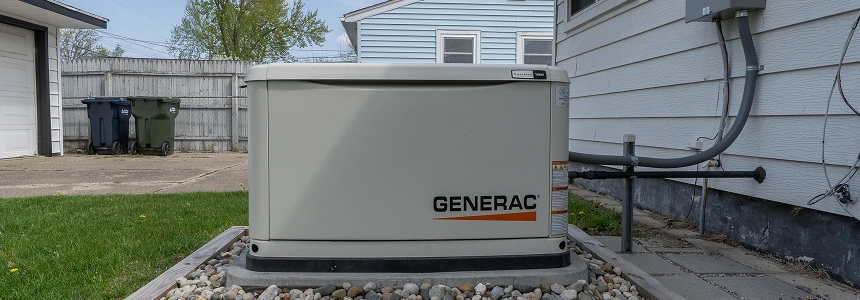
A home generator is a true lifesaver in the event of a prolonged power outage, but generators don’t come cheap. In this guide, Liberty Home Guard has compiled all the essential information about generator costs and installation considerations so that you can make the most out of your investment.
A whole-home standby generator is a substantial piece of equipment that needs to be directly wired to your home’s electrical system. Unlike a portable generator, you can’t simply plug a standby generator into an outlet with an extension cord.
The generator’s activation is triggered by an automatic transfer switch (ATS),which is wired between the utility meter and main electrical panel. When this generator transfer switch detects an interruption in power from the meter, it automatically switches the home to generator power. This works in reverse as well. When power is restored, the ATS switches the home back to the main power source and shuts down the generator. It’s a completely automatic process that doesn’t require you to manually switch power sources or reset the home’s breaker.
Generators, of course, require a fuel source of their own to supply backup power for homes. This fuel source could be a locally installed propane tank, or the generator may be connected to an existing gas line on the property.
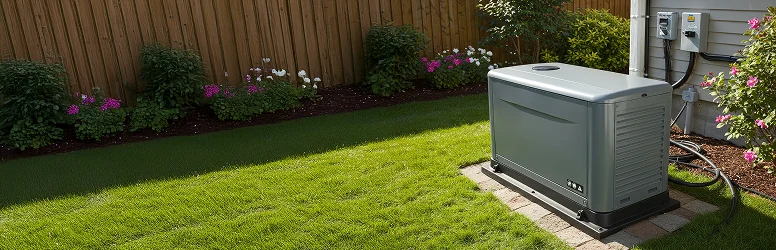
Residential generators typically range in capacity from 14 kW to 26 kW, and choosing the right size generator for your home demands some careful consideration. If your standby generator is too small, you won’t be able to supply enough power to your home. If it’s too big, you’ll overspend on upfront installation costs and fuel.
First, consider your ideal power needs. If you want enough power to handle your home’s full electrical load without interruption, you will need a more powerful generator. That’s at least 16 kW for the average American home, or 20 kW or more for large homes with electric cooking appliances, well pumps, heating systems, and other power-hungry appliances.
On the other hand, if you want just enough power to supply a few critical circuits to keep essential appliances running, you can make do with a smaller generator. A generator with an output between 10 kW and 16 kW may not power your entire home, but it will keep your refrigerator running and power some essential lights.
If you have a good idea of how much power you would like in a material sense but have no idea how that translates to generator capacity, you can talk it through with your contractor or installer. A professional can easily calculate your home’s power needs.
Several factors play into a whole-home generator cost, so it’s challenging to nail down a specific figure or even a narrow range. A small generator in an area with a low cost of living might set you back around $5,000 from initial purchase to final install. For a generator with a 20 kW capacity or greater, that figure can easily exceed $15,000. Here’s a breakdown of what factors into the overall price.
Most municipalities require a permit for standby generator installation. Typically, you’ll need to submit plans for review before work begins and schedule an inspection after the work is complete. Your installer should be familiar with local requirements and may handle the permitting process for you, but confirm ahead of time.
Local building codes also govern how the installation must be performed in order to mitigate fire hazards, carbon monoxide exposure, and other safety hazards. Make sure your installer is licensed and up to date on local code requirements to avoid a failed inspection.
If you’re part of a homeowner’s association, check your HOA’s rules before installing a generator. Your HOA may have restrictions on where a generator can be placed or how much noise it can make. Getting advance approval for installation can help you avoid any fees or relocation costs.
Installing a whole-home standby generator takes a lot of technical expertise, and not every electrician or contractor has the experience, knowledge, and licensing that the job demands. Going with an installer with insufficient qualifications puts you at risk of electrical problems, safety hazards, and headaches with permitting and inspections. Follow these guidelines to find a qualified installer.
When properly installed and maintained, standby generators are robust pieces of home equipment. But like any other appliance or system, a generator will require occasional repairs and service checkups over its lifespan. A home warranty can help offset those costs and give you peace of mind that you won’t be facing a large repair bill when your generator needs attention.
A home warranty with generator coverage is especially relevant if you’ve recently purchased a home. Newly installed generators are almost certainly covered by a manufacturer’s warranty, but that coverage expires after a set amount of time. If your new home has an aging generator, coverage through Liberty Home Guard can provide the protection and reassurance you need. Learn more about our coverage options by calling (833)-543-7699. You can also explore our website to learn more.
If your home is already connected to a gas line, natural gas is usually the best option. Propane is a fine fuel source for a home generator, but it needs to be stored in an on-site tank. You’ll have to monitor the fuel levels and schedule propane deliveries as the fuel depletes. A dedicated natural gas line requires less active maintenance.
Straightforward generator installs can be done in a couple of days. The process could take longer if there are permitting or inspection disputes, delivery delays, updates to the fuel lines, or if a concrete pad needs to be poured.
A generator can increase a home’s value, yes. The amount of added value varies by market, but generators are particularly desirable in areas that are prone to power outages because of severe weather.
Yes, a properly installed standby generator will switch on automatically in the event of a power outage. This is the key function of the automatic transfer switch (ATS),which detects when there’s an interruption in utility power and automatically moves the home to generator power.
You should schedule a service checkup for your standby generator once per year. That checkup will typically include an oil change, filter replacement, spark plug inspection, battery test, and inspection of the overall system’s health. Keeping to a steady maintenance schedule is essential. You don’t want to discover an issue with your generator in a power outage, just when you need it most.
Stay Ahead of Potential
Home Mishaps!
Subscribe to our Liberty Home Guard Newsletter and gain access to exclusive content that ensures your peace of mind.

Subscribe to receive our emails & get
Have questions?
Call us: (833) 544-8273