

Contemplating coverage?
Subscribe to receive our emails & get
$300 OFF!
Have questions?
Call us: (833) 544-8273

Expert-Reviewed Content: Guided by Editorial Standards

Written By David Moreno
High summer humidity makes it difficult to get comfortable in our own homes. The air feels sticky and stifling, and prolonged bouts of high humidity can adversely affect our health and slowly degrade our homes and furnishings. Fortunately, there are several simple and affordable strategies to effectively reduce indoor humidity levels.
There’s a reason Liberty Home Guard was rated the #1 Home Warranty
Service by U.S. News and World Report for 2021, 2022, 2023, 2024, and 2026. Check out our services.
Minor spikes in humidity aren’t especially concerning, but prolonged exposure to high humidity can negatively affect your home and health in several ways.
The EPA and HVAC professionals recommend a target relative humidity range of 30% to 50%. It’s natural for the precise figure to drift depending on the weather and season. It will be easier to keep to the low end of the range in winter since the cold winter air is naturally drier. In the summer, aim for the upper end, and don’t worry about occasionally exceeding 50% on especially humid days. You just want to make sure your indoor humidity levels aren’t routinely above 60% to avoid the worst of the humidity’s effects.
You can measure your home’s indoor humidity levels with a hygrometer, an inexpensive tool you can find at your local hardware store or online. Modern hygrometers typically indicate the temperature and relative humidity on a digital display, and they can be placed anywhere in the home. To measure your home’s humidity levels most effectively, follow these guidelines:
A dehumidifier is one of the most effective means of home humidity control, but there are other ways to keep indoor humidity in check. Here’s how to dehumidify a room without a dehumidifier.
If you can’t bring your indoor humidity levels down to 50% or 55% with some combination of the strategies outlined above, then a dehumidifier may be your only recourse. There are two main types to consider: portable and whole-home dehumidifiers.
Portable humidifiers are the simpler option. They are compact, inexpensive, and easy to set up and move about. If you’re concerned about high humidity in just one part of the home, such as the basement or a bathroom, a portable dehumidifier is the right choice. But be aware that you need to manually empty a portable dehumidifier’s reservoir as it fills up, and these appliances cannot meaningfully reduce the humidity levels in an entire home. For that you need multiple portable dehumidifiers or a whole-home dehumidifier.
A whole-home dehumidifier is integrated into the home’s HVAC system and uses the existing ductwork to dehumidify the entire home. Compared to a portable unit, it’s quieter and more energy efficient, and you don’t need to check on it every day to empty a reservoir. But the upfront cost of anywhere from $1,500 to $4,000 is much higher, and you need to include service checkups in your HVAC maintenance budget.
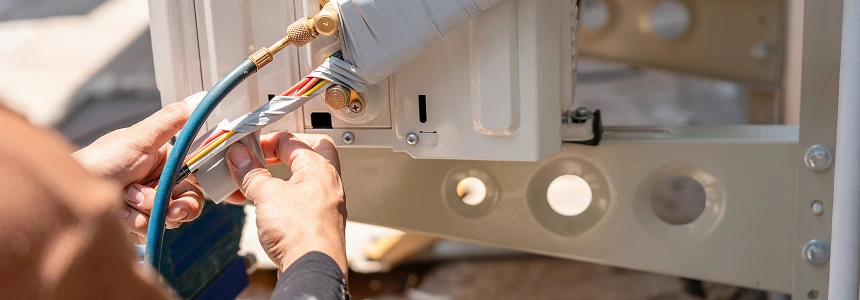
Air conditioners don’t generate cold air. They actually pull warm, humid air from the room, and this air then passes over evaporator coils filled with refrigerant. The heat that the coils absorb is pumped outside, and the moisture in the air condenses and drips into a drain line. The now cooler, drier air is blown back into the room.
This process will naturally dehumidify a room, though the size of the AC relative to the space it is cooling is important. If the AC is too big, it will cool the room too quickly and shut off before enough moisture has condensed on the coils, leaving the room still humid and clammy. If the AC is too small, it will run constantly and never get the temperature and relative humidity where you’d like them to be.
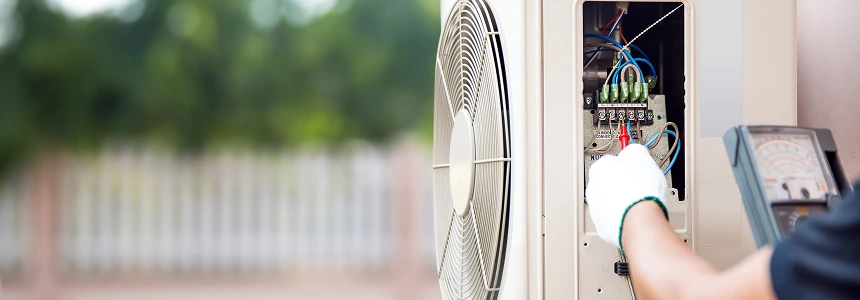
Your AC may not be enough to adequately dehumidify a room if you live in an especially humid climate. Also, common air conditioner problems that reduce efficiency could impair your system’s ability to remove moisture from the air. Dusty evaporator coils or a refrigerant leak, for example, will keep the AC from reaching its dehumidifying potential.
Ideal indoor humidity ranges from 30% to 50%. There’s no need to chase 30% in the summer, though. When it’s hot and humid, target between 40% and 50% relative humidity.
A digital hygrometer is the most effective way of measuring home humidity levels. Hygrometers are inexpensive and readily available at any hardware or big box store.
Yes, prolonged exposure to very humid conditions can degrade a home’s structure over time. In extreme cases, humidity can lead to mold, wood rot, and corrosion, which has the potential to compromise the integrity of a structure. But this requires near constant high humidity. The occasional week of humid weather in the summer is not a concern.
Some plants have leaves that naturally absorb moisture from the air. These include Boston ferns, peace lilies, English ivy, and air plants.
Yes, an air conditioner that is well maintained and properly sized for its space will reduce indoor humidity. If the AC is too large for the room, though, it will cool the room and shut off before it removes enough moisture from the air, leaving the room feeling cold and damp.
Stay Ahead of Potential
Home Mishaps!
Subscribe to our Liberty Home Guard Newsletter and gain access to exclusive content that ensures your peace of mind.

Subscribe to receive our emails & get
Have questions?
Call us: (833) 544-8273