




Contemplating coverage?
Subscribe to receive our emails & get
$300 OFF!
Have questions?
Call us: (833) 544-8273


Expert-Reviewed Content: Guided by Editorial Standards

Written By Ben Joseph
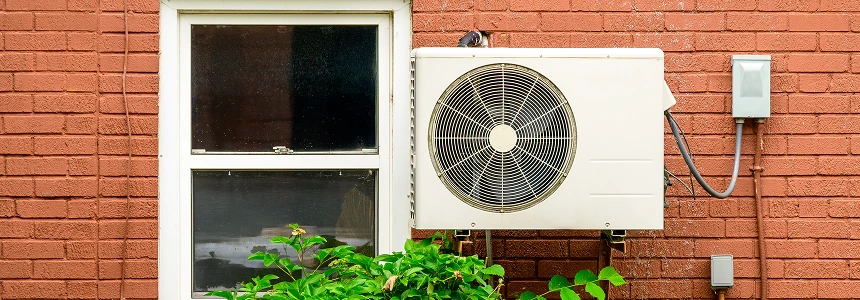
Your air conditioner is probably one of the greatest consumers of electricity in your home during the summer. If you want to know how efficiently it’s using that energy to cool your home, you need to pay attention to its SEER score. With some basic knowledge of AC efficiency ratings, you can be empowered to reduce your energy bills when it comes time to repair or replace your cooling system.
SEER is an acronym that stands for seasonal energy efficiency ratio. This figure comes from taking the total BTUs of cooling during a single cooling season and dividing it by watt-hours of electricity consumed in the same amount of time. For example, an air conditioner rated 18 SEER will have an output of 18 BTUs of cooling per watt-hour.
SEER is an effective shorthand for how much energy you can expect an air conditioner to consume. Let’s say you have two air conditioners, one rated 14 SEER and the other 16 SEER, and each deliver the same number of BTUs of cooling in a set timeframe. In this scenario, the 16 SEER appliance will consume less electricity than the one rated 14 SEER.
The U.S. Department of Energy developed SEER ratings in the late 1970s in response to that decade’s energy crisis. The first federally mandated minimum SEER score came in the 1990s, and that minimum has been periodically adjusted up in the years since. In 2023, the government revised the SEER rating calculator to more accurately reflect how air conditioners consume energy and deliver cooling in real-world conditions. For example, the revised calculations better account for the airflow resistance that filters and ductwork generate. The new testing system, known as SEER2, is more rigorous, so revised ratings tend to be 4.5% to 5% lower. An appliance previously rated 18 SEER might now have a rating of around 17.1.
While the federal government sets minimum SEER ratings for air conditioners in the U.S., the requirement is not the same everywhere. Homes and businesses in hot climates will get much more use out of their air conditioning than those in cooler climates, so efficiency standards are more stringent in places that see hot weather for a larger portion of the year. The Department of Energy divides the country into three regions: the North, Southeast, and Southwest. In practice, this means HVAC cooling equipment in Phoenix or New Orleans must have a higher SEER score than that in New York City.
You don’t need to strive for an air conditioner with the highest SEER score you can find. If you live in a northern climate, for instance, you may not use your air conditioner enough over the course of the summer for the energy savings to offset the upfront cost of the appliance in a reasonable amount of time. The right balance between initial investment and energy savings year over year tends to be around 1 to 2 SEER points beyond the federal minimum. So, if you live in the North, target a cooling appliance with a rating or 15 or 16 SEER. If you’re in the Southeast or Southwest where hotter weather predominates, aim for 16 to 18 SEER.
Bear in mind that the Energy Star designation is a good yardstick by which you can measure appliance efficiency. In order to be Energy Star certified, an air conditioner must be at least 16 SEER (or 15.2 in the revised system). That is a score that indicates sufficient efficiency for each of the three regions the Department of Energy has created for the United States.
To give you a better idea of how SEER ratings might help you anticipate cost savings over time, let’s look at a specific example. Say your appliance’s AC tonnage is 3, which equates to around 36,000 BTUs, an average cooling capacity for an air conditioner in the United States. Say also that electricity costs 20 cents per kilowatt-hour, which is a little above the average for the U.S. as of 2026. Finally, imagine that you run this air conditioner for 1,500 hours over the course of the summer. In this scenario, here are the expected annual costs for air conditioners with varying SEER ratings:
You can see how upgrading an existing 10 SEER air conditioner to a new 18 SEER air conditioner can help you realize savings of more than $400 in a single cooling season.
The potential savings are also more significant in regions where you rely on your air conditioner for a longer portion of the year. Take the above scenario but transplant it to New Orleans or Houston, where the total duration of AC usage might be up to 3,000 hours per year. In such a scenario, upgrading from 10 SEER to 18 SEER would save nearly $1,000 in a year.
Ultimately, there are several factors that play into your energy expenditures. Local rates are variable, and ductwork condition, home size, thermostat settings, insulation, and more can affect how much energy you consume.
All air conditioners accumulate wear and tear over time. A modern high-efficiency unit might use less energy and save you money month to month, but even state-of-the-art cooling equipment can break down when a compressor, capacitor, or motor fails. Depending on the nature of the malfunction, AC repair can be expensive, but there is a reliable way to minimize your out-of-pocket costs. If you partner with Liberty Home Guard for HVAC warranty coverage, all you need to do when a problem arises is submit a claim with our team. We’ll work around your schedule to have a technician diagnose and repair the problem as soon as possible.
Of course, you’re not limited strictly to HVAC protection. We cover virtually all home systems and appliances, and we offer a robust menu of home services. Call (855)-953-9695 to learn more.
A 13 SEER air conditioner is no longer considered efficient by modern standards. 13 SEER was the minimum rating from 2006 to 2015, but the Department of Energy has since revised that requirement to 14 SEER in the North and 15 SEER in the Southeast and Southwest. If your home’s air conditioner is rated 13 SEER, you don’t have to replace it immediately. When you eventually buy a new air conditioner, though, your energy bills will reflect the upgrade in efficiency.
SEER ratings measure efficiency, not cooling power. Two air conditioners with different efficiency ratings will both bring your room to your desired temperature, but the appliance with the higher SEER score will consume less energy in doing so.
Pay attention to tonnage or BTUs if you want to gauge an air conditioner’s cooling capacity. But be aware that bigger isn’t necessarily better. An air conditioner should be appropriately sized for a space, and one that is too big will cool the room down before it has reduced the humidity levels, leaving the room feeling uncomfortably clammy.
The return on investment from purchasing a high-SEER rated appliance depends on its efficiency, your energy rates, and how often you use your AC. You can get a good estimate by dividing the additional upfront cost by the expected annual savings on your energy bill. If you spend an extra $1,000 upfront for an appliance with a higher efficiency rating but stand to save $200 in energy bills for the year, you’ll break even in five years.
Yes, if you have an older home, it is possible that you’ll need to update some of the infrastructure to be compatible with a modern high-efficiency appliance. If your cooling system hasn’t been updated in some time, you may need to upgrade the type of refrigerant, thermostat, or other AC components in order to install a unit that meets today’s SEER requirements.
Stay Ahead of Potential
Home Mishaps!
Subscribe to our Liberty Home Guard Newsletter and gain access to exclusive content that ensures your peace of mind.

Subscribe to receive our emails & get
Have questions?
Call us: (833) 544-8273