

Contemplating coverage?
Subscribe to receive our emails & get
$300 OFF!
Have questions?
Call us: (833) 544-8273

Expert-Reviewed Content: Guided by Editorial Standards

Written By David Moreno
Air conditioners are the most conventional means of cooling down a living space, but they’re not the only one. A swamp cooler, or evaporative cooler, can also make a room feel cooler and more comfortable, but they require specific weather conditions to really be effective.
Air conditioners and swamp coolers are quite different in how they operate, even if both ultimately bring down the temperature of a room.
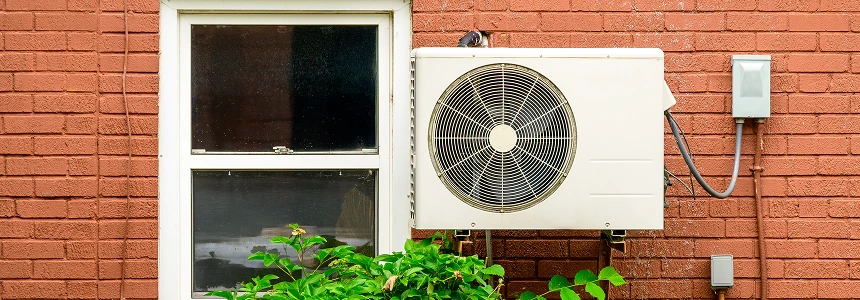
An air conditioner cools down a room by actively removing heat and moisture from the air. Whether it’s a window unit or whole-home central air system, refrigerant travels throughout a closed loop. In a liquid state, cool refrigerant courses through evaporator coils to absorb some of the heat from the air indoors. Now warmer, the refrigerant travels to a compressor where it’s turned into a very hot and highly pressurized gas. Outside, this gaseous refrigerant courses through condenser coils and releases much of its heat to the air. Even if you’re running the AC in an extreme heatwave, the comparatively hotter refrigerant will still release heat and cool down, turning back into a liquid. The refrigerant passes through an expansion valve that lowers its pressure, then returns to the evaporator coils. The cool breeze that you feel from an air conditioner’s vents or central air registers comes from a fan that blows air over the cold evaporator coils.
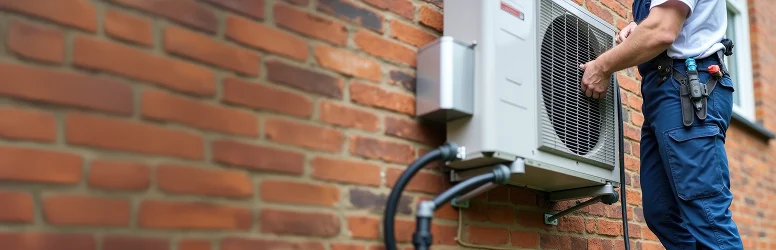
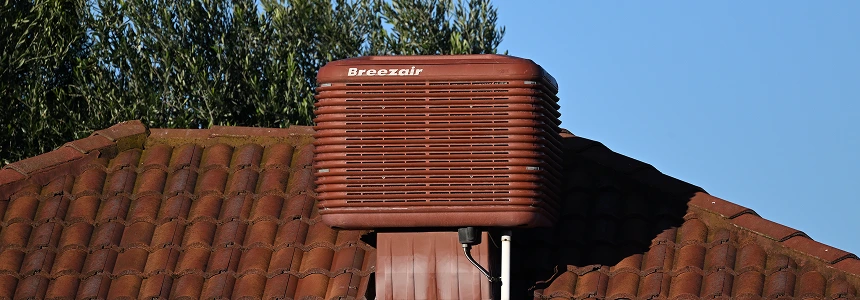
Swamp coolers function according to a totally different principle, and there is no refrigerant involved. Instead, swamp coolers use evaporative cooling to bring down the room temperature. A motorized fan pulls hot and dry air into the appliance so that it courses over water-soaked cooling pads. The water in the cooling pads evaporates into the air, cooling it down by around 15°F to 25°F. The fan blows that cooler air into the room, while a pump moves water from a reservoir to the cooling pads to ensure that they stay saturated.
Air conditioners have a dehumidifying effect whereas swamp coolers actively humidify the air. Whether a swamp cooler makes a living space feel more comfortable is entirely dependent on the weather.
The air can only hold so much moisture. If the relative humidity is below 40% or so, which it commonly is in desert climates, then the evaporative cooling action of the swamp cooler can reduce the temperature of the room substantially. If humidity levels are already at or beyond the comfort zone of 40% to 60% or so, then a swamp cooler will make the space feel damp and clammy.
Unlike a swamp cooler, an air conditioner reduces humidity levels in addition to bringing down the temperature, making it the best choice for locations with muggy weather. In an already dry climate, an air conditioner may not be ideal because it could make the air drier to the point of discomfort.
As the weather or environmental conditions stray from the ideal operating conditions for a swamp cooler or air conditioner, the appliance could run into problems. Here’s what swamp coolers tend to struggle with:
Air conditioners have their points of failure as well. These include:
If you’re unsure of whether your climate justifies a swamp cooler or air conditioner, you can consider a few helpful guidelines. A swamp cooler is a good invest if:
An air conditioner is the better fit for your home if:
Broadly speaking, you should probably opt for an air conditioner if you live in the Northeast, South, Midwest, or Northwest. A swamp cooler is a viable alternative in the Southwest and dry mountain climates.
Use this table for an at-a-glance comparison of swamp coolers and air conditioners.
Swamp Cooler | Air Conditioner | |
Cooling Method | Evaporative cooling | Heat removal via refrigerant |
Ideal Climate | Low humidity | Moderate to high humidity |
Energy Usage | Low (about 75% less energy consumption than air conditioning) | Moderate to high |
Average Cost | $300–$6,000, depending on portable vs. permanent, type of mounting, and ductwork integration | Highly variable; whole-home ACs generally more expensive than swamp coolers |
Maintenance Requirements | Monitor and clean reservoir; clean and replace cooling pads; seasonal service checkup | Clean air filter every 30–90 days; monitor and clean evaporator and condenser coils; annual service checkup |
Airflow and Ventilation | Blows in and cools outdoor air; works best when another window is open to allow for cross ventilation and air displacement | Recycles and cools indoor air; works best when all windows and doors are sealed |
Air conditioners are the most conventional means of cooling down a living space, but they’re not the only one. A swamp cooler, or evaporative cooler, can also make a room feel cooler and more comfortable, but they require specific weather conditions to really be effective.
Whether you opt for a swamp cooler, air conditioner, or both, you might consider protecting your equipment with home warranty coverage. This would ensure that your cooling system can be quickly repaired in the event of a breakdown, and you would be protected from paying the full repair cost out of pocket. With Liberty Home Guard’s award-winning coverage, you can bundle swamp cooler or AC protection with coverage for your broader HVAC, plumbing, and electrical systems. Call (855)-953-9695.
A swamp cooler might lower the temperature by a few degrees in a humid environment, but no, they don’t work very well in muggy weather. Swamp coolers add moisture to the air and make a room feel clammy and uncomfortable if the relative humidity is already above the comfort zone.
Yes, if you live in a climate that is hot and dry for much of the year but experiences a humid stormy season, you can certainly switch between a swamp cooler and air conditioner as necessary.
Yes, because swamp coolers really only power a motorized fan and small water pump, they use around 60% to 80% less energy than air conditioners use. The compressor in an air conditioner requires a lot of power and drives up energy usage.
Yes, indoor humidity can be a concern with swamp coolers. Because a swamp cooler adds moisture to the air, problems with mold or mildew can be exacerbated if the humidity levels get too high. Track your home’s humidity with a hygrometer. If you notice the relative humidity creeping over 50%, open more windows to introduce drier air from outside. If it’s already a humid day, use an air conditioner for cooling instead.
Stay Ahead of Potential
Home Mishaps!
Subscribe to our Liberty Home Guard Newsletter and gain access to exclusive content that ensures your peace of mind.

Subscribe to receive our emails & get
Have questions?
Call us: (833) 544-8273