

Contemplating coverage?
Subscribe to receive our emails & get
$200 OFF!
Have questions?
Call us: (833) 544-8273

Expert-Reviewed Content: Guided by Editorial Standards

Written By Erin Easley
As a home warranty provider that covers pool equipment, Liberty Home Guard has processed thousands of pool equipment claims. That claims history gives us a ground-level view of which automatic pool cleaner brands hold up over time and which generate the most service calls, a perspective that pure affiliate review sites cannot replicate.
This guide covers all three cleaner types: robotic, suction-side, and pressure-side. Most 2026 guides focus exclusively on robotic cleaners. We include picks at every budget level so you can find the right match regardless of pool size, shape, or existing pump infrastructure.
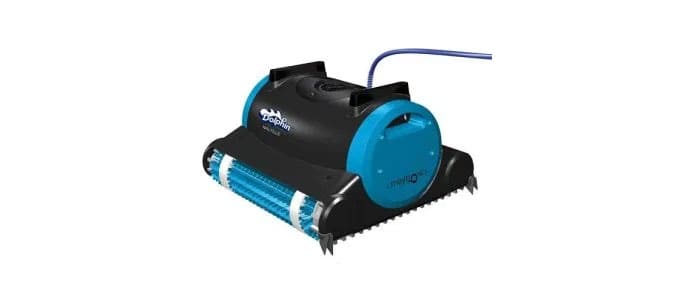
The best automatic pool cleaner overall is the Dolphin Nautilus CC Plus, which cleans pools of all shapes using a 60-foot cord and independent filtration. For budget shoppers, the Baracuda G3 offers reliable suction-side coverage under $300. For heavy debris loads, the Polaris Vac-Sweep 280 is the top-rated pressure-side option.
Our editorial team evaluated automatic pool cleaners based on cleaning coverage (floor, wall, waterline),pool size and shape compatibility, energy efficiency, filter maintenance requirements, cord vs. cordless design, and long-term reliability data drawn from manufacturer specifications and industry research.
Here is a quick comparison of the top six automatic pool cleaners of 2026. For detailed specs and verdicts, see the full reviews below.
Rank | Model | Type | Price Range (Approx.) | Best For |
1 | Dolphin Nautilus CC Plus | Robotic | $500–$700 | Most inground pools, irregular shapes
|
2 | Dolphin Premier | Robotic | $900–$1,100 | Large pools up to 50 ft, heavy debris
|
3 | Polaris Vac-Sweep 280 | Pressure-Side | $350–$500 | Debris-heavy pools with pressure infrastructure
|
4 | Hayward TigerShark RC9990GR | Robotic | $700–$900 | Inclines, steps, pools with steep walls
|
5 | Aiper Seagull Pro | Robotic (Cordless) | $400–$550
| Smaller pools, above-ground, cord-free setup
|
6 | Baracuda G3 | Suction-Side | $200–$280 | Budget buyers, standard inground pools
|
Prices vary by retailer and are approximate 2026 ranges. Verify current listings before purchasing.
Automatic pool cleaners fall into three distinct categories. Each works differently, costs differently, and suits different pool setups. Understanding the difference before buying saves money and avoids compatibility problems.
The three types of automatic pool cleaners, defined:
Robotic cleaners are self-contained units with their own motors, filters, and navigation systems. They plug into a standard electrical outlet and operate independently of the pool’s circulation system, which means they do not add load to your pool pump. According to the U.S. Consumer Product Safety Commission, robotic pool cleaners typically operate on 12 to 24 volts and should always be plugged into GFCI-protected outlets to reduce the risk of electric shock.
Most robotic cleaners cover the pool floor, walls, and waterline in a single cycle. Higher-end models add app-based scheduling, multi-surface scanning, and cordless operation.
Robotic cleaners generally carry the highest upfront cost but the lowest long-term energy costs, because they operate independently of the pool filtration system and do not require the pool pump to run during cleaning cycles. Better circulation from robotic cleaning also improves chemical distribution in pool water, which can reduce chemical costs over time.
Safety note: Robotic cleaners should be removed from the pool before swimmers enter. Cords and hoses can create entanglement hazards, per the New York State Department of Health. Pool vacuums and automatic cleaners should only be used when the pool is unoccupied.
Suction-side cleaners connect to the skimmer or a dedicated suction port and use the existing pool pump to create vacuum pressure. They move randomly or in a programmed pattern across the pool floor and walls, pulling debris into the pool’s existing filtration system.
Suction-side cleaners are the most affordable category and require no separate power source or booster pump. The tradeoff is that they run on your pool pump, adding wear to that system over time. If you notice pool pump flow problems, a suction-side cleaner’s performance will drop accordingly, as it depends on steady water pressure.
These cleaners suit smaller or standard-shaped inground pools on tighter budgets. They perform best on flat or gently sloped pool floors.
Pressure-side cleaners use the return pressure of filtered water to move through the pool, and some require a separate booster pump. Debris is collected in an attached bag rather than routed through the pool’s main filter, which reduces filter maintenance.
Pressure-side cleaners excel in pools with heavy debris loads, such as pools near trees or in areas with frequent wind. They are a cost-effective middle option between suction-side and robotic, though upfront costs rise significantly if a booster pump is required.
The six picks below represent the strongest options in each category for 2026. Each section includes a mini spec table and a clear "Best for:" verdict.
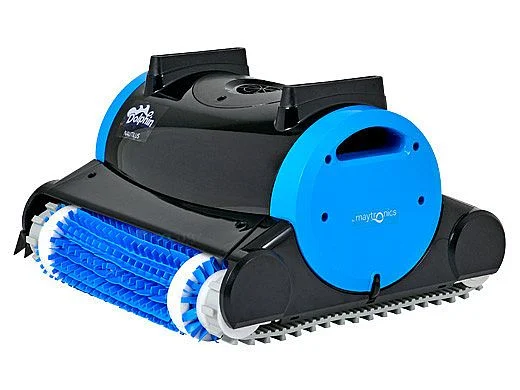
The Dolphin Nautilus CC Plus (the current version of the original Dolphin Nautilus, model 99996323) is the top overall pick for most inground pool owners. It uses dual scrubbing brushes and a dual-filter system to clean pool floors, walls, and the waterline in a single two-hour cycle.
The Nautilus CC Plus is built around a 60-foot cord, which gives it substantially more reach than most comparably priced robotic cleaners. That extra cord length is especially important for pools that are not rectangular or that measure on the larger side. If your pool has curved edges, freeform shapes, or exceeds 40 feet in any direction, the 60-foot cord prevents the unit from being tethered too tightly to work efficiently. This cleaner is the best match for those with pools that are not in a rectangular shape or that are larger in size.
The Wi-Fi-enabled version adds smartphone scheduling so you can run cycles during off-peak hours without being home, which pairs well with pool and home maintenance apps that track cleaning schedules and water chemistry.
The original model number 99996323 has been succeeded by the CC Plus line, but replacement parts for earlier Nautilus units remain widely available.
Spec | Detail |
Price Range | Approx. $500–$700 |
Cord Length | 60 feet |
Surface Coverage | Floor, walls, waterline |
Filter Type | Dual cartridge (fine and ultra-fine) |
Scheduling | Weekly timer (app control on Wi-Fi model) |
Best For | Non-rectangular pools, pools 40+ feet |
Best for: Homeowners with large or irregularly shaped inground pools who want a reliable all-surfaces robotic cleaner at a mid-range price.
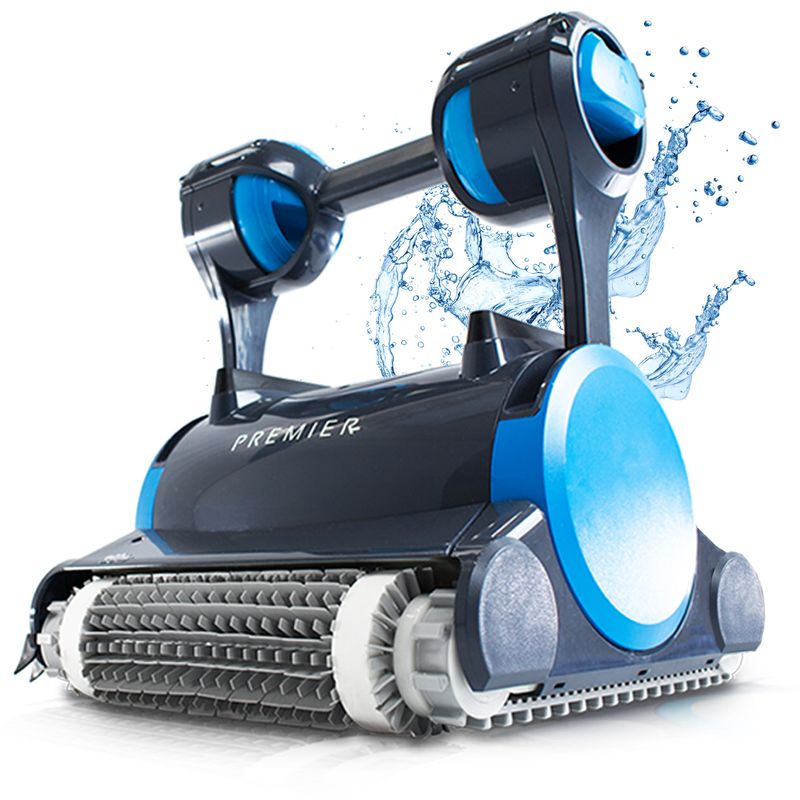
The Dolphin Premier is Maytronics’ premium tier robotic cleaner and one of the most frequently cited picks in current AI Overviews and expert roundups for 2026. It is designed specifically for larger pools and complex shapes, handling pools up to 50 feet in length.
The Premier uses multi-layer filtration with three interchangeable filter options: ultra-fine, fine, and oversized debris. Owners who deal with a combination of fine silt and larger leaf debris can switch filter types between cycles without purchasing a separate unit. The cleaner’s active scanning technology maps the pool floor and adjusts its path to maximize coverage, which makes it more efficient in pools with benches, shallow entries, or irregular floor contours.
Remote control capability is included, allowing you to manually direct the cleaner to specific problem areas without lifting it out of the water. For pools with persistent algae patches or heavy sediment in corners, that manual override is a practical advantage.
At its price point, the Dolphin Premier competes with the Hayward TigerShark on wall performance but covers a larger pool surface per cycle and offers more filtration flexibility.
Spec | Detail |
Price Range | Approx. $900–$1,100 |
Pool Size Limit | Up to 50 feet |
Cord Length | 60 feet |
Filter Type | Multi-layer (three interchangeable options) |
Remote Control | Yes |
Best For | Large pools, heavy mixed debris loads |
Best for: Owners of large inground pools (40 to 50 feet) with varied debris types who want premium cleaning coverage and filtration flexibility.
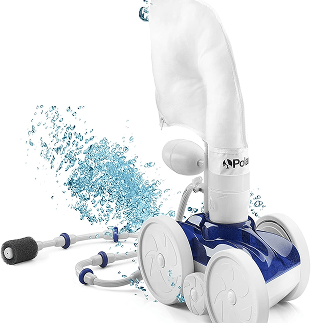
The Polaris Vac-Sweep 280 is the most versatile pressure-side cleaner available and works on any inground pool. It can vacuum the floor, the walls, and the steps, covering the full surface of an inground pool without robotic technology or an independent power source. This is also the best pool cleaner for those who frequently have too much dirt or small leaf particles getting into the pool, because debris is captured in the cleaner’s own filter bag rather than routed to the pool’s main filter.
The Vac-Sweep 280 connects to the pool’s return line and uses water pressure to propel itself. It does not require an electrical outlet. The filter bag is easy to remove and rinse between uses.
Compared to Dolphin robotic cleaners, the Polaris Vac-Sweep 280 costs significantly less upfront but requires connection to a booster pump or dedicated pressure line, making it better suited for pools already equipped with that infrastructure.
The Polaris is a strong long-term value for pools in high-debris environments, particularly those near trees or in areas prone to windblown leaves and dirt.
Spec | Detail |
Price Range | Approx. $350–$500 |
Type | Pressure-side |
Pool Compatibility | Any inground pool |
Debris Bag | Yes, included |
Booster Pump Required | Recommended (required for some installations) |
Best For | Debris-heavy pools, pools with pressure infrastructure |
Best for: Inground pool owners with heavy debris loads and existing booster pump or dedicated pressure return line who want a reliable, lower-cost cleaner.
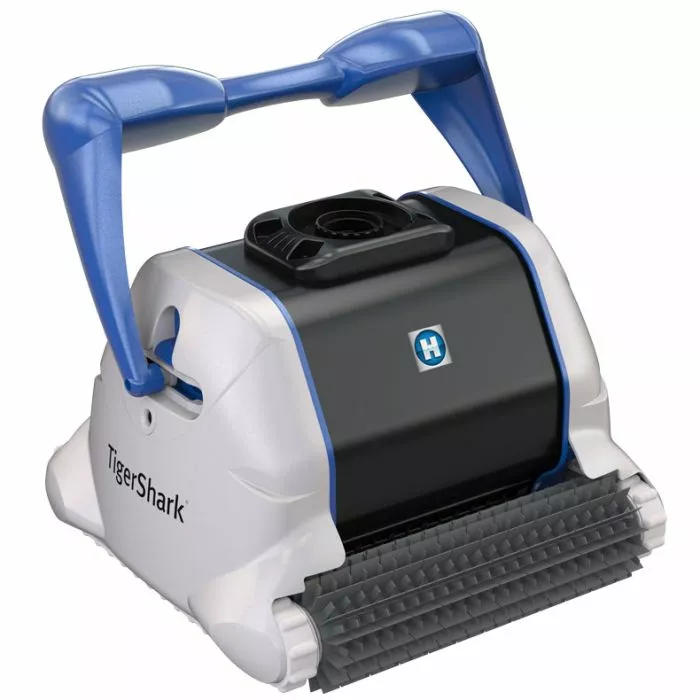
The Hayward TigerShark (model RC9990GR) is the strongest robotic option for pools with significant slope variation, pronounced steps, and steep walls. Its combination of cord reach, floor-mapping intelligence, and easy filter access makes it a top contender in the $700 to $900 range.
The TigerShark’s 55-foot cord gives it substantial reach across most standard inground pools, and it performs strongly on inclines, steps, and walls where many mid-range robotic cleaners lose traction or miss surface area. Pools with beach entries, tiered floors, or deep steps benefit most from the TigerShark’s drive system.
One standout feature is how easy the filter is to clean. The filter cartridge lifts out from the top of the unit without tools, rinses quickly under a hose, and snaps back into place. For owners who run cleaning cycles several times a week, that ease of maintenance adds up over a pool season.
The TigerShark also maps out the floor of your pool to find the most efficient route to clean it. Rather than moving randomly, it calculates a systematic path that reduces redundant passes and improves cycle efficiency, particularly in pools with irregular perimeter shapes.
Hayward TigerShark vs. Dolphin is one of the most-searched comparisons in this category. The TigerShark edges out the Dolphin Nautilus on incline performance and filter access; the Dolphin Nautilus leads on cord length and app scheduling features.
Feature | Hayward TigerShark RC9990GR | Dolphin Nautilus CC Plus |
Price Range | ~$700–$900 | ~$500–$700 |
Cord Length | 55 feet | 60 feet |
Floor Mapping | Yes | Yes |
Wall Cleaning | Excellent on inclines/steps | Good on standard walls |
Filter Access | Top-load, tool-free | Side cartridge access |
Best For | Steps, inclines, steep walls | Non-rectangular, larger pools |
For sourcing replacement parts for either model, see our guide on where to buy pool cleaner replacement parts.
Spec | Detail |
Price Range | Approx. $700–$900 |
Cord Length | 55 feet |
Surface Coverage | Floor, walls, steps |
Floor Mapping | Yes |
Filter Access | Top-load, tool-free |
Best For | Inclines, steps, steep-walled pools |
Best for: Pool owners with pronounced steps, sloped floors, or steep walls who prioritize easy filter maintenance alongside strong wall coverage.
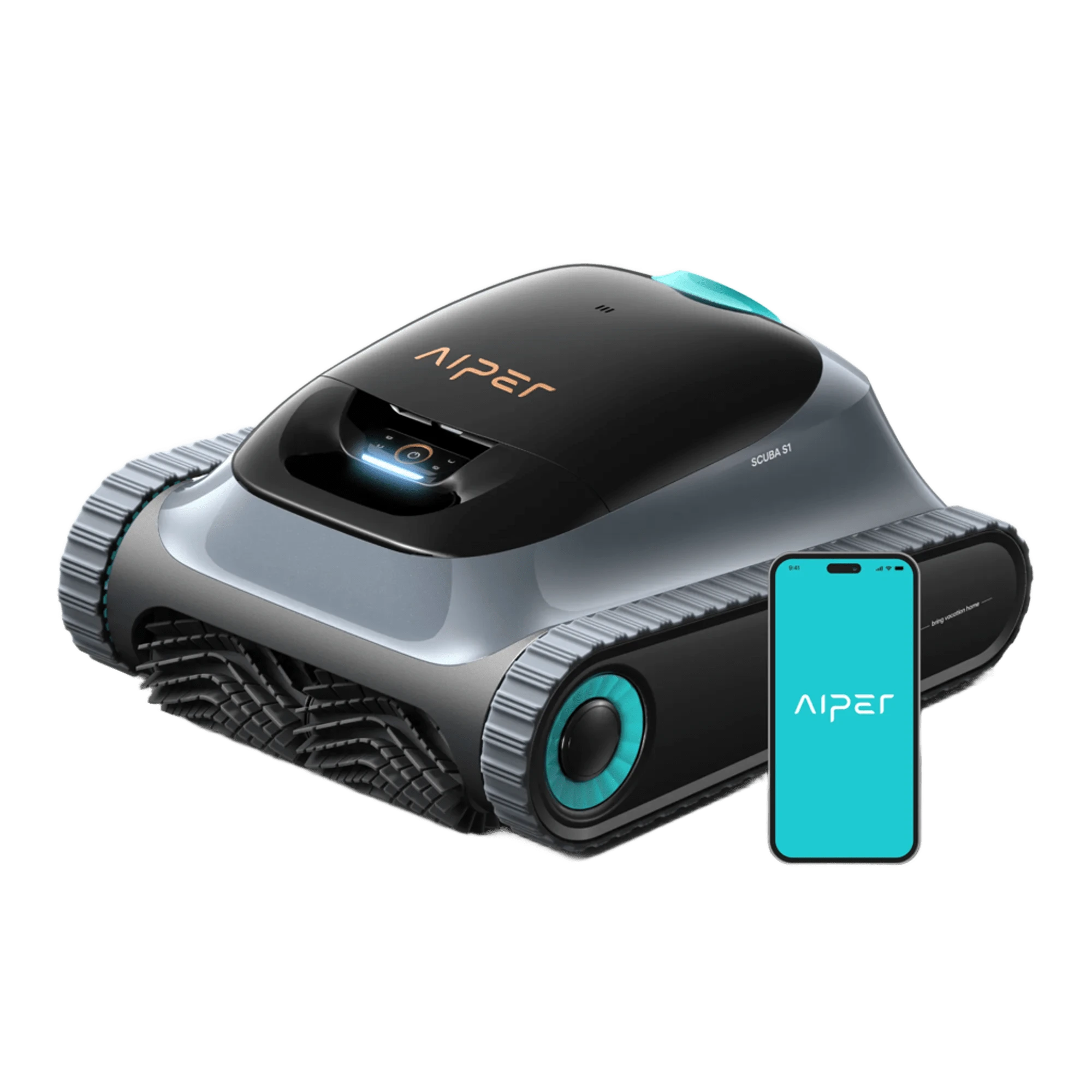
Cordless robotic pool cleaners are the fastest-growing segment of the 2026 market, and the Aiper Seagull Pro is the leading entry-level option in that category. It eliminates the power cord entirely, running on an onboard battery that delivers approximately 90 minutes of cleaning per charge.
The Seagull Pro handles pools up to 861 square feet, which makes it well-suited for above-ground pools, smaller inground pools, and spa or plunge pool setups. Because it requires no power cord or booster pump, setup is straightforward: charge the unit, drop it in, and retrieve it when the cycle ends.
Without a cord, there are no tangle risks and no GFCI outlet required at poolside. The unit self-parks near the pool’s edge when the cycle completes, making retrieval easy.
The limitation of cordless design is battery runtime. At 90 minutes, the Seagull Pro is efficient for pools under 400 square feet but may require two cycles to fully clean a pool in the 600 to 861 square foot range. For larger pools over 40 feet, a corded robotic cleaner will deliver more consistent full-pool coverage per session.
Spec | Detail |
Price Range | Approx. $400–$550 |
Battery Life | ~90 minutes per charge |
Pool Size Limit | Up to 861 sq ft |
Cord | None (cordless) |
Surface Coverage | Floor, lower walls |
Best For | Smaller or above-ground pools, cord-free setups |
Best for: Owners of smaller inground or above-ground pools who want a cord-free robotic cleaner without the complexity of booster pumps or electrical outlet placement.
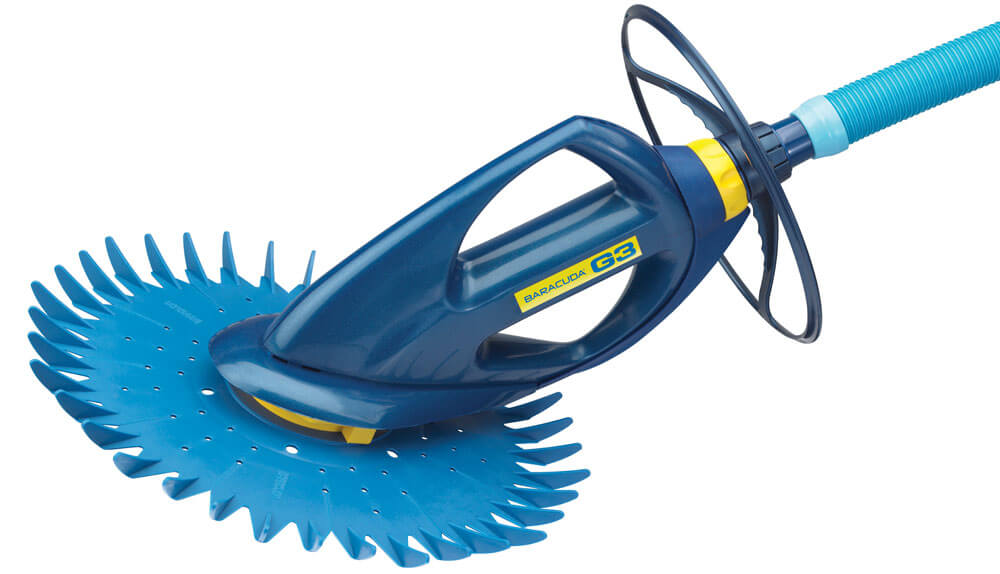
The Baracuda G3 (model W03000) is the most reliable budget suction-side cleaner for standard inground pools. It connects to the skimmer or a dedicated suction port and uses the existing pool pump to generate the vacuum pressure it needs to move and collect debris. No separate booster pump is required.
The G3 can navigate steps, ladders, and corners with no problem, which is a limitation that eliminates many cheaper suction-side competitors. It also adjusts its performance based on the power flow of your pool system, which means it compensates automatically for variations in pump speed rather than losing suction or getting stuck.
The G3’s Diaphragm technology drives its movement and creates a strong, consistent vacuum across varying floor surfaces. It works on concrete, vinyl, and fiberglass. At under $300, it delivers floor-level cleaning that compares favorably with suction-side units at twice the price.
For pools with heavy or irregular debris, the G3 will move debris to the skimmer basket rather than capturing it in a separate bag, so skimmer basket cleaning frequency increases during heavy-use seasons.
Spec | Detail |
Price Range | Approx. $200–$280 |
Type | Suction-side |
Pool Compatibility | Standard inground pools, all surfaces |
Steps/Corners | Yes |
Booster Pump Required | No |
Best For | Budget buyers, standard inground pools |
Best for: Budget-conscious pool owners with standard-shaped inground pools who want reliable floor cleaning without the cost of a robotic unit.
Choosing the right automatic pool cleaner comes down to four variables: pool size and shape, surface material, cord preference, and budget. Getting one wrong means buying a cleaner that underperforms or creates ongoing maintenance problems.
Pool size determines which cleaners are even compatible with your setup. Most robotic cleaners specify a maximum pool length, typically 33 to 50 feet, and running a unit beyond its rated range results in incomplete coverage. For smaller pools under 400 square feet, a cordless robotic cleaner or a suction-side cleaner like the Baracuda G3 is sufficient. For pools over 40 feet or with irregular shapes, choose a robotic cleaner with scanning technology, such as the Dolphin Premier or Dolphin Nautilus CC Plus.
Custom-shaped pools, including freeform, kidney, and lagoon designs, present a unique challenge. Suction-side cleaners move somewhat randomly and may miss sections of non-standard pool shapes. Robotic cleaners with active floor-mapping, such as the Hayward TigerShark and Dolphin Premier, calculate efficient cleaning paths and adapt to irregular perimeters more reliably. For the best results in a custom-shape pool, a scanning-equipped robotic cleaner is the right choice.
Suction-side cleaners like the Baracuda G3 are safe on all pool surface types: concrete, vinyl, and fiberglass. They do not use brushes that can scratch softer surfaces.
Robotic cleaners vary. Many use brushes optimized for concrete or rough plaster. If your pool has a vinyl liner or fiberglass shell, check the manufacturer specs for brush type before purchasing. Models with soft rubber brushes or dual-material brush systems, such as the Dolphin Nautilus CC Plus, are generally safe on vinyl and fiberglass. Hard-bristle models designed for textured concrete can damage softer surfaces with repeated use.
Cordless robotic cleaners, such as the Aiper Seagull Pro and the Beatbot AquaSense 2 Ultra, are a growing 2026 category. Cordless suits smaller pools and above-ground setups, and eliminates outlet placement concerns at poolside. The tradeoff is battery runtime: most cordless units top out at 60 to 90 minutes per charge, limiting their usefulness in pools over 40 feet.
Corded robotic cleaners, such as the Dolphin Nautilus CC Plus and Hayward TigerShark, generally offer longer run times and cover more surface area per cycle. For pools over 30 feet, a corded robotic cleaner delivers more consistent complete coverage. Corded units should always be plugged into a GFCI-protected outlet per CPSC guidelines.
Just as common home maintenance problems can sneak up on homeowners who skip seasonal checks, pool cleaner performance issues often trace back to setup decisions made at purchase: wrong cord length, wrong brush type, or wrong cleaner category for the pool size.
Automatic pool cleaners span a wide price range, and the right budget tier depends on pool size, surface complexity, and how much ongoing maintenance you want to handle.
Robotic cleaners carry higher upfront costs but lower ongoing energy costs, because they run independently of the pool pump and do not add wear to that system. Home warranty coverage for pool equipment can offset unexpected repair costs when motors, pumps, or drive systems fail outside the manufacturer warranty period.
For sourcing replacement parts, see where to buy pool cleaner replacement parts to avoid inflated pricing through aftermarket channels.
The Hayward TigerShark vs. Dolphin comparison is one of the most searched questions in the automatic pool cleaner category. Here is a direct side-by-side of the two most closely matched models.
Feature | Hayward TigerShark RC9990GR | Dolphin Nautilus CC Plus |
Price Range | ~$700–$900 | ~$500–$700 |
Cord Length | 55 feet | 60 feet |
Floor Mapping | Yes | Yes |
Wall Cleaning | Excellent (inclines, steps) | Good (standard walls) |
Filter Access | Top-load, tool-free | Side cartridge access |
Warranty | Typically 2 years | Typically 2 years |
Best For | Stepped, sloped, steep-walled pools | Non-rectangular and large pools |
Verdict: The Hayward TigerShark RC9990GR holds the edge for pools with pronounced steps, inclines, and steep walls, where its drive system and top-load filter access are practical advantages. The Dolphin Nautilus CC Plus wins on cord length (60 feet vs. 55 feet),app scheduling features, and price. For most standard inground pools without significant elevation changes, the Dolphin Nautilus CC Plus offers better overall value. For pools with complex geometry, heavy steps, or steep walls, the TigerShark is worth the premium.
Yes, for most inground pool owners, a robotic pool cleaner pays for itself within two to three pool seasons. The primary savings come from energy efficiency and reduced pump wear.
According to the U.S. Department of Energy, robotic pool cleaners can reduce a pool’s circulation-system load by up to 30% and cut pump run time by up to two hours per day. That reduction in pump runtime translates directly to lower electricity costs and reduced strain on the pool pump motor.
The energy savings are most significant for owners switching from pressure-side cleaners with booster pumps. Filtration and cleaning account for approximately 70% of a pool’s total energy use. Switching from a booster-pump pressure cleaner to a robotic cleaner can save 1,000 to 2,000 kWh per year, according to ETCC California.
Most robotic pool cleaners last 5 to 7 years with proper maintenance, which includes regular filter cleaning, covered storage between seasons, and use of a GFCI-protected outlet. Understanding how long pool equipment lasts helps set realistic replacement timelines and budget accordingly.
When pool equipment fails, when pool equipment stops working the repair bill can arrive unexpectedly. A home warranty plan that covers pool equipment reduces that financial exposure. Get a home warranty quote to see coverage options for pool systems and mechanical equipment.
One important limitation: automatic pool cleaners reduce but do not eliminate manual brushing. Per the Arizona Department of Environmental Quality, corners, steps, and tight areas still benefit from periodic hand brushing to prevent algae buildup, even with regular robotic or suction-side cleaning.
Protect What’s Most Important With
Get A Free Quote
America’s #1 Home Warranty
Dolphin robotic cleaners operate independently of the pool pump and suit most inground pools, covering floors, walls, and the waterline in a single cycle. Polaris pressure-side cleaners like the Vac-Sweep 280 excel in pools with heavy debris loads and dedicated pressure lines. For most residential pools, a Dolphin robotic cleaner offers lower long-term operating costs, because it does not run on the pool pump. The Polaris is the stronger choice for debris-heavy environments where bag collection is preferable to filtering debris through the main pool filter.
Most robotic pool cleaners last 5 to 7 years. Factors that shorten lifespan include infrequent filter cleaning, outdoor storage without a cover, and plugging into outlets without GFCI protection. Regular maintenance, including after-season storage and periodic drive belt inspection, can push the upper end of that range. Just as standing water and appliance maintenance can degrade appliance parts over time, neglecting filter and brush cleaning accelerates wear on robotic cleaner motors and drive systems.
The Dolphin Sigma is widely recognized as one of the most feature-rich robotic pool cleaners available in 2026, offering AI-based navigation, tri-filter technology, and smartphone app scheduling for pools up to 50 feet. The Beatbot AquaSense 2 Ultra is another top-tier option for buyers prioritizing cordless operation, with onboard sensors and multi-surface mapping. Both represent the current ceiling of consumer robotic pool cleaner technology.
No. Per the Arizona Department of Environmental Quality, automatic pool cleaners do not fully replace manual brushing. Corners, steps, and tight surface areas often require hand brushing to prevent algae buildup, even with regular robotic or suction-side cleaning. Automatic cleaners handle the majority of pool surface maintenance efficiently, but periodic manual brushing in hard-to-reach areas remains necessary for complete algae prevention.
Match the cleaner's rated pool size to your pool's square footage and length. Most robotic cleaners specify a maximum pool length of 33 to 50 feet. For smaller pools under 400 square feet, a cordless robotic cleaner or suction-side cleaner is sufficient. For pools over 40 feet or with irregular shapes, choose a robotic cleaner with active scanning technology, such as the Dolphin Premier or Hayward TigerShark, to ensure complete surface coverage.
Stay Ahead of Potential
Home Mishaps!
Subscribe to our Liberty Home Guard Newsletter and gain access to exclusive content that ensures your peace of mind.

Subscribe to receive our emails & get
Have questions?
Call us: (833) 544-8273