



Contemplating coverage?
Subscribe to receive our emails & get
$200 OFF!
Have questions?
Call us: (833) 544-8273

Expert-Reviewed Content: Guided by Editorial Standards

Written By Ellie Brooks
Opening your washer after a cycle to find a drum full of water is one of the more frustrating appliance surprises a homeowner can face. But before you call a repair technician, know this: most washing machine drainage problems have more than one cause that don’t require professional help.
This guide walks you through every likely reason why there is standing water in your washing machine, how to diagnose each one, how to remove the water safely, and, crucially, how to stop the problem from coming back.
Quick warranty note: If your machine is still under a manufacturer’s warranty, check the terms before opening anything up. DIY repairs can void coverage. When in doubt, contact the manufacturer first.
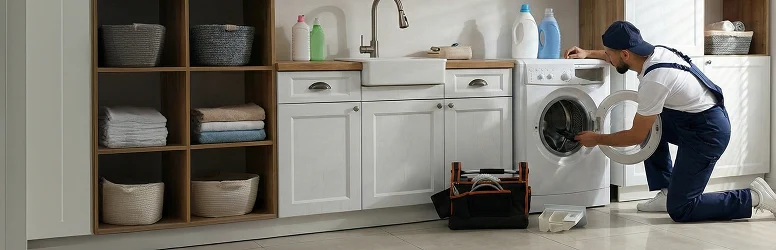
The single most common reason water sits in the drum is a blocked drain filter. Most modern washers, especially front-loaders, have a small filter near the bottom of the machine that traps lint, hair, coins, and fabric debris. Manufacturers typically recommend cleaning it every three to four months, but many homeowners go years without touching it.
Where to find it: Front-loading machines usually have a small access panel near the bottom front. Top-loaders may have the filter under the central agitator or along the rim of the drum. When in doubt, check your model’s manual.
Signs your filter is clogged:
How to clean it:
Real-world example: The Samsung 5E/5C error code, one of the most-searched washer error codes in 2025, is triggered almost exclusively by a clogged filter or kinked drain hose. Clearing the filter resolves the majority of these cases without any professional service.
Your washer expels wastewater through a corrugated drain hose connected to a wall standpipe. If this hose gets kinked, crushed, or internally clogged, water has nowhere to go, and it pools in the drum.
Common culprits inside a clogged hose: lint balls, accumulated detergent residue, clumps of hair, and occasionally small items like a forgotten sock or a baby’s shoe.
How to check and clear it:
2026 note: High-capacity front-loaders introduced widely after 2022 produce significantly more wastewater per cycle. If your standpipe was installed for an older, smaller machine, it may be undersized, causing backed-up water that mimics a machine drainage fault.
If the hose is clear and water still won’t drain, the problem is likely the drain pump. The pump actively forces water upward through the drain hose. Without it working properly, the water just sits.
Signs of a failing drain pump:
How to diagnose and address it:
New example: GE’s SmartHQ-connected washers can display real-time diagnostic data through their app, helping distinguish between low-flow issues and pump motor failures.
Many washing machines, particularly older top-loaders, use a lid switch sensor to confirm the lid is closed before initiating the spin or drain cycle. If this sensor malfunctions, the machine may refuse to drain because it thinks the lid is still open.
Front-loading machines use a door latch sensor with similar logic. A failed sensor leaves water sitting in the drum at the end of what appears to be a complete cycle.
How to test the lid switch:
Sometimes the washer itself is fine. The problem may be your home’s plumbing. The standpipe, or the wall drain your hose empties into, may be partially clogged, too narrow, or set at the wrong height, causing water to back up into the machine.
How to check:
2026 context: An increasing number of homeowners are discovering that their standpipes, originally installed for older, smaller washers, can’t handle the higher drain flow rates of modern high-efficiency machines. If your standing water problem started after replacing an old washer with a new high-capacity model, this is worth investigating before assuming the new machine is defective.
Modern washers have sensors that detect excessive drum imbalance during the spin cycle. If an imbalance is detected, the machine pauses or stops, sometimes before the final drain cycle completes. The result: standing water in the drum.
Causes and fixes:
HE washers use significantly less water per cycle than traditional top-loaders, which is great for utility bills but creates a quirk: because there’s less water volume to dilute buildup, lint, detergent residue, and mineral deposits accumulate faster in filters and hoses. Homeowners switching from a conventional top-loader to an HE front-loader often find they need to clean the filter monthly rather than quarterly.
Additionally, HE machines require HE-labeled detergent in smaller amounts. Using regular detergent, or too much HE detergent, creates excess suds that can overwhelm the drain system and leave sudsy standing water in the drum. Many machines, including Samsung, LG, and Whirlpool models, may show a “SUD” or “Sd” error code in this scenario.
Before you can make any repairs, you’ll need to get the water out. Here are your options, from simplest to most hands-on:
Method 1: Run the “Drain & Spin” cycle. Many machines have a dedicated drain-only mode. Try this first. If it works, your problem may be intermittent.
Method 2: Gravity drain through the hose. Unplug the machine. Detach the drain hose from the standpipe and lower it into a bucket positioned on the floor. Let gravity do the work. You’ll likely need to empty the bucket several times.
Method 3: Drain via the filter access port. On front-loaders with an accessible filter panel, slowly open the filter cover with towels positioned underneath. The water drains gradually through the port. Empty the pan as needed.
Method 4: Siphon. Place one end of a garden hose or tube into the drum and the other end into a drain or bucket at floor level. Start the siphon using a hand pump or suction and let gravity clear the water.
Consistent maintenance is the single most effective way to avoid standing water problems. Here’s a practical schedule:
Frequency | Task |
After every load | Empty pockets before washing; leave the door/lid ajar to let the drum dry |
Monthly | Clean the drain filter; run a cleaning cycle monthly (hot water + washing machine cleaner or white vinegar) |
Every 3 months | Inspect the drain hose for kinks or cracks; wipe door gasket/seal |
Every 6 months | Check all hose connections for tightness; verify machine is still level |
Annually | Inspect inlet hoses for wear and replace if cracked or bulging |
Additional tips:
Most standing water issues are DIY-friendly, but some situations warrant a service call:
For brand-specific drain issues, see our symptom guides: Kenmore washer won’t drain, Samsung washer not draining, GE washer won’t spin or drain, and Hotpoint washer not draining.
Appliance repair costs have risen significantly. The average washing machine repair now runs $150–$400 depending on the part and region, and a full pump replacement with labor can approach $300. A home warranty with appliance coverage can offset these costs substantially.
A quality home warranty plan typically covers mechanical and electrical component failures, including drain pumps, motors, and lid sensors, due to normal wear and tear. What’s generally not covered: cosmetic damage, misuse, and damage from failure to maintain the appliance, such as a catastrophically clogged filter that was never cleaned. To understand how this differs from what comes in the box, see our guide on home warranty vs. manufacturer warranty.
If you’re weighing your options, look for a plan that covers all mechanical components of the washer, not just specific named parts. Consider whether extended warranties make sense for your appliance age and budget. Liberty Home Guard’s washing machine coverage includes all mechanical components and parts, including pump and motor failures.
Note that standpipe/plumbing issues may not be covered under a standard appliance plan. A separate systems plan or combined coverage is needed if the fault lies in your home’s drain lines rather than the machine itself.
For brand-specific warranty details, see our guides for Samsung, Whirlpool, GE, and Kenmore appliances.
There’s a reason Liberty Home Guard was rated the #1 Home Warranty Service by U.S. News and World Report for 2021, 2022, 2023, and 2024. Check out our services.The Best Home Warranty Service
The most likely culprits are a clogged drain filter, blocked drain hose, faulty drain pump, or failed lid/door sensor. In HE front-loaders, a small amount of water in the door gasket channel is normal; visible pooling in the drum is not.
In front-loading HE washers, a small amount of water (less than a cup) in the rubber door gasket is by design, keeping the seal from drying out. Visible standing water in the main drum after a cycle is not normal and should be diagnosed.
Every 3–4 months for normal use. If you have pets, wash heavy items frequently, or notice slow draining, clean it monthly.
Yes. Excess suds interfere with the drain cycle and can trigger "SUD" or "Sd" error codes that halt the machine before it fully drains. Always use HE detergent in HE machines, in the correct amount.
It depends on the cause. Mechanical failures like a failed drain pump are typically covered. Issues stemming from lack of maintenance (e.g., a severely neglected filter) may not be. See what plumbing issues home warranties cover for more detail.
Stay Ahead of Potential
Home Mishaps!
Subscribe to our Liberty Home Guard Newsletter and gain access to exclusive content that ensures your peace of mind.

Subscribe to receive our emails & get
Have questions?
Call us: (833) 544-8273