





Contemplating coverage?
Subscribe to receive our emails & get
$200 OFF!
Have questions?
Call us: (833) 544-8273

Expert-Reviewed Content: Guided by Editorial Standards

Written By Ryan Merchant
If your breaker keeps tripping and cutting power to parts of your home, you’re not alone. While it’s easy to assume a blackout or outage is to blame, a tripped breaker is often the culprit. Understanding why your circuit breaker keeps tripping can help you protect your home from potential electrical hazards.
This guide explains the top three reasons your breaker keeps tripping, and what you can do to fix the issue safely.

A circuit breaker is a critical safety device that protects your home from electrical overloads. It’s located in your home’s breaker panel, also called the service panel, and monitors the flow of electricity through circuits.
When too much electricity flows through a circuit, the breaker automatically shuts off or “trips” to prevent overheating, fires, or electrical damage. After a trip, you can reset it, but if your breaker keeps tripping repeatedly, there’s usually an underlying problem that needs attention.
There are three primary reasons a breaker may keep going off. Let’s take a closer look at each one.
One of the most common reasons a breaker keeps tripping is an overloaded circuit. This happens when multiple high-powered devices draw electricity from a single circuit at once.
Imagine a cold night when the lights, TV, phone charger, and laptop are all plugged in. Then you add a space heater, and suddenly, everything shuts off. Your breaker tripped to prevent overheating and electrical overload.
If this happens repeatedly, rearrange your appliances or move some to different outlets to balance the electrical load.
Pro tip: If your breaker started tripping suddenly, note which devices were running when it happened. That’s often the quickest way to pinpoint the overload.
To understand why overloads happen, it helps to know how much power your appliances actually draw. Most home circuits are rated for either 15 amps or 20 amps. Here is how common devices stack up:
Appliance | Draw | 15A circuit | 20A circuit |
Space heater (1,500W) | 12.5A | Caution — nearly full | Safe alone |
Microwave (1,000W) | 8.3A | Safe alone | Safe alone |
Hair dryer (1,800W) | 15A | Trips if anything else is on | Caution |
Window AC (1,440W) | 12A | Caution — nearly full | Safe alone |
Laptop charger | ~0.5A | Negligible | Negligible |
TV (55-inch) | ~1A | Safe | Safe |
Space heater + microwave | 20.8A | Trips 15A breaker | Trips 20A breaker |
Rule of thumb: a circuit should not run above 80 percent of its rated amperage continuously. That means no more than 12 amps on a 15-amp circuit, and 16 amps on a 20-amp circuit. Anything above that, and you are likely to trip the breaker — especially with appliances that draw extra power when they first start up.
Old, damaged, or improperly installed wiring is another reason a breaker keeps tripping. Modern electrical systems use three main wires:
If a hot wire touches a neutral or ground wire, it causes a short circuit. This unimpeded flow of electricity creates a surge that immediately trips the breaker. A short circuit is a serious safety hazard and should always be inspected by a licensed electrician.
Other common causes include water exposure in outlets or fixtures, wires touching metal boxes or building materials, and rodent or pest damage to insulation. If your breaker keeps tripping even after being reset, wiring damage or a short is likely the cause. Leave the breaker off and contact an electrician immediately.
Short circuits usually give off signals before the breaker trips repeatedly. Watch for any of these:
Any of these signs mean you should stop resetting the breaker and call a licensed electrician. Do not attempt to inspect or repair the wiring yourself.
Ground faults and short circuits are related but distinct — and the type of breaker involved matters. Here is how they compare:
| GFCI breaker / outlet | Standard breaker |
Protects against | Ground faults (current leaking to ground) | Overloads and short circuits |
Sensitivity | Trips at 4–6 milliamps — enough to prevent shock | Trips at rated amperage (15A or 20A) |
Required where | Bathrooms, kitchens, garages, outdoors | All circuits |
Has test/reset button | Yes | No |
Protects people | Yes — designed for shock prevention | No — designed to protect wiring |
If a GFCI outlet in your bathroom or kitchen keeps tripping, do not keep resetting it. It is detecting a real current imbalance — often caused by moisture in the wiring, a failing appliance, or a ground fault in the circuit. Repeated GFCI trips in wet areas should be inspected by an electrician.
A sudden increase in voltage, known as a power surge, can also be why your breaker keeps tripping. Lightning strikes, downed power lines, or grid fluctuations can overwhelm your home’s system.
External surges are usually temporary, but if power surges repeatedly trip your breaker, the issue might be internal, like faulty wiring or a malfunctioning appliance. To protect your home, consider installing a whole-house surge protector or using surge-protected power strips for sensitive electronics.
If your breaker has tripped, follow these simple steps to restore power:
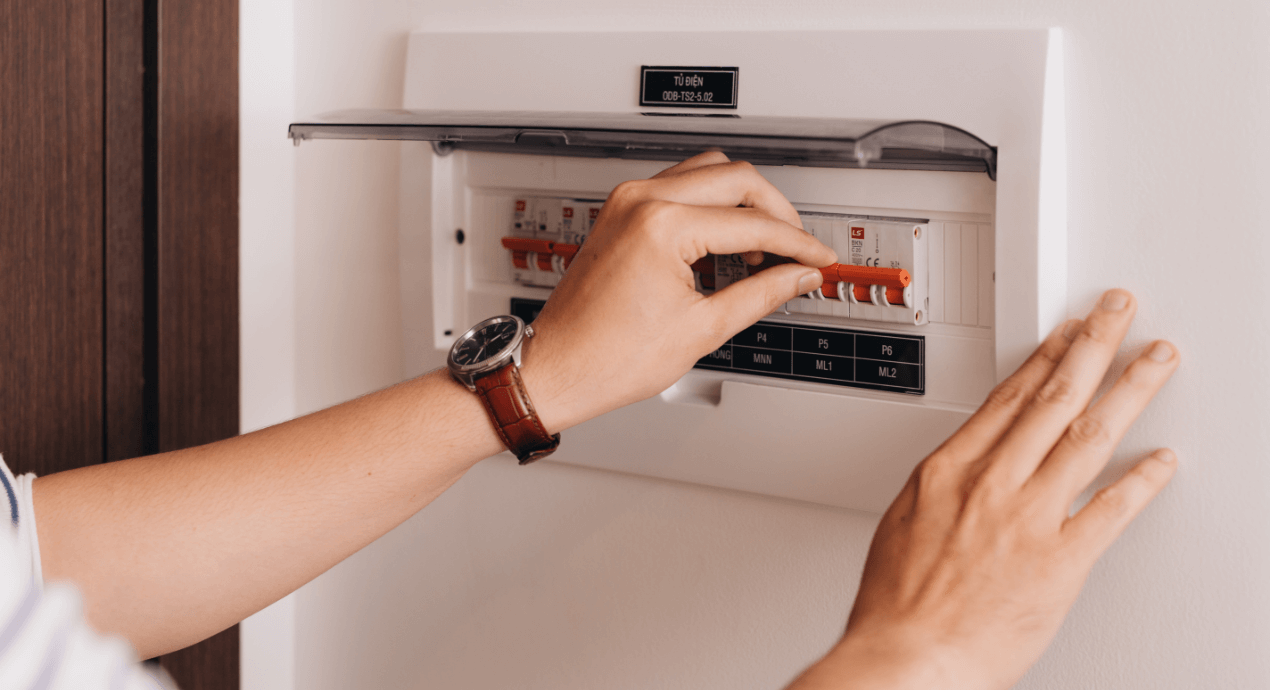
1. Locate your home’s breaker panel. It’s typically found in the basement, garage, or utility room.
2. Identify the tripped breaker. The switch will usually be in the middle position or slightly out of alignment with the others.
3. Flip the switch fully to “Off,” then back to “On.”
4. If the breaker keeps tripping immediately after reset, do not force it back on, this indicates a serious electrical issue.
Older homes may still use fuse boxes instead of modern circuit breakers. If you have blown fuses instead of tripped breakers, replace the fuse with one of the same amperage rating.
If your breaker keeps tripping every time you use certain devices, unplug unnecessary electronics and redistribute the load across other outlets. However, if your breaker keeps tripping without a clear cause, or if it happens daily, it’s time to call a professional electrician. Repeated tripping can signal damaged or deteriorating wiring, faulty outlets or fixtures, ground faults, or major appliance malfunctions.
Never attempt to repair high-voltage wiring yourself. Always leave electrical troubleshooting to licensed professionals. Until the issue is fixed, keep the breaker switch in the “Off” position to reduce the risk of fire or shock.
Not sure which of the three causes applies to your situation? The pattern of when your breaker trips is usually the clearest clue. Use this table before calling an electrician — it may save you a service call.
What you observe | When it happens | Most likely cause |
Trips immediately on reset | Before any device is turned on | Short circuit or ground fault — do not reset again, call an electrician |
Trips when running appliances | Only with heavy loads (heater, AC, microwave) | Overloaded circuit — redistribute devices to other outlets |
Trips during storms or outages | During or right after a power event | Power surge — consider a whole-house surge protector |
Trips with no clear pattern | Random — no consistent trigger | Aging wiring, faulty breaker, or panel issue — schedule an inspection |
Important: if your breaker trips immediately after being reset — before you turn anything on — leave it in the off position and call a licensed electrician. This pattern almost always indicates a short circuit or wiring fault that can cause a fire if the breaker is forced back on.
Home warranty coverage can help you avoid costly electrical repairs when your breaker keeps tripping due to system issues.
Liberty Home Guard’s robust plans cover key electrical components, including circuit breakers, wiring, and service panels. If something goes wrong, a qualified technician can be dispatched to diagnose and fix the problem quickly, usually within 24 to 48 hours.
Get a free home warranty quote or learn more about electrical coverage by calling (833)-545-7060.
If your breaker trips immediately after you reset it, this usually indicates a serious electrical issue such as a short circuit, overloaded circuit, or faulty wiring. Leave the breaker off and contact a licensed electrician to avoid fire or shock hazards.
A circuit is likely overloaded if the breaker trips when you use multiple high-powered devices at once—such as space heaters, microwaves, hair dryers, or window AC units. Spreading appliances across different outlets or circuits can help reduce the load.
Yes. Damaged, loose, or aging wiring can cause short circuits or ground faults, which instantly trip a breaker. Signs include burning smells, flickering lights, or outlets that feel warm. Faulty wiring should only be handled by a licensed electrician.
Unplug electronics and turn off appliances on that circuit, then reset the breaker. If it continues to trip without a clear cause, there may be an electrical fault or system failure that requires professional inspection.
Many home warranty plans, including Liberty Home Guard, offer coverage for electrical systems such as breakers, wiring, and service panels. This can help reduce repair costs and provide fast access to qualified technicians.
Stay Ahead of Potential
Home Mishaps!
Subscribe to our Liberty Home Guard Newsletter and gain access to exclusive content that ensures your peace of mind.

Subscribe to receive our emails & get
Have questions?
Call us: (833) 544-8273