








Contemplating coverage?
Subscribe to receive our emails & get
$300 OFF!
Have questions?
Call us: (833) 544-8273

Expert-Reviewed Content: Guided by Editorial Standards

Written By Ben Joseph
Not every renovation pays you back the same way. Some projects can return more than you spend, while others, despite looking impressive, only recoup a fraction of the investment once you factor in the sale price. If you’re trying to figure out which renovations add value before you commit real money to a project, understanding home improvement ROI is the smartest place to start.
Below, we’ve ranked 12 of the most common home upgrades from highest to lowest percentage recouped, using national industry cost-vs-value data as a benchmark, along with typical cost ranges and estimated value added. Keep in mind these are national averages—actual figures will vary by market, home condition, and project scope.
Give buyers and sellers the best protection  Home Warranty
Provider In America
at great prices!
Become A Partner Today
Home improvement ROI is calculated by dividing the value a project adds to your home by what it cost to complete, then converting that to a percentage. For example, a project that costs $5,000 and adds $8,000 in resale value has recouped 160% of its cost. Anything above 100% means the project effectively pays for itself and then some, while anything below 100% means you’re covering part of the cost out of pocket, even if the upgrade still makes your home more appealing to buyers.
Garage doors consistently top the list of best ROI home renovations, and the math explains why. The project is relatively inexpensive, but a garage door covers a large portion of your home’s front-facing exterior, so buyers notice the upgrade immediately.
A new front door is one of the cheapest ways to boost curb appeal, and buyers tend to associate it with a well-maintained, secure home.
Wrapping the base of your home’s exterior in stone veneer is a smaller-scale project that consistently ranks among the best ROI home renovations, largely because it dramatically changes how a home looks from the street.
If your home already has hardwood underneath worn carpet or a dated finish, refinishing it is one of the highest-recouping interior projects available, since you’re maximizing an asset you already own rather than starting from scratch.
This is where the data on which renovations add value gets interesting. A minor kitchen remodel, refaced or refreshed cabinets, new hardware, updated countertops, and mid-range appliances, consistently outperforms a full gut renovation in percentage terms, even though the finished result is less dramatic.
Updating a vanity, fixtures, lighting, and tile without moving plumbing or expanding the footprint keeps costs contained while still meaningfully improving how a bathroom shows.
New windows won’t fully pay for themselves at resale, but they’re a strong argument for buyers concerned about energy efficiency and comfort, and they can shorten time on market.
A roof replacement rarely tops any home improvement ROI list, but it’s one of the few projects that can be a dealbreaker if skipped entirely. An aging roof often lowers your appraisal more than a new one raises it.
Like roofing, siding replacement leans more toward protecting your home’s value than dramatically increasing it, but it remains one of the more efficient exterior upgrades available.
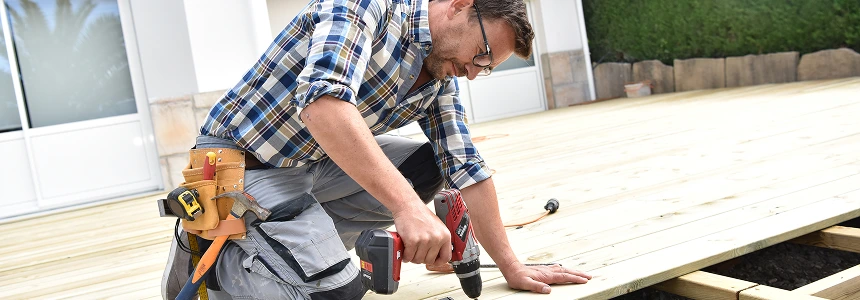
Outdoor living space appeals to a wide range of buyers, and a deck typically costs less per square foot than adding interior square footage, even though the percentage recouped trails higher-ranked projects.
A full gut renovation with custom cabinetry, premium countertops, and high-end appliances looks fantastic, but the percentage recouped drops significantly compared to a minor remodel, since the added cost outpaces what most buyers are willing to pay extra for.
Large additions sit at the bottom of nearly every home improvement ROI ranking. They’re worth pursuing if you plan to enjoy the space for years to come, but they’re rarely justified by resale value alone.
If you’re trying to decide which renovations add value before a near-term sale, the data points in a consistent direction: smaller, targeted, curb-facing projects tend to outperform large-scale interior overhauls on a percentage basis.
If you’re planning to stay in your home for the long haul, though, ROI is only one piece of the decision. Comfort, functionality, and how much you’ll actually enjoy the upgrade matter just as much as what you’d recoup at resale.
Whichever projects you take on, protecting the systems and appliances behind the scenes matters as much as the upgrades themselves. A brand-new kitchen loses its shine fast if the dishwasher or HVAC system fails a few months later. A home warranty from Liberty Home Guard helps homeowners cover those unexpected repair costs, so your renovation budget goes toward the upgrades that add value, not emergency repairs. Explore Liberty Home Guard’s coverage plans to see how the right protection can support every project on your list.
Manage your client base and home warranty information
with our Real Estate Portal:
Garage door replacement delivers the best home improvement ROI, recouping roughly 190% to 200% of its cost. A typical replacement runs $4,000 to $4,500 and adds about $8,000 to $8,500 in resale value. Entry door replacement and manufactured stone veneer rank next. All three share the same trait: a low price tag relative to how much of the home's street-facing exterior they change, which is why buyers register the upgrade instantly.
Primary suite and room additions add the least value relative to cost, recouping only about 20% to 30%. A $100,000 to $175,000 addition typically returns $25,000 to $45,000 at resale. Upscale kitchen remodels are the next-lowest at 40% to 50% recouped. Both underperform for the same reason: project cost scales faster than what buyers will pay extra for. They can still be worth doing if you plan to stay and use the space for years.
Yes, on a percentage basis. A minor kitchen remodel costs $28,000 to $30,000 and recoups 95% to 113%, while an upscale full remodel costs $80,000 to $150,000 or more and recoups only 40% to 50%. Refacing cabinets, swapping hardware, updating countertops, and installing mid-range appliances captures most of what buyers respond to at roughly a quarter of the cost of a gut renovation.
Replace them only if they are near end of life, and understand you are protecting value rather than adding it. A roof replacement recoups about 60% to 65% of its $9,000 to $13,000 cost, but an aging roof can lower an appraisal, trigger inspection objections, or complicate a buyer's financing. If the roof or HVAC still has several years of service left, documented maintenance records are usually a better use of the money than a full replacement.
A home warranty covers the mechanical breakdown of eligible systems and appliances caused by normal wear and tear, including newly installed ones once the manufacturer's warranty expires. It does not cover the renovation work itself, cosmetic damage, or improper installation. Since most manufacturer warranties run just one year, a home warranty is how many homeowners keep coverage on new appliances after that. Liberty Home Guard plans cover major systems and appliances, with add-on options for items outside standard coverage.
Stay Ahead of Potential
Home Mishaps!
Subscribe to our Liberty Home Guard Newsletter and gain access to exclusive content that ensures your peace of mind.

Subscribe to receive our emails & get
Have questions?
Call us: (833) 544-8273