Coupons & Promotions

GE Profile Washer Is Not Starting

A GE Profile washer that won't start almost always falls into one of three situations. Matching your symptoms to the right scenario now prevents misdiagnosis and saves you from replacing an expensive control board when the real problem is a $15 door latch.


Which scenario matches what happened? 

After a power outage or surge 

The machine was mid-cycle or on standby when power cut out, now it's completely unresponsive. GE Profile control boards are susceptible to soft-locks after voltage events. A hard reset (unplug 60 seconds) resolves most of these cases at zero cost.

Start button does nothing; door feels loose

You press start, hear nothing and the cycle never initiates, but the display may still light up. This pattern strongly points to the door lock assembly (30% of GE Profile no-start cases). The washer deliberately blocks the start signal if it can't confirm a locked door.

Display is dead or partially unresponsive

Buttons don't respond, the panel is blank, or only some controls work. This points to the control panel or main control board which is the most common cause overall at 40% of cases. Also check the thermal fuse first; it's a $10 fix that mimics a dead control board exactly.


Once you've matched your scenario, use the triage table below to confirm the likely cause before spending time or money on a repair.


Quick Diagnostic Triage Table

Match what you're seeing to find the most probable cause and your best first move.


What You’re Seeing

Most Likely Cause

Recommended First Step

Completely dead — no lights, no display, no response

No power reaching the unit

Test the outlet with another appliance. Check the circuit breaker. Unplug for 60 seconds and replug. Confirm power cord is undamaged.

Display lights up but pressing Start does nothing

Door lock assembly not engaging (30% of cases)

Firmly close the door and listen for a click. Test the door latch for continuity with a multimeter. Replace latch/switch if no continuity ($15–$40 part).

Panel is unresponsive; some buttons work but not Start

Failed control panel / user interface board (40% of cases) 

Check for moisture or debris on the panel. Try pressing and holding Start for 3 seconds. Run a hard reset. If still unresponsive, test or replace the UI board.

No power at all after a storm or surge

Blown thermal fuse or tripped breaker

Reset the breaker first. Then locate the thermal fuse (near the heating element) and test for continuity. Replace if blown ($10–$20 part). Always investigate the root cause of overheating too.

Washer hums briefly then stops; no cycle

Defective timer or control board signal failure

Run GE's built-in diagnostic (hold "Delay Start" + "Extra Rinse" 3 sec on most models). Note error codes. The timer rarely fails in isolation. Rule out the door lock and control board first.

Starts occasionally but not reliably

Intermittent door lock or loose wiring harness

Inspect the wiring harness connectors behind the control panel for looseness or corrosion. Re-seat all connectors and test the door lock switch again.

Circuit breaker trips immediately when washer is plugged in

Short circuit in the motor or wiring

Do not repeatedly reset the breaker. Unplug the unit and call a technician. A short circuit in the motor or wiring can be a fire hazard if ignored.

Lid/door locked mid-cycle; now won't start a new cycle

Lid lock actuator stuck in locked position

Unplug the unit and wait 2 minutes to release the actuator mechanically. If the door opens but the lock doesn't reset, replace the lid lock assembly ($25–$55 part).


⚠ Model-Specific Note

Most Commonly Affected GE Profile Models For This Symptom

Based on GE Appliances service documentation and technician field reports, these models have the highest reported rate of no-start failures:


  • PTW600BSRWS / PTW605BSRWS (top-load) — control panel and UI board failures are the dominant complaint; GE issued a software update bulletin for some units.
  • PFW850SSVS / PFW900SPVRS (front-load) — door lock assembly wear is the leading cause; latch wear accelerates on high-frequency household use.
  • GTW685BSLWS (standard GE top-load, often paired with Profile dryers) — lid switch and thermal fuse failures reported disproportionately on units 4–7 years old.
  • PFWS4605LRS (front-load) — intermittent start failures traced to wiring harness corrosion near the door lock connector; a common repair in humid climates.


GE's model-specific service bulletins are available on their site. Enter your model number for any open technical service advisories.

Extend the Life of Your Appliance

Find Your Solution Here!

Learn More

Key Reasons for the Problem:

%

40% of reported issues are the

Failed Control Panelquestion

%

30% of reported issues are the

Faulty Door Lock Assemblyquestion

%

20% of reported issues are the

Defective Timerquestion

%

10% of reported issues are the

All Other Causesquestion

Facing a $175–$380 repair bill? Your home warranty should cover that.

Liberty Home Guard's Appliance Guard plan covers GE Profile washers including control boards, door locks, timers and more — parts and labor included under one flat annual cost.
 

See Appliance Guard

Diagnostic and Troubleshooting Steps

Work through these in order. The majority of GE Profile no-start issues are resolved by step 4. Always unplug before touching internal components.
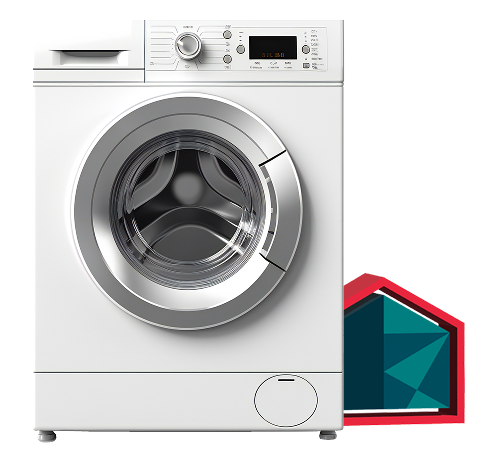
 

Diagnostic & Troubleshooting
Check the Power Supply and Plug

Step 1:

Check the Power Supply and Plug
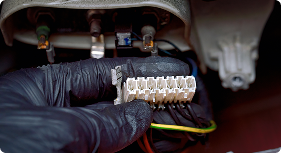
  • Confirm the washer is plugged into a working 120V outlet and test with another appliance. Unplug the washer for at least 60 seconds, then replug. This clears soft-locks on the control board caused by power fluctuations. Many machines restart normally after this step alone.
     
Inspect the Circuit Breaker

Step 2:

Inspect the Circuit Breaker

  • Check your electrical panel for a tripped breaker on the washer's circuit. Reset it by switching fully to "off" then back to "on." If it trips again immediately, there is a short circuit in the machine or wiring, so do not continue resetting it. Call a technician.
Examine the Door Latch or Door Lock

Step 3:

Examine the Door Latch or Door Lock
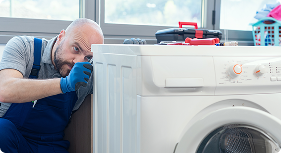
  • Close the door firmly and listen for an audible click. On front-load models, inspect the door latch for cracks or misalignment. On top-load models, check the lid switch. Use a multimeter to test for continuity. No continuity means the part is faulty and needs replacement. This is the second most common cause of GE Profile no-start failures.
Test the Thermal Fuse

Step 4:

Test the Thermal Fuse

  • The thermal fuse is a one-time safety device that cuts power if the washer overheats. A blown fuse produces symptoms identical to a dead control board. Locate it near the heating element, disconnect power, and test for continuity with a multimeter. A blown fuse must be replaced; also investigate what caused the overheating to prevent recurrence.
Examine the Start Button and Control Panel
Step 5:

Examine the Start Button and Control Panel

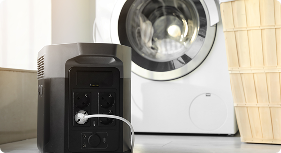
  • Press and hold the Start button for 3–5 seconds. GE Profile washers sometimes require a held press to initiate. Inspect the panel for moisture, debris, or visible damage. On touchpad models, a single unresponsive button can point to a failing membrane switch rather than the entire control board which is a less expensive fix.
Check for Water Supply Issues

Step 6:

Check for Water Supply Issues

  • Ensure that the water faucets connected to the washer are fully open and that there are no kinks or blockages in the hoses. If the water pressure is too low, the washer may not start. 
  • Inspect the hoses and valves for any visible damage, and clear any obstructions that may be blocking water flow.
Run GE's Built-in Diagnostic Mode

Step 7:

Run GE's Built-in Diagnostic Mode
  • Most GE Profile washers have a self-test sequence. A common activation: with the machine off, rotate the cycle selector (if equipped) three positions clockwise, then one counterclockwise, then one clockwise,  then press Start. Consult your model's owner manual for the exact sequence. Document all error codes before calling a technician.
Get a Home Warranty to Safeguard Your Appliances

Step 8:

Get a Home Warranty to Safeguard Your Appliances
  • Protect against unexpected breakdowns—companies like Liberty Home Guard offer appliance-focused coverage.

Key Actions for Homeowners:

  • Confirm the washer is plugged securely into a dedicated 120V outlet. GE Profile washers draw significant amperage and should not share a circuit with other major appliances.
  • Check the circuit breaker panel any time the machine is completely unresponsive. A tripped breaker is the single most overlooked no-start cause and takes 10 seconds to fix.
  • Inspect the door latch for wear or misalignment every 6–12 months. A latch that feels loose or doesn't click firmly is on the way to failure.
  • Clean the control panel with a dry cloth regularly. Moisture and detergent residue are common contributors to button failure and membrane switch degradation.
  • Install a surge protector or whole-home surge suppressor. GE Profile control boards are sensitive to voltage spikes, and a single surge event can cause a board failure worth $200+.
  • Schedule a professional inspection once the machine is 5+ years old to check the thermal fuse, wiring harness connections, and motor condition before they cause an unexpected breakdown.
     
Diagnostic & Troubleshooting

Most Common Repairs With Realistic Cost Ranges

All costs shown reflect parts plus professional labor. DIY parts-only costs are typically 50–70% lower. Prices are national averages and will vary by region and technician.

    • Inspect and replace the power supply cord or outlet ($75-$150 with labor) — A damaged cord or dead outlet is the simplest no-start diagnosis and the cheapest fix. Visually inspect the cord for fraying, burns, or pinches. Test the outlet with a known-working device. Parts alone cost $15–$35 for a replacement cord. If the outlet itself is faulty, that's an electrician job which typically costs $100–$150 for a dedicated outlet replacement.
    • Reset or replace the circuit breaker ($0-$100 with labor) — Resetting a tripped breaker is free and takes 30 seconds. If the breaker repeatedly trips or has failed internally, a licensed electrician will need to replace it. Breaker replacement parts cost $10–$50. The labor cost is the main variable as electrician rates run $75–$150/hour. If the breaker trips due to a fault in the washer itself, the underlying washer repair is a separate cost.

Frequently Asked Questions

  • Why won’t my GE Profile washer start?

    The most common causes, in order of frequency: a failed control panel or user interface board (40% of cases),a faulty door lock or lid switch assembly (30%),a defective timer (20%),and miscellaneous causes like a blown thermal fuse, tripped breaker, or damaged power cord (10%). Start with the free checks like a hard reset, breaker inspection and door latch test before assuming an expensive component failure. 
     

  • How can I reset my GE Profile washer if it's not starting?

    Unplug the machine from the wall outlet and wait a full 60 seconds, not 10 or 30 seconds. This gives the control board's capacitors time to fully discharge and clear any soft-lock state. Replug and press Start. If your model has a cycle selector knob, you can also try GE's diagnostic reset sequence by rotating the knob as described in Step 6 of the troubleshooting section above. If the reset doesn't work, proceed to check the door latch and thermal fuse before assuming board failure.

  • What should I do if the door latch isn’t engaging properly on my GE Profile washer?

    First, inspect the latch strike plate on the door for any cracks or debris preventing full engagement. Close the door slowly and feel for a firm click. If the click is soft or absent, the latch mechanism is worn. Use a multimeter to confirm by testing for continuity through the door lock switch. No continuity means replacement is necessary. GE Profile latch assemblies are model-specific, so confirm your model number before ordering to ensure compatibility. Replacement is typically a 30-minute job for a confident DIYer.

  • How do I test the thermal fuse in my GE Profile washer?

    Unplug the washer before doing anything. Locate the thermal fuse. On most GE Profile models, it sits near the heating element, accessible after removing the rear or top panel depending on the model type. Disconnect the fuse's wire leads and touch your multimeter probes to each terminal. A working fuse shows continuity (the meter beeps or reads near zero ohms). A blown fuse shows no continuity at all. If it's blown, replace the fuse and investigate the cause: blocked exhaust vents, a failing motor, or repeated overloading are common culprits.

  • How much does it cost to fix a GE Profile washer that won't start?

    The cost range is wide depending on the root cause. Free fixes include resetting the breaker and hard-resetting the control board. Inexpensive repairs ($100–$225 with labor) include thermal fuse replacement, power cord replacement, and door lock or lid switch replacement. Mid-range repairs ($175–$380 with labor) include timer replacement and control panel or UI board replacement. At the high end, if a main control board and UI board both need replacement simultaneously, total costs can approach $400–$500. Use the triage table at the top of this page to identify your most likely cause before authorizing any repair

  • Should I repair my GE Profile washer or replace it?

    The standard benchmark is that if the repair cost exceeds 50% of the appliance's current replacement value, replacement deserves serious consideration. GE Profile front-load washers currently retail for $1,000–$1,400; top-load models run $700–$1,000. Against that baseline, a $150–$225 door lock or thermal fuse repair is clearly worth doing on any machine under 8 years old. A $350–$500 control board replacement on a 9–10 year old machine is a closer call. Factor in the age, overall condition, and whether the machine has had prior repairs. If two or more major components are failing simultaneously, replacement is usually the smarter investment.

  • Does a home warranty cover a GE Profile washer that won't start?

    Yes, washer repair is one of the most frequently claimed benefits under appliance warranty plans. Liberty Home Guard's Appliance Guard plan covers GE Profile washers for mechanical and electrical failures including control board failures, door lock assemblies, timers, and thermal fuses — both parts and labor. On a $200–$380 control panel repair, for example, you'd pay only the service call fee rather than the full technician invoice. To see full coverage details and get a personalized quote, visit the Appliance Guard plan page.

Liberty Home GuardLiberty Home GuardLiberty Home GuardLiberty Home GuardLiberty Home Guard

The Most Consumer Centric
Home Warranty Provider.

Homeowners across the country recommend Liberty Home Guard Home Warranty above all others.
Don’t just take our word for it—Liberty Home Guard Reviews speak for themselves!

Oscar was very thorough and competen...

Oscar was very thorough and competent. He arrived on time and finished the electrical work quickly. He was very friendly and answe...

Mimi C.

Liberty home Guard
I did some research before I looked ...

I did some research before I looked for a Home Warranty Company and I also looked at the BBB ratings before I made my decision. Li...

Sally W.

Liberty home Guard
I am impressed with the service I re...

I am impressed with the service I received from Keith Gordon. He explained extensively and clearly what in included in the warrant...

Exie R.

Liberty home Guard
Daniel in Customer service was very ...

Daniel in Customer service was very helpful in setting up a service call. I appreciate the prompt effort.

Frank A.

Liberty home Guard
same day responsive to claim. techni...

same day responsive to claim. technician assigned very quickly. also follow up after completion! 

Vince A.

Liberty home Guard
Rocky Phillips was very nice and hel...

Rocky Phillips was very nice and helpful amazing person, very patient, and very good to work with. Overall amazing  &nbs...

Seven S.

Liberty home Guard
I've been with Liberty for three yea...

I've been with Liberty for three years now and very pleased on how they process claims and pay on time. Looking forward to working...

Rathin S.

Liberty home Guard
This is review is for Kato Nunez. He...

This is review is for Kato Nunez. He was a great in resolving my issue. I really appreciate his patience and excellent customer se...

Mohammad K.

Liberty home Guard
Orlando Peralta provided excellent c...

Orlando Peralta provided excellent customer service. He thoroughly explained the status of my claim and what I needed to do. He pr...

JSL

Liberty home Guard
Jay Cruz was great about explaining ...

Jay Cruz was great about explaining the contractor onboarding and very helpful with process 

Ricky S.

Liberty home Guard
Liberty Home Guard
Appliance Acting Up?
Get Covered Before the
Next Breakdown
Get My Free Quote
Liberty Home Guard
Need help?

Talk to our Liberty Home Guard Agents 24/7.

(855) 953-9695