



Air Conditioner Blowing Hot Ai
Liberty Home Guard

Expert-Reviewed Content: Guided by Editorial Standards

Angel Vallejo

Written By Angel Vallejo

Published 11/09/26
Home Maintenance

Why Is My Air Conditioner Blowing Hot Air Instead of Cold?

Key Takeaways:

  • Cooling problems can often be resolved with simple fixes, such as readjusting the thermostat, cleaning a dirty filter, or resetting a tripped breaker.
  • Other explanations for an AC not cooling properly are worn mechanical parts, frozen or dirty coils, airflow obstructions, and leaking refrigerant.
  • Cleaning a dirty filter and removing ice from a frozen evaporator coil are DIY activities, but more advanced AC repairs involving refrigerant or electrical work require assistance from a licensed technician.
  • Never allow your AC system to continue running if you suspect a problem of any kind. Running the system without resolving the primary problem can cause more damage.

When all you want is a little relief from the heat, there’s little worse than discovering that warm air is coming from your vents when the AC is running. An air conditioner blowing hot air is annoying, and there are a few possible underlying causes. Some are easy to remedy on your own, while others require the attention of an HVAC professional. 
Submit a Claim

Chill out—we’ve got your cooling covered.

Protection that keeps your home comfortable
when temperatures soar.

Explore AC Coverage

Start With These Simple Checks Before Calling for Help

Warm air from the air conditioning system sometimes has a simple and mundane explanation. Before you pick up the phone to call in the pros, it’s worth checking a few settings and ruling out some basic problems.

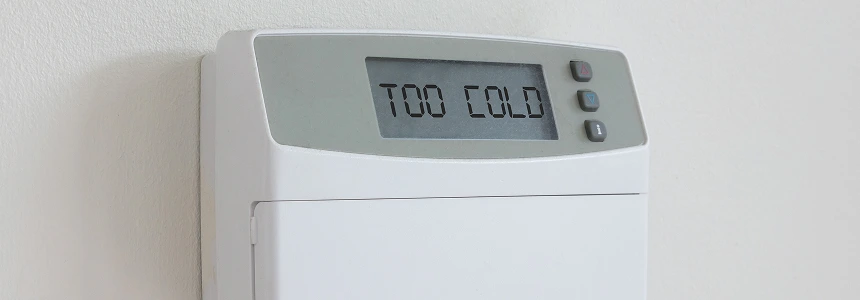
  • Double-check the settings on the thermostat. Confirm that the thermostat is set to cool and that the target temperature is a couple of degrees cooler than the actual temperature of your home. Also confirm that the fan is set to “auto” instead of “on.” When the blower fan runs constantly, it can introduce warm air into your home between cooling cycles.
  • Confirm that the outdoor AC equipment is drawing power. A central air conditioning system usually operates on two circuits, one for the indoor unit and one for the outdoor unit. If the breaker for the outdoor unit trips, cooling will be impossible, but the blower fan inside can continue to run because it draws power from a separate circuit. Check the main electrical panel and reset the outdoor breaker as necessary.
  • Clean or replace the air filter. A dirty filter impedes airflow, which prevents your AC system from effectively removing heat from your home. If you discover cooling problems, check the filter for dust accumulation and clean per the manufacturer’s specifications.
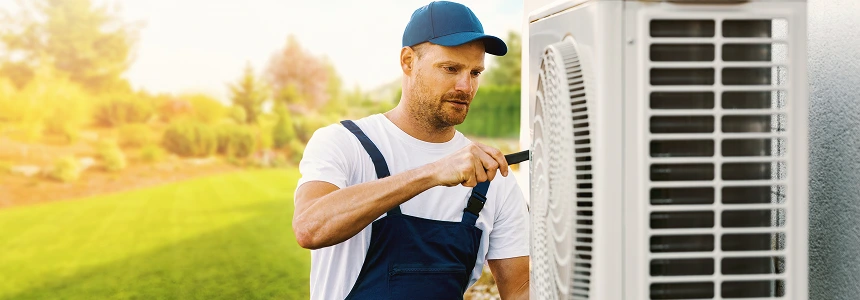
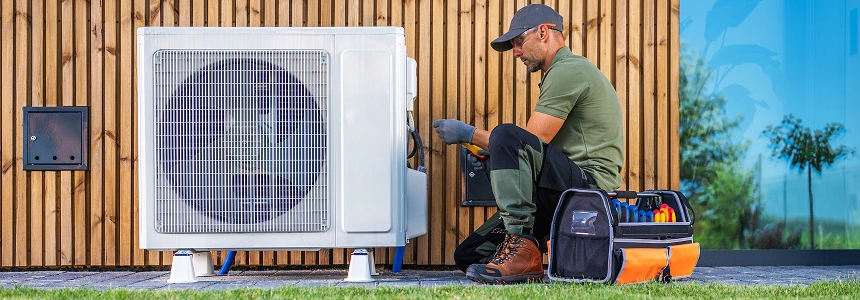
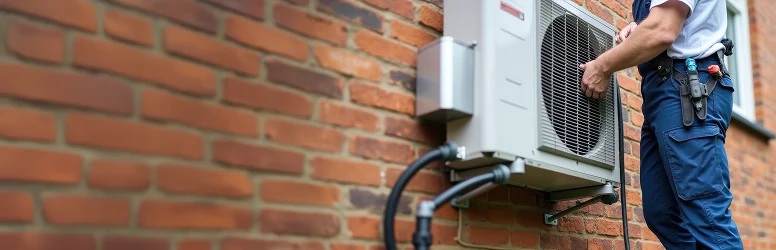
  • Check the outdoor condenser fan. When your cooling system engages, the condenser and outdoor fan should immediately turn on. If the fan doesn’t spin, the system can’t release its heat and the condenser will stay hot, and you may notice warm air blowing inside. Set your system to cool, then go outside. If the fan doesn’t spin, a mechanical or electrical repair is necessary.

Why Your AC Is Running but Not Producing Cold Air

Many of us think of air conditioners as generating cool air, but they actually remove heat to bring down the temperature of a room. Refrigerant courses through a closed system, absorbing indoor heat via an evaporator coil then releasing that heat via the condenser coil outside. There are many critical AC system components that contribute to this heat transfer, and inefficiencies or malfunctions at various points in the system can impair the absorption or release of heat. Here’s why your AC may be running but not delivering any cooling effect:

  • The airflow is obstructed. Air conditioners require steady and unimpeded airflow throughout the system. A dirty filter or blocked vents can prevent the evaporator coil from absorbing heat, resulting in less cooling.
  • The evaporator coil is frozen. If the evaporator coil gets too cold, moisture in the air can freeze on the coil itself, and this ice accumulation interferes with the system’s ability to absorb heat from the air inside.
  • The refrigerant is leaking. The refrigerant level should stay steady in a functional system, but a leak somewhere along the line will cause the refrigerant level to drop. Low refrigerant symptoms might include diminished cooling, ice accumulation, hissing noises from the equipment, and higher energy bills.
  • The condenser coil is dirty. While the evaporator coil absorbs heat, the condenser coil releases it. It’s possible for the coil to become dirty with dust and outdoor debris, and this layer of insulation can cause the coil to retain heat.
  • The outdoor unit is malfunctioning. If there’s a malfunction in any part of the outdoor unit, the system won’t be able to cool properly. If the indoor blower fan is still running, it will simply blow warm air inside.
  • The ductwork is leaky or poorly insulated. A significant source of cooling loss in the summer is inefficient ductwork. If there are leaks in the ducts or the ductwork is not adequately insulated, much of the cool air escapes before it reaches its destination.

What Homeowners Can Fix on Their Own

Depending on the nature of the problem, you may be able to resolve insufficient cooling on your own. Here’s what is safe to manage by yourself:

  • Replace or clean the filter. Some systems have disposable filters, and others have reusable filters that you can clean with a vacuum and a little soapy water. Aim to clean the filter every one to three months.
  • Improve airflow by opening vents and removing obstructions. During a home walkthrough, move any furniture, curtains, rugs, or other furnishings that might be blocking the vents or registers.
  • Remove the ice from a frozen evaporator coil. To thaw a frozen coil, turn off the cooling system but turn on the blower fan at the thermostat. Allow the airflow to melt the ice and resist the temptation to chip the ice away, which can damage the coil. Set a few towels beneath the unit to absorb the water.
  • Clean the condenser coil. If the condenser coil is covered in dirt or dust, use a hose to lightly spray the material away. Don’t use a powerful hose setting or scrub the coil vigorously.

When You Need to Stop Troubleshooting and Call a Technician

When investigating your air conditioning system, you might discover that the cooling problem requires more advanced troubleshooting or sophisticated HVAC knowledge. Here’s when you should ask for help:

  • If you notice leaking refrigerant. Per EPA guidelines, only licensed professionals can handle refrigerant to recharge an AC, service the lines, or clean up a leak.
  • If the outdoor unit won’t turn on. If the outdoor unit ceases to function, there is usually a bad part. Because air conditioners run on high voltage and can retain a charge even when disconnected from a power source, an HVAC technician should be the one to repair or replace the compressor, fan motor, or other component.
  • If the breaker trips repeatedly. A breaker tripping one time isn’t necessarily a cause for concern, but repeated trips point to a more serious electrical issue.
  • If you notice strange odors or sounds. Grinding, whirring, and buzzing noises or the smell of something burning usually suggest an internal component failure.

Never force the system to run after you’ve noticed a malfunction, no matter how minor. At best, you’ll push the system to use more energy to compensate for the inefficiency and raise your energy bills in the process. Other consequences could range from water damage around the indoor unit to compressor failure. What could be a simple fix might become a multi-thousand-dollar fiasco.

How to Prevent Your AC From Blowing Warm Air in the Future

Unless there’s a damaged component or refrigerant leak, problems with air conditioners blowing warm air are usually related to poor upkeep. Incorporate some basic preventive maintenance into your seasonal checklist to avoid the problem.

  • Clean or replace the air filter every one to three months.
  • Have a technician perform a service check-up at the start of the cooling season every year.
  • Check the evaporator and condenser coils weekly to ensure they are clean.
  • Make sure your vents are open and free of obstructions.
  • Monitor your system for changes in airflow, temperature, cycle time, and energy usage.

Repairing Your AC on a Budget

AC repair costs can be steep, especially when they involve expensive components like the compressor or evaporator coil. Fronting the total cost on your own isn’t a foregone conclusion, though. If you have a home warranty, your plan can cover the repair or replacement. Liberty Home Guard can even find you the most qualified technician in your area to perform the work. Explore our coverage options by calling (833)-543-7699.

HVAC Repairs Can Be Costly.

See how smart homeowners
stay ahead of the curve.

Learn More

Frequently Asked Questions

  • How often should AC refrigerant levels be checked?

    Refrigerant cycles through a closed loop, so you shouldn’t need to check the level in a healthy system. It’s a good idea to have an HVAC tech examine the system annually to confirm the pressure and check for leaks.

  • How long does an AC compressor typically last?

    A properly maintained compressor can last for up to 20 years, though 15 is about average. As with any appliance, regular maintenance will increase its longevity. 

  • What is the most expensive AC repair to expect?

    Usually the most expensive AC repair involves repairing or replacing the compressor. Anything involving the evaporator coil is not very far behind. Both jobs involve handling refrigerant and can typically require more labor hours than other AC repairs. 

  • When should you replace an AC instead of repairing it?

    Appliance replacement becomes financially worthwhile if your current system is more than 10 years old or if it’s breaking down frequently. Also, if repair quotes exceed 40% or 50% of the cost of a new system, it’s probably worth opting to replace instead.

  • How much does it cost to recharge AC refrigerant?

    An AC recharge may cost $200 to $800 or more. The price tag is dependent on the type of refrigerant, quantity required, labor hours, any accompanying repairs, and your local cost of living.

Liberty Home Guard
Need help?

Talk to our Liberty Home Guard Agents 24/7.

(855) 953-9695
Liberty Home Guard
Special Offer
GET QUOTE
Liberty Home Guard
Need help?

Talk to our Liberty Home Guard Agents 24/7.

(855) 953-9695