



Contemplating coverage?
Subscribe to receive our emails & get
$300 OFF!
Have questions?
Call us: (833) 544-8273

Expert-Reviewed Content: Guided by Editorial Standards

Written By Angel Vallejo
Dallas summers don’t ease up. From June through September, temperatures regularly climb past 100°F, and your HVAC system runs nearly around the clock trying to keep pace. That kind of demand exposes every weakness in a system, and it does it fast.
If your air conditioner has ever quit on the hottest day of the year, you already know the feeling. And if it hasn’t yet, understanding why Dallas pushes HVAC systems to the edge can help you get ahead of the problem before it becomes an emergency.
Most homeowners assume their HVAC breaks down because of the heat alone. The heat is a factor, absolutely. But the real culprit is duration.
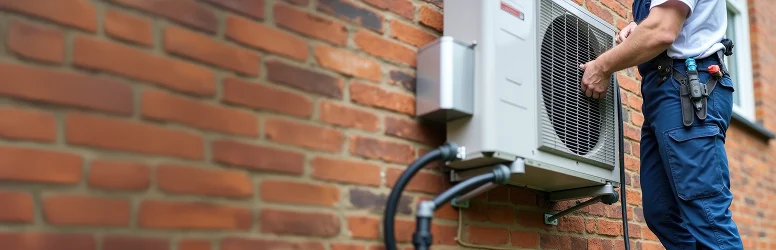
In a moderate climate, an air conditioner might run four to six hours a day during peak season. In Dallas, that same system can run sixteen hours or more. Components that were designed for normal cycling wear down significantly faster when they never get a rest. Capacitors overheat. Motors strain. Refrigerant lines work under sustained pressure they weren’t built to handle continuously. The system doesn’t fail because it’s defective. It fails because nothing mechanical was designed for that kind of relentless output.
Add Dallas’s notoriously high humidity during summer storm cycles, and you compound the stress on your coils and drainage system simultaneously.
Three components tend to break first, and they break in a predictable order.
The capacitor goes most often. It’s the component that gives your compressor and fan motors the electrical jolt they need to start up. When a capacitor weakens under sustained heat, the motor struggles to kick on, draws excess power, and eventually burns itself out. Homeowners typically notice this as a system that hums but won’t cool, or one that kicks off within minutes of starting.
The compressor follows. Compressors are the heart of your cooling system, and they’re expensive to replace. Sustained high-load operation causes the refrigerant inside to run hot, which accelerates internal wear. A low refrigerant charge, often caused by a slow leak that went undetected during the mild spring months, makes compressor failure dramatically more likely once temperatures peak.
Condensate drain lines round out the trio. Dallas’s humidity generates significant moisture inside your air handler. When drain lines clog, which happens frequently during heavy use, water backs up into the system. Some units shut down automatically to prevent water damage. Others simply flood your utility room or attic.
None of this is unusual. All of it is preventable with the right ac home warranty coverage in place.
Let’s be honest. An HVAC breakdown in December is inconvenient. An HVAC breakdown in a Dallas July is a health situation. Elderly family members, young children, and pets face genuine risk when indoor temperatures climb past 85 or 90 degrees, which can happen within hours of a system failure on a 105-degree afternoon.
Beyond safety, summer breakdowns carry a financial sting that most homeowners don’t anticipate. HVAC technicians in Dallas are in high demand from June through August. Service call fees climb. Wait times stretch from days into weeks during peak season. And when the technician finally arrives, the repair bill often lands between $800 and $2,500 for compressor or capacitor work, sometimes higher for full system replacement.
Paying for a repair you didn’t see coming, at a price you didn’t budget for, while waiting in the heat, is exactly the situation a home warranty exists to prevent.
Home warranties vary widely. Coverage terms, service fees, contractor networks, and claims processes differ enough from one provider to the next that the plan you choose matters as much as having a plan at all.
Liberty Home Guard covers HVAC systems comprehensively, including both heating and cooling components, under straightforward terms that don’t bury exclusions in the fine print. When something breaks, you file a claim, pay a predictable service call fee, and Liberty Home Guard dispatches a licensed technician from our vetted contractor network. You don’t negotiate with the repair company. You don’t hunt for someone available in the middle of summer. The process is handled.
Our 24/7 claims availability matters in Dallas specifically. HVAC systems don’t wait for business hours to fail, and our homeowners shouldn’t have to wait either. Claims filed at 11 p.m. on a Saturday get processed the same way they do on a Tuesday morning.
US News & World Report has named Liberty Home Guard the best overall home warranty company, and this year marks the fifth time we’ve earned that recognition. That’s not a fluke. Rankings like that come from consistent performance across real claims, real service calls, and real homeowners who needed someone to come through for them and did.
For Dallas homeowners, where the question isn’t whether your HVAC will face serious stress, but when, that kind of reliability isn’t a perk. It’s the whole point.
The best time to enroll in a home warranty is before you need it. Waiting until your system shows signs of strain puts the coverage you want out of reach at exactly the wrong moment.
Liberty Home Guard offers flexible plans that cover your HVAC system alongside your other major appliances and home systems. Getting a quote takes minutes, and our team can walk you through the right plan for your home and budget.
Dallas summers are relentless. Your protection doesn’t have to be uncertain.
Yes. Like most home warranty providers, Liberty Home Guard applies a 30-day waiting period from your enrollment date before coverage becomes active. This is standard across the industry and exists to ensure the warranty functions as protection against future breakdowns, not as a backdoor repair fund for problems that already exist. The practical takeaway: don't wait until your system is already struggling to enroll. Sign up before peak season arrives so your coverage is fully active when you need it most.
Age alone doesn't disqualify a system from coverage. Liberty Home Guard covers HVAC units regardless of how old they are, provided the failure stems from normal wear and tear rather than pre-existing conditions or improper installation. This matters in Dallas, where many homes still run systems that are ten to fifteen years old. A unit that has been maintained reasonably well and breaks down due to component wear is exactly what the warranty is designed to cover. If you have questions about a specific system, our team can walk you through what applies to your situation before you enroll.
They cover completely different things, and confusing the two is one of the more expensive mistakes a homeowner can make. Homeowners insurance protects your HVAC system against sudden external events: a lightning strike, a fire, storm damage. It does not cover mechanical failure, which is what actually takes most systems down. A home warranty covers the mechanical and electrical failures that insurance won't touch, the compressor that wears out, the capacitor that overheats, the motor that burns through. For Dallas homeowners, both matter. But if you're relying on your insurance policy to cover a summer breakdown, you're likely to be disappointed at the worst possible moment.
A few signals are worth taking seriously. If your system is running longer than usual to reach the set temperature, that points to reduced efficiency, often from a struggling compressor or low refrigerant. Unusual sounds, grinding, rattling, or a high-pitched squeal on startup, typically indicate a mechanical component under stress. Warm air from your vents when the system is running, unexpected spikes in your energy bill without a change in usage, or visible ice forming on the refrigerant lines are all signs that something is working harder than it should. None of these guarantees imminent failure, but all of them are worth a professional inspection before peak season begins. Catching a small problem in May is significantly cheaper than addressing a full failure in August.
Quick answer, yes you can. However, Liberty Home Guard dispatches technicians from its own vetted contractor network, which is how the company maintains consistent service standards and controls the claims process on your behalf. In most cases, you'll work with a contractor assigned through that network. However, if you're in a situation where you've already had emergency work completed or you have specific circumstances, contacting Liberty Home Guard's claims team directly is the right first step. The claims line is available 24/7, and getting clarity before you act protects both your coverage and your wallet.
Stay Ahead of Potential
Home Mishaps!
Subscribe to our Liberty Home Guard Newsletter and gain access to exclusive content that ensures your peace of mind.

Subscribe to receive our emails & get
Have questions?
Call us: (833) 544-8273