







Contemplating coverage?
Subscribe to receive our emails & get
$300 OFF!
Have questions?
Call us: (833) 544-8273

Expert-Reviewed Content: Guided by Editorial Standards

Written By Rachel Cherem
A whole home generator is a desirable piece of home equipment. Who doesn’t want the luxury of regaining power moments after an outage in a heavy storm? But this investment can be as expensive as it is enticing, with current whole house generator cost estimates ranging from $8,000 to $15,000 or more. Let’s run through everything you need to know before you commit.
Whole home generators and portable generators both provide power during local outages, but they are otherwise very different machines. A portable generator is a smaller piece of equipment with a more limited power output. When your home loses power, you can manually start the generator and use some extension cords to connect it to a few essential appliances, such as the refrigerator, space heater, and a couple of lamps. Most portable generators are fueled by gasoline and need to be operated outdoors because they emit carbon monoxide.
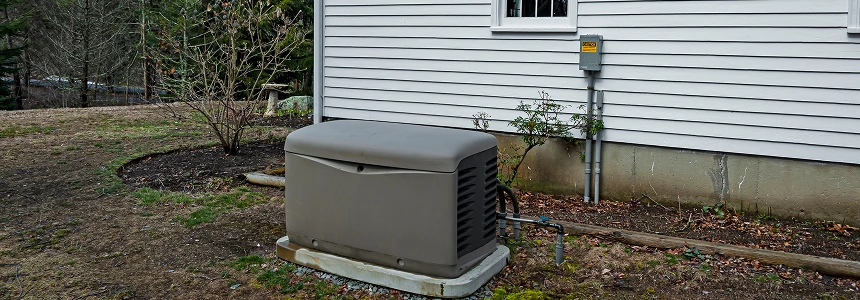
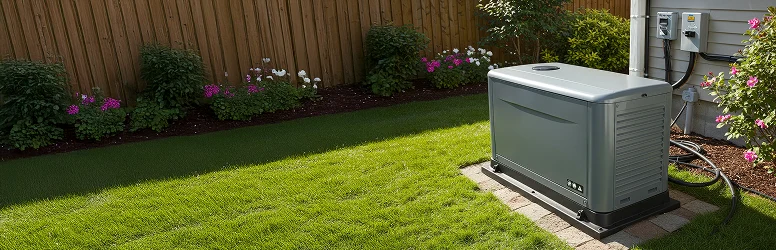
A whole home generator, or standby generator, is a larger machine that sits permanently on a concrete pad behind or to the side of the house. Unlike a portable generator, it is hardwired to the home’s electrical panel with an automatic transfer switch, which enables the generator to switch on as soon as there’s an interruption in utility power. There’s no wrangling of extension cords or manual intervention needed. Just wait 15 seconds or so for the generator to power up, and it’s as if the outage never occurred.
Whole home generators are usually fueled by either natural gas or propane. A natural gas generator requires a dedicated gas line. This eliminates the need to manually refuel, but it’s not an option for every home. Propane generators don’t rely on local infrastructure and can be installed virtually anywhere, but they require an on-site tank that you need to refuel periodically.
Installing a standby generator is a substantial financial investment, and asking a few questions ahead of making a purchase can help you avoid costly rework or buyer’s remorse. Here’s what to consider:
Whole home generators range in capacity, with smaller models delivering an output of 10 to 14 kW and larger models delivering 26 kW or more. The greater the capacity, the more expensive the generator. Before committing to a particular model, you’ll need to consider both your home size and what you want to supply with power during an outage.
A natural gas generator is most convenient if you already have a gas line running to your property. If you don’t, a propane generator is the most common alternative. This will require a fuel tank in addition to the generator itself, and a 250- or 500-gallon tank takes up additional space in the yard. Some generators use diesel or solar batteries, but these are less common.
Manufacturers and local governments may have minimum clearance requirements to keep a generator some distance away from the house, windows, doors, and property lines. Proximity to gas lines and the electrical panel are also considerations.
Due diligence when exploring whether to install a standby generator also entails checking your town or HOA rules. Some locations and organizations restrict where a generator can be placed or how loud it can be.
Your electrical panel’s compatibility with a standby generator isn’t a given. Older panels or small panels may need to be upgraded before they can accommodate an automatic transfer switch.
Installing a whole home generator is a multistep process that will take several days to weeks. Here is what to expect:
Doing a quick search online for generator prices won’t give you the full picture of installation costs. Other factors push the overall cost for most homeowners to between $8,000 and $15,000 or more. Let’s break it down.
Part of the draw of a standby generator is its automatic operation, but it still requires maintenance and upkeep to ensure it’s functional when you need it. Here are some essential generator maintenance tasks to fold into your home maintenance checklist:
Also be sure to check on your generator if it’s been running for more than a few days due to a prolonged outage. You may need to change the oil or schedule an inspection earlier than anticipated.
There’s a reason Liberty Home Guard was rated the #1 Home Warranty Service by U.S. News and World Report for 2021, 2022, 2023, 2024, and 2026. Check out our services.The Best Home Warranty Service
Connecting a generator to a home’s electrical system and gas line can be done in 2–3 days. The full project timeline is typically much longer, though, because of permit requirements, inspections, equipment delivery, infrastructural updating, and so on. These factors can push install times to 3–8 weeks.
Yes, most jurisdictions have permit requirements for whole home generators. Expect an electrical permit to connect the generator to the home’s electrical system and a gas or mechanical permit if connecting the generator to a natural gas line.
A small single-family home could get by with a 14 kilowatt unit to power only essential appliances, such the refrigerator, well and sump pumps, and some lighting. Powering every circuit or supplying power to a large home will require a generator with a capacity in the 20 to 26 kW range.
Yes, a standby generator can run on natural gas, though its power output might be slightly less than if it used propane. Using natural gas as a fuel source also requires access to a natural gas line, which not every home has.
Coverage for generators isn’t usually part of a standard home warranty plan, but Liberty Home Guard does offer generator coverage as an optional policy add-on. With our support, you can have a problem diagnosed and resolved in no time if a mechanical failure knocks your generator offline. Learn more about how our offerings can help you maintain a happy and healthy home by calling (833)-566-9479.
Stay Ahead of Potential
Home Mishaps!
Subscribe to our Liberty Home Guard Newsletter and gain access to exclusive content that ensures your peace of mind.

Subscribe to receive our emails & get
Have questions?
Call us: (833) 544-8273