




Contemplating coverage?
Subscribe to receive our emails & get
$300 OFF!
Have questions?
Call us: (833) 544-8273

Expert-Reviewed Content: Guided by Editorial Standards

Written By Angel Vallejo
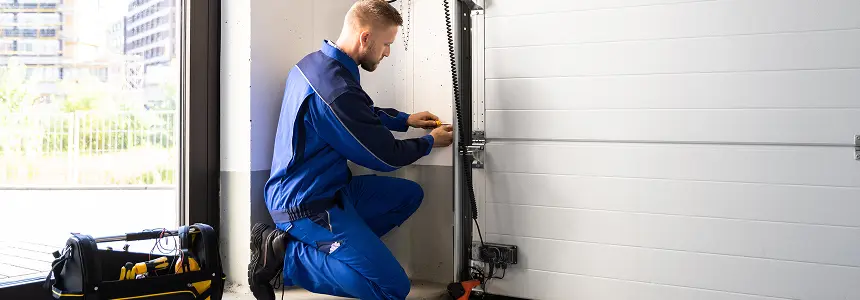
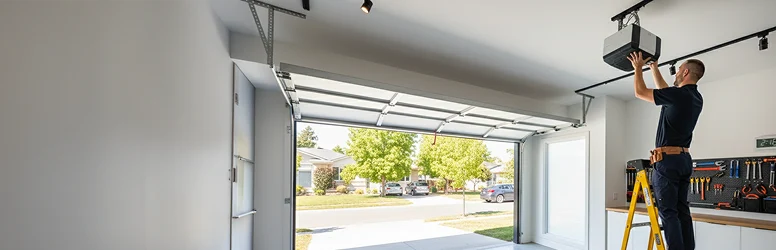
Most homeowners pay between 300 and 700 dollars for a fully installed garage door opener. That’s the honest range, not a marketing number, and it covers the large majority of standard installs nationwide.
Type, horsepower, labor, and a handful of add-ons decide where you land inside that range. This guide breaks down each one, then answers the question homeowners ask right after the price: does anything help cover this if it breaks.
Item | Cost |
|---|---|
National average | $400 to $500 installed |
Typical range | $300 to $700 |
Low end | $200 to $300 (basic chain-drive, simple install) |
High end | $900 to $1,200 (wall-mount jackshaft or smart pro model with add-ons) |
Opener unit only | $150 to $500 |
Labor | $150 to $350 (2 to 4 hours) |
Typically included | Opener unit, rail, sensors, 1 to 2 remotes, wall control, basic installation and programming |
None of that happens by accident. Every dollar in that range traces back to a specific, identifiable decision.
Four factors decide where your project lands: opener type, horsepower, labor, and any accessories layered on top. Take them one at a time and the pricing stops feeling random.
Chain-drive models are the least expensive and the most common, and they handle most single and double doors without issue. Belt-drive units cost more but run quieter, which matters when a bedroom sits above or beside the garage. Screw-drive splits the difference on price and upkeep. Direct-drive and wall-mount jackshaft models sit at the top, chosen for ceiling clearance, fewer moving parts, or the cleanest possible install.
Opener type | Unit cost |
|---|---|
Chain drive | $150 to $250 |
Belt drive | $160 to $350 |
Screw drive | $150 to $300 |
Direct drive | $280 to $500 |
Jackshaft wall-mount | $500 to $750 |
A 1/2 horsepower motor handles most lightweight single doors, and plenty of doubles besides. Heavier, insulated, or solid wood doors need more muscle, typically 3/4 to 1 1/4 horsepower, adding roughly 50 to 150 dollars to the unit price. Undersizing the motor to save money upfront is a false economy. An overworked opener wears out faster, and you end up paying for this decision twice.
Professional installers typically bill 65 to 125 dollars per hour, and most installs take 2 to 4 hours.
For context, the U.S. Bureau of Labor Statistics puts the median hourly wage for electricians at just over 30 dollars nationally. The gap between that number and what you’re billed covers licensing, insurance, and overhead, the same as it would for any licensed trade. It isn’t padding. It’s the cost of hiring someone qualified to do the job safely.
Battery backup runs 50 to 150 dollars. An automatic deadbolt adds 100 to 300 dollars. LED lighting, Wi-Fi, a camera, extra remotes, and a keypad each run 25 to 200 dollars on their own, and none of them are required for the opener to function. Removal of the old unit is usually folded into labor, adding 30 to 75 minutes. Two single doors need two separate openers, close to double the equipment cost plus added labor, since one unit can’t do double duty.
Replacement follows the same logic, with one addition worth knowing about.
Most people searching this aren’t installing an opener where none existed before. They’re swapping out one that’s failed or aged out. The scope looks almost identical to a new install, with removal of the old unit folded in.
Item | Cost |
|---|---|
National average | $450 to $600 |
Typical range | $300 to $900 |
Low end | $250 to $350 (basic chain-drive replacement) |
High end | $900 to $1,200 (jackshaft or premium smart replacement) |
Typically included | Removal and haul-away of the old unit, new opener, rail and sensors, programming |
A genuinely new install can occasionally cost more than a straight replacement, usually for one reason: no outlet exists near the mounting spot, and an electrician has to add one, typically 150 to 350 dollars on top of the opener itself. Replacements skip this step almost every time, since the wiring is already there.
Before going further, it’s worth clearing up a distinction that trips up almost every homeowner shopping for this project.
A garage door opener is an entire operating system, not a single part: motor, logic board, rail, trolley, sensors, wall control, and remotes. When something breaks, it’s rarely the whole system at once. Usually it’s one component, and the motor or logic board fails most often.
Replacing just the motor or logic board costs 80 to 300 dollars in parts and 250 to 600 dollars installed, meaningfully cheaper than a full opener, and the right call whenever the rail, trolley, and sensors are still in good shape. Once a motor-only repair creeps toward the top of that range, full replacement usually makes more sense. At that point you’re paying nearly full replacement price for a partial fix.
That same logic applies to every other repair decision below.
Repair | Parts | Labor |
|---|---|---|
Service call and tune-up | — | $75 to $150 total |
Safety sensors | $25 to $100 | $75 to $150 |
Trolley or carriage | $20 to $60 | $100 to $200 |
Belt or chain replacement and tensioning | $20 to $50 | $100 to $200 |
Logic board | $80 to $200 | $150 to $250 |
Capacitor or limit switch | $15 to $40 | $100 to $180 |
Keypad or remote replacement and programming | — | $25 to $100 total |
Most repairs land between 100 and 350 dollars total. Complex electrical repairs or a full motor replacement can push that to 400 to 600 dollars, and that’s the range where the math starts to tilt toward replacement.
Repair makes sense when the opener is under 8 to 10 years old and the total repair cost stays under roughly 40 to 50 percent of a comparable new opener installed. Replace instead when the opener is 10 to 15 years old or older, when the repair involves the motor or logic board and approaches 300 to 400 dollars, when you want smart features or battery backup, or when the opener lacks required safety sensors altogether. That last one isn’t optional. Sensors are a safety standard, not an upgrade.
A breakdown from ordinary wear and tear is exactly what a home warranty plan is built to help cover. Here’s how that actually works, and what it costs to find out before you need it.
Still deciding whether a warranty is worth carrying at all? What a home warranty covers is the right place to start before narrowing in on openers specifically.
Home warranties generally cover the working parts of an opener, meaning the motor and internal mechanical and electrical components, when they fail from normal wear and tear. What they typically don’t cover is the door itself: panels, tracks, rollers, hinges, chain, and trolley. That distinction matters before you assume a plan covers more, or less, than it does.
Liberty Home Guard lists garage door openers as a covered item under both the Appliance Guard and Total Home Guard plans. Covered components include the motor, control board, sensors, switches, and other internal mechanical parts. The door itself, its structural components, chains, trolley, tracks, rollers, and hinges fall outside coverage, consistent with how most home warranties draw this same line.
Filing a claim is simple: pay a service call fee, and Liberty Home Guard dispatches a technician within 24 to 48 business hours to get your opener back up and running. Labor and installation are covered up to $150 total per term on monthly or annual agreements, and up to $450 on multi-year agreements, so routine repairs are handled without extra cost to you. For covered repairs or replacements, you’re covered up to $2,000 per item (or the item’s book value),meaning the vast majority of garage door opener issues are fully absorbed by your plan.
See the full breakdown of what’s covered and what isn’t in garage door opener warranty coverage, and check the Liberty Home Guard sample policy for the exact dollar limits on your plan. Compare plans to see what fits your home, or get a quote in minutes at no cost.
Coverage details aside, brand still matters when you’re the one writing the check.
Pro-line brands cost more, and the premium buys something real: heavier-duty components, quieter operation, and often a longer manufacturer warranty. LiftMaster runs 500 to 900 dollars installed, with jackshaft models reaching 800 to 1,200 dollars. Chamberlain and Genie price closer to the middle, 350 to 700 dollars installed. Overhead Door, sold mostly through professional channels, prices similarly to LiftMaster’s higher end at 500 to 850 dollars.
By type, installed cost runs 300 to 650 dollars for chain, belt, or screw drive, 500 to 900 dollars for direct drive, and 700 to 1,200 dollars for jackshaft wall-mount units. Chain drive fits budget-conscious installs where noise isn’t a concern. Belt drive is the standard pick for attached garages where quiet operation matters day to day. Jackshaft solves a specific problem: it mounts to the wall instead of the ceiling, useful for low clearance or a ceiling already claimed by storage.
Whatever opener you land on, compare plans to protect it before something fails.
A garage door opener is a small purchase that gets asked about constantly, and now you have the real numbers behind it. Type, horsepower, labor, and a few optional extras decide the final price. Guesswork has nothing to do with it.
If your current opener is already showing its age, find out exactly what’s protected before it turns into a bigger bill. Get a free quote from Liberty Home Guard. Talk to us before the sensor quits, not after.
Protect What’s Most Important With
Get A Free Quote
America’s #1 Home Warranty
Opener-only pricing typically runs 150 to 500 dollars, depending on type, horsepower, and features. Add installation labor, and total installed cost lands between 300 and 700 dollars for most homes.
Professional installation labor typically adds 150 to 350 dollars for two to four hours of work. Combined with the opener itself, most homeowners pay 300 to 700 dollars installed.
Replacement, including removal and haul-away of the old unit, typically costs 300 to 900 dollars. The national average sits closer to 450 to 600 dollars.
The motor is one part of the opener system, not the whole thing, and replacing it alone costs 80 to 300 dollars in parts. Installed, a motor-focused repair runs 250 to 600 dollars, at which point replacing the full opener usually makes more financial sense.
Smart features, Wi-Fi, app control, a camera, or battery backup, add 50 to 200 dollars each. For an attached garage or a household that uses the door daily, that's a modest premium for real functionality.
Most home warranties, including Liberty Home Guard's Appliance Guard and Total Home Guard plans, cover the opener's motor and internal mechanical and electrical components when they fail from normal wear and tear. The door itself typically falls outside coverage. See the full coverage breakdown, then get a free quote to check pricing for your home.
Stay Ahead of Potential
Home Mishaps!
Subscribe to our Liberty Home Guard Newsletter and gain access to exclusive content that ensures your peace of mind.

Subscribe to receive our emails & get
Have questions?
Call us: (833) 544-8273