



Contemplating coverage?
Subscribe to receive our emails & get
$300 OFF!
Have questions?
Call us: (833) 544-8273

Expert-Reviewed Content: Guided by Editorial Standards

Written By Angel Vallejo
Black mold isn’t necessarily the uniquely devastating fungus problem that some sensationalist media would lead you to believe, but it’s still something to discourage from growing in your home. Even if severe illness from black mold is uncommon, its toxigenic byproducts can cause eye or respiratory irritation, allergic reactions, and headaches. Mold is also unsightly, can cause structural damage to your home if left unchecked, and will cause your home’s appraisal value to plummet.
In most cases, mold remediation specialists can remove black mold without much trouble. If you catch the problem early enough, you may be able to get rid of the mold yourself.

The term “black mold” usually refers to Stachybotrys chartarum, a species of greenish-black speckled mold that gained notoriety in the 1990s because of a study that suggested it contributed to lung ailments in infants. This finding is controversial, and most experts today don’t consider S. chartarum to be more dangerous than any other species of mold commonly found in homes.
Many other types of mold appear dark green or black, so “black mold” has become something of an unscientific catch-all for several species. Virtually all of these species thrive in the same conditions, so you can’t be sure whether you’re dealing with S. chartarum or something else without a clinical test. For the average homeowner, though, the specific species is unimportant. Different types of mold, regardless of color, often have the same adverse health effects on vulnerable or sensitive individuals, and all call for the same cleaning and remediation techniques.
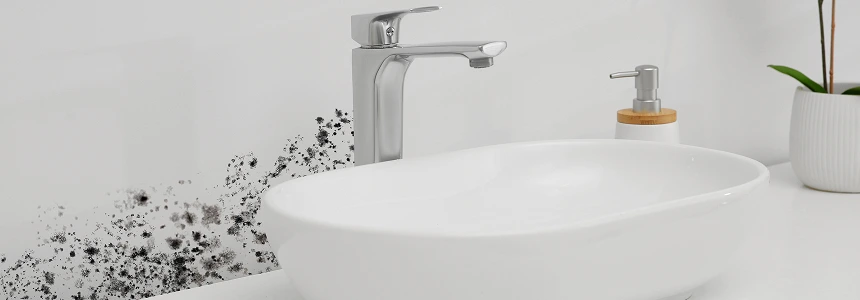
The bathroom is one of the most common sites for mold growth because it supplies in abundance everything mold needs to sustain itself: warmth, water, and food. Steam and heat from showers raises the temperature and moisture content of the air in the bathroom. With two conditions for survival easily met, the mold only needs a food source, which it can find in skin cells, soap scum, dust, and cellulose in the wood and drywall.
Some straightforward tips can help you clean a moldy surface thoroughly without spreading spores or causing cosmetic damage:
After an initial cleaning, assess whether replacement materials are necessary to prevent the mold from returning in force. If left unchecked for several weeks or months, mold can infiltrate porous surfaces. Check the caulk and grout for trace spots of mold, removing old material and applying new mold-resistant caulk or grout as needed. Check the walls and ceiling for drywall that is water-damaged, stained, or discolored, and replace if necessary.
Once the mold is removed, you need to take measures to prevent it from returning. Follow these steps:
Some mold problems are beyond the scope of what the average homeowner can manage. The EPA recommends enlisting professional help if the mold covers an area greater than 10 square feet. That amount of mold usually means the problem goes much deeper, in the walls, above the ceiling, or under the flooring.
You should also contact a professional remediation service if mold continues to return after repeated cleanings, or if there are persistent humidity issues, leaks, or musty odors that have no obvious cause or source.
Mold removal cost estimates are dependent on the size of the problem. Small remediation jobs in a single bathroom might run from $500 to $2,000. If the mold has spread into the walls or adjacent rooms, the cost can quickly inflate to several thousands, exceeding $10,000 in serious cases.
Sometimes the cause of mold growth or moisture problems in the bathroom isn’t a single localized issue, but instead a combination of everyday habits. If you’re concerned about black mold, bathroom habits worth kicking include:
For most healthy people, mild mold growth in the bathroom is not particularly dangerous, causing only minor congestion, coughing, and eye or skin irritation. Infants, older adults, and individuals with asthma, allergies, or a weakened immune system are more susceptible to adverse health effects and, in rare cases, serious illness. Concerns from decades past about deadly or toxic black mold are largely seen by experts today as overblown and based on controversial research.
Bleach isn’t necessarily the best choice to remove mold from grout. Grout is porous, and while mold spores can proliferate deep in the material, bleach doesn’t penetrate as deeply. Bleach may whiten the exterior surface, but that can leave a false impression of the problem being resolved.
If the moisture problem that contributed to the mold growth hasn’t been resolved, mold can start to grow back within two days, with visible patches appearing in one to two weeks. With proper remediation and prevention strategies, mold should not grow back at all.
Yes, a bathroom fan can be an effective tool to prevent mold. Using the exhaust fan during and after a steamy shower keeps humidity levels in check and prevents excess moisture from feeding mold. Also, running a bathroom fan is just one mold prevention strategy that should be used in concert with others.
Homeowner’s insurance is unlikely to cover mold removal unless the mold was caused by a sudden accident, such as a burst pipe. Home warranties don’t typically cover mold remediation either, but they can cover the appliances and systems that can be associated with the mold’s cause or prevention. Liberty Home Guard, for instance, supports plumbing system coverage, which can ensure that your home is free of leaky pipes or fixtures that promote water damage and mold. We also cover exhaust fans, which are critical to maintaining optimal humidity levels to inhibit mold growth.
Learn more about the breadth of our coverage options by calling (833)-566-9479.
Stay Ahead of Potential
Home Mishaps!
Subscribe to our Liberty Home Guard Newsletter and gain access to exclusive content that ensures your peace of mind.

Subscribe to receive our emails & get
Have questions?
Call us: (833) 544-8273