



Contemplating coverage?
Subscribe to receive our emails & get
$300 OFF!
Have questions?
Call us: (833) 544-8273


Expert-Reviewed Content: Guided by Editorial Standards

Written By Angel Vallejo
There’s nothing like cranking up the AC on a brutal summer day, only to get hit with a weird smell instead of cool, fresh air. It’s frustrating, and yes, it can also be a little alarming. The good news? Most AC odors have a clear cause and a clear fix. Let’s break it all down so you know exactly what’s going on and what to do next.
Sometimes yes, sometimes absolutely not. Here’s how to tell the difference fast.
Shut the system off immediately and take action if you smell:
Keep in mind that carbon monoxide (CO) itself has no smell at all. According to the CDC, CO is an odorless, colorless gas, so battery-operated or battery-backup CO detectors near sleeping areas are essential. If you notice exhaust or fuel odors, don’t wait around trying to diagnose it yourself.
What to do right now:
If what you’re dealing with is more of a musty, stale smell, you’re likely safe to keep reading and try a few DIY steps below.
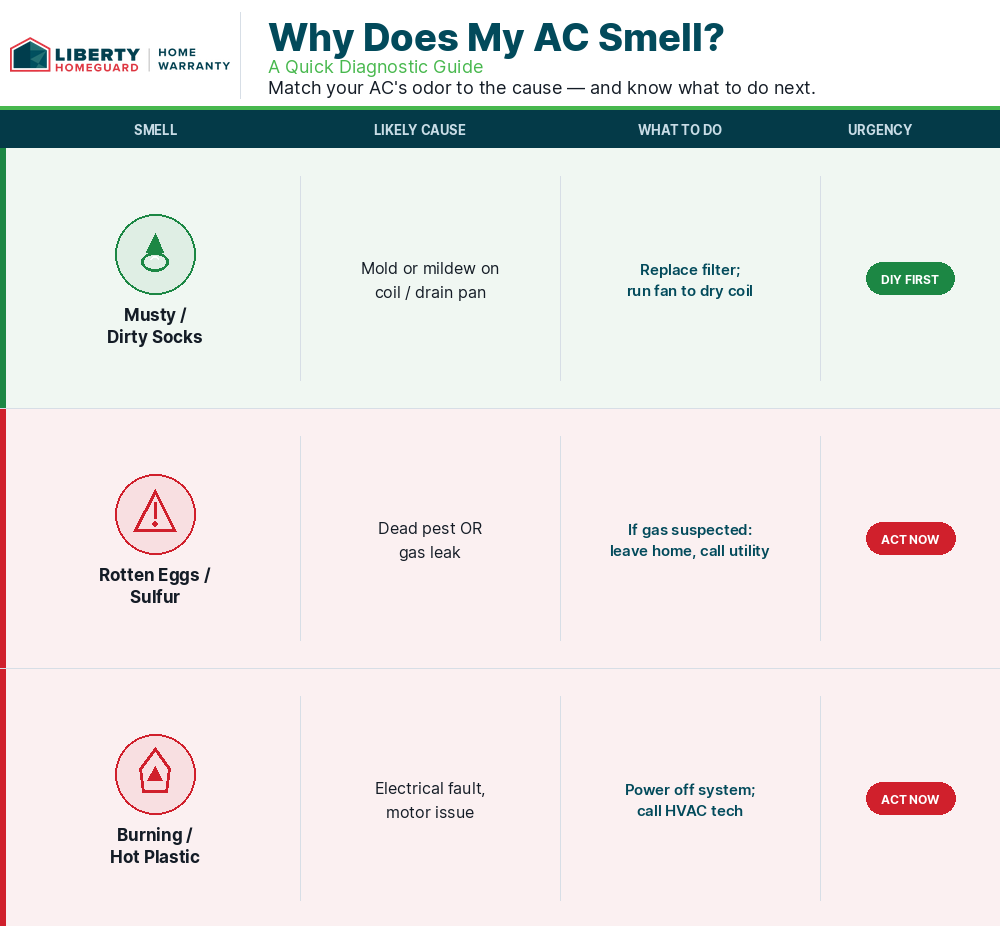
This is the most common AC complaint out there, and it’s almost always tied to moisture. Microbial growth on the evaporator coil, in the drain pan, or inside the ductwork is the usual culprit. A dirty filter, high indoor humidity, or a short-cycling oversized system can all make it worse.
Try this: Replace the filter, run the fan setting for 15 to 20 minutes to help dry out the coil, check the drain pan for standing water, and confirm the condensate line is draining properly. This is also a good moment to review our tips on how to maintain your home’s air conditioner so this doesn’t become a repeat problem.
Call a pro if: The smell keeps coming back, you spot visible mold, or the drain keeps clogging no matter what you do.
There are two very different explanations here, and telling them apart matters. It could be a dead pest trapped somewhere in the ductwork or attic, or it could be natural gas. Utilities intentionally add a chemical to gas so leaks are easy to notice. As the California Public Utilities Commission explains, utilities add an odorant, typically mercaptan, to natural gas so it has a distinctive rotten egg smell that helps people detect leaks.
Safety first: If gas is even a possibility, leave the home and call your gas company or 911 from outside. Don’t investigate this one yourself.
If gas is ruled out: Inspect accessible registers and ductwork for signs of a pest issue, or bring in a pro to look further.
This points to something electrical, whether it’s the blower motor, the control board, or worn wiring.
What to do: Power the system down completely and call a licensed HVAC technician. This isn’t a DIY fix, and running the system further could cause real damage or a fire hazard.
Usually this means a dried-out or damaged plumbing vent, or a sewer issue somewhere near your return air or ductwork.
Try this: Run water in nearby drains to refill dry traps, which is a common and simple fix. If you want to understand why this happens in the first place, our guide on why plumbing air vents are important breaks it down. If the smell sticks around after refilling the traps, it’s time to call a plumber or HVAC pro.
If your system is drawing in air near a garage or mechanical room, it can pull in vehicle exhaust or appliance fumes along with it.
Safety first: Get to fresh air, address the source right away, and double-check that your CO alarms are working and have fresh batteries.
This can come from microbial byproducts, cleaning chemicals stored too close to a return vent, or in rare cases, a refrigerant-related issue.
Safety first: Never attempt to handle refrigerant yourself. If a chemical smell doesn’t clear up, call a technician.
Smoke residue can settle into coils and ductwork, then get released again every time the system runs.
Try this: Replace the filter and clean return grilles. If the smoke smell lingers, a professional coil cleaning may help. This is one of several common AC problems worth knowing how to spot early. Duct cleaning should only be considered when it truly meets EPA’s criteria, which we cover below.
This one is typically bacteria building up on the coils or in standing water inside the drain pan.
Try this: Replace the filter and clear the drain. Call a pro for a coil cleaning if the smell won’t go away.
Most AC smells trace back to one of these:
On that oversizing point, the Department of Energy notes that an oversized air conditioner cools the house faster but removes less humidity, which leads to short-cycling. That extra moisture left behind is exactly the kind of environment odor-causing microbes love. Short-cycling often shows up alongside odd sounds too, so if something seems off, our guide to reducing AC noise covers a related set of airflow and maintenance issues worth checking.
Run through this list before calling in reinforcements:
If you’re running through this checklist in the middle of summer, it’s also worth a quick look at our heatwave energy-saving tips, since filter checks and humidity control matter even more when your system is working overtime.
A little routine upkeep goes a long way toward avoiding odor issues altogether:
A little planning now saves a lot of frustration later.
One more note on ductwork: don’t assume duct cleaning fixes everything. The EPA is clear that routine duct cleaning isn’t recommended, and cleaning should only be considered if there’s substantial visible mold, vermin, or excessive dust and debris.
Pick up the phone if you’re dealing with any of the following:
Odor troubleshooting is a great DIY starting point, but ongoing AC health really comes down to consistent maintenance. That’s where Liberty Home Guard’s optional HVAC Maintenance Add-On comes in. It’s designed to catch issues early, before they turn into bigger (and smellier) problems, and includes:
Liberty Home Guard policies also come backed by a 365-day workmanship guarantee, and claims can be filed online or by phone, any time, day or night. Our team typically dispatches a technician within 24 to 48 hours, and coverage is available in all 50 states plus Washington, D.C. Keep in mind the HVAC Maintenance Add-On is optional and not automatically included, so be sure to review your policy terms for full details on what’s covered.
Ready to see what’s included? Explore Liberty Home Guard’s air conditioner coverage directly.
Dealing with recurring odors elsewhere in the house? Check out our guides on why your water heater smells and why your washing machine smells.

Dust and moisture sitting on the coils and in the ductwork can create microbial odors that surface as soon as air starts moving. Replace your filter, run the fan for 15 to 20 minutes to dry the coil, and clear the condensate line.
It can be, especially for sensitive individuals. The CDC notes that mold exposure is linked to symptoms including stuffy nose, sore throat, coughing or wheezing, burning eyes, or skin rash, and it can worsen asthma. Address moisture issues and any visible mold promptly.
Yes, right away, if you notice burning, gas or sulfur, sewage, or exhaust smells. For a mild musty smell, basic maintenance is usually a fine first step, but call a pro if it doesn't clear up.
Absolutely. A dirty or restrictive filter reduces airflow and allows moisture to build up, both of which contribute to musty smells. Check filters monthly and replace at least every three months.
It could be a dead pest nearby, or it could be a gas leak. If gas is even a possibility, leave the house and call your utility or 911. Once gas is ruled out, have the ductwork inspected for pests.
This usually signals an electrical or motor issue. Turn the system off immediately and contact a licensed HVAC professional.
Replace filters, clean return grilles, and consider a professional coil cleaning. Duct cleaning should only be a consideration if it meets EPA's criteria, such as visible mold, vermin, or heavy debris buildup.
Keep indoor humidity between 30 and 50 percent, stay on top of filter changes, keep condensate lines clear, and schedule annual HVAC tune-ups. Liberty Home Guard's HVAC Maintenance Add-On can help make that upkeep easier to stay on top of. If you're weighing your options, our comparisons of air conditioner home warranty coverage versus AC insurance and our full air conditioner warranty guide can help you decide what fits.
Stay Ahead of Potential
Home Mishaps!
Subscribe to our Liberty Home Guard Newsletter and gain access to exclusive content that ensures your peace of mind.

Subscribe to receive our emails & get
Have questions?
Call us: (833) 544-8273