



Contemplating coverage?
Subscribe to receive our emails & get
$200 OFF!
Have questions?
Call us: (833) 544-8273

Expert-Reviewed Content: Guided by Editorial Standards

Written By Ryan Merchant
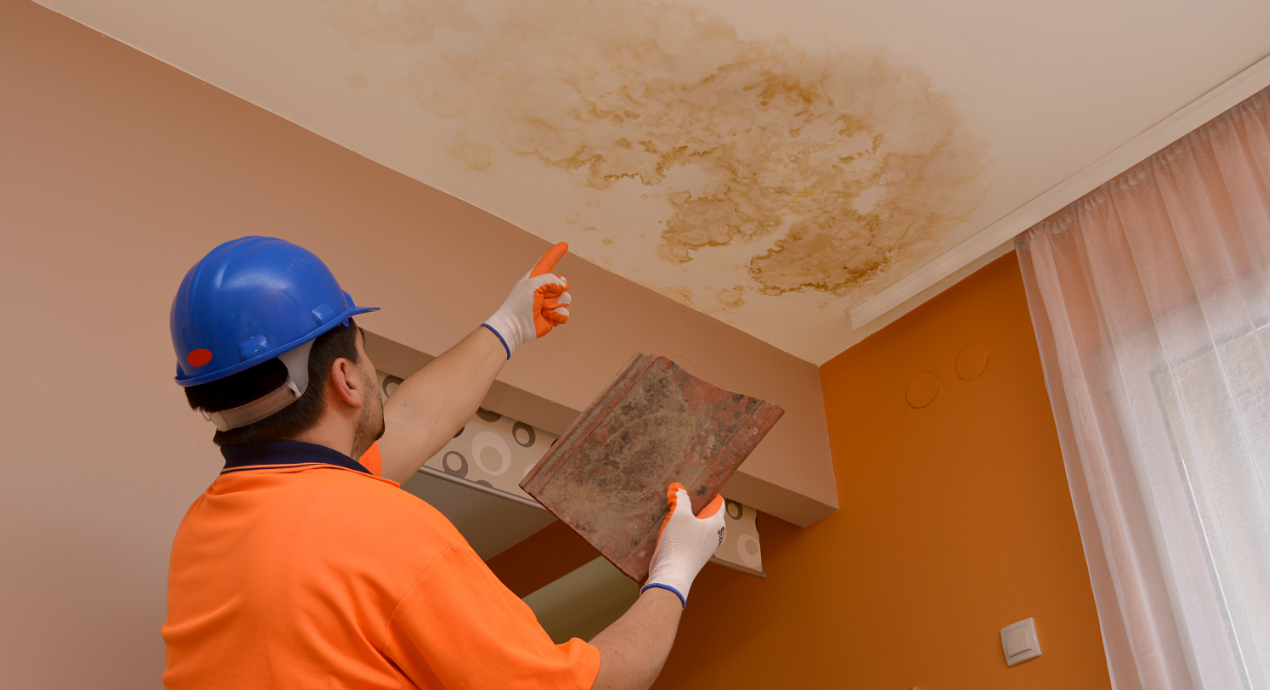
Water stains on ceilings are caused by moisture intrusion from above or below. The most common sources are roof leaks, plumbing pipe failures, HVAC condensate drain overflow, and poor bathroom ventilation. According to the U.S. EPA, the average family wastes 9,400 gallons annually from household leaks; a stain on your ceiling is one of the earliest visible signs that a leak has started. You must stop the water source before treating the stain, or it will return.
This guide walks you through how to identify what is causing your stain, how to remove it safely, and how to keep it from coming back.

Water stains on ceilings are caused by moisture intrusion from above or below. The most common sources are roof leaks, plumbing pipe failures, HVAC condensate drain overflow, and poor bathroom ventilation. The stain location and color can help you narrow down the cause before calling a professional.
The EPA notes that small leaks inside walls and ceilings may not be obvious, which is exactly why a ceiling stain can signal hidden water damage that has been building for weeks. The U.S. Department of Energy also lists water-damaged finishes and water stains as conditions that warrant inspection, alongside mold.
Use the stain location as your first diagnostic clue:
The appearance of a water stain can tell you a lot before you pick up a phone or a sponge. Use this table as a starting point for diagnosis.
Stain Appearance | Location | Most Likely Cause |
Brown or yellow ring with darker edges | Near roofline or exterior wall | Roof leak or damaged flashing |
Yellow or pale patch, fuzzy edges | Bathroom or kitchen ceiling | Condensation from poor ventilation |
White or chalky residue | Anywhere | Mineral deposits from evaporated hard water |
Dark brown or black discoloration | Any location | Possible mold growth; requires professional assessment |
Light gray mottled patches | Near HVAC vents or exterior walls | Condensation from temperature differential |
Stain appearance shifts over time. Fresh stains appear lighter and may feel slightly damp to the touch. Older stains are darker and completely dry. A brown ring that grows larger after every rainstorm is a strong indicator of an active roof leak that needs immediate attention, not just cosmetic treatment.
A water stain with no visible leak is usually caused by condensation. Cold outdoor temperatures cause moisture-laden indoor air to condense on cooler ceiling surfaces, especially in bathrooms, kitchens, and areas above uninsulated attics. Ice dams in winter can also push water under roof shingles and produce interior stains without any obvious dripping.
If you have a stain but cannot find an active leak, work through this 3-step diagnostic before calling a professional:
If none of these checks reveal a source, call a licensed plumber or roofing contractor to inspect for a hidden pipe or roof failure.
Once the water source is resolved and the ceiling is dry, you can begin removing the stain. The steps below apply to the most common water stains. This process drives consistent results for stains from roof leaks, plumbing drips, and condensation.
Gather these supplies before starting:
This numbered sequence is the most reliable method for DIY ceiling stain removal, consistent with guidance from the National Association of Certified Home Inspectors.
For stains that do not respond to vinegar, a bleach solution is the most effective DIY treatment. This method anchors the correct approach for stubborn water stains, and the dilution ratio matters.
Safety Notice
Always work in a well-ventilated area when using bleach. Wear rubber gloves and protective eyewear throughout the process. Never mix bleach with vinegar or any ammonia-based cleaner; the combination produces toxic chloramine fumes. Open windows and run an exhaust fan during and after application. The 1:5 dilution ratio is important: undiluted bleach can damage ceiling drywall and is no more effective than the diluted solution.
Many homeowners search for a way to treat a ceiling stain without rolling paint across the entire surface. This is a reasonable goal, and it is achievable for small, isolated stains, but only if you understand why regular paint fails.
Why regular paint fails on water stains. Water stains contain mineral deposits and organic residue that bleed through standard latex ceiling paint. Even two coats of flat white ceiling paint will not permanently hide the stain without a barrier underneath. The minerals migrate through the paint film, and the stain reappears within weeks.
Aerosol stain-blocking spray as a spot solution. For small, isolated stains where the rest of the ceiling is in good condition, an aerosol shellac-based stain-blocking primer, such as Zinsser BIN or a comparable product, can be applied as a targeted spot treatment without rolling the entire ceiling.Identify the Cause of the Water Stain
Before addressing the water stain, it is crucial to identify the source of the problem. Without doing so, you will only address the symptom and not the cause of the problem, which can lead to more damage in the future.
If the water stain is located near the roof, it is likely caused by a leaky roof. Check your attic for any signs of water damage, such as wet insulation or water dripping from the ceiling. If you find any, call a professional roofer to assess the damage and make the necessary repairs.
If the water stain is located near a bathroom, it could be caused by a leaky pipe. Turn off the water supply and call a plumber to fix the problem.
Steps for spot treatment:
When this approach is enough. If the stain is smaller than a dinner plate, the ceiling paint is in good condition, and the stain is not recurring, spot priming followed by a small brush touch-up is often sufficient and will save you hours of work.
When you need to repaint the whole ceiling. If the stain is large, if there are multiple stains across different areas, or if the ceiling paint has aged and yellowed, a spot touch-up will not match. A full ceiling repaint produces better results and is the professional recommendation in these cases.
You cannot successfully cover a water stain with regular ceiling paint alone. The stain will bleed through, even with multiple coats. The correct sequence is: fix the water source, let the ceiling dry completely, apply a stain-blocking primer, and then apply ceiling paint. Skipping the primer step will result in the stain reappearing within weeks.
Why latex paint alone fails. Standard latex ceiling paint is permeable enough for the mineral salts and tannins in water stains to migrate through the film. This is called bleed-through, and it happens even when the stain appears completely dry before painting.
Three types of stain-blocking primer and when to use each:
How to match ceiling paint after priming. Apply a coat of flat white ceiling paint over the fully dried primer. For older ceilings where the white has yellowed with age, a spot paint touch-up will rarely match the surrounding surface. In those cases, painting the entire ceiling surface produces a consistent finish. If the ceiling is in good condition and recently painted, a spot repaint over the primed area should blend adequately.
Preventing ceiling water stains means controlling the three sources that cause them: roof vulnerabilities, plumbing failures, and condensation. Here are the most effective prevention steps.

The EPA reports that 85 percent of the buildings studied had been damaged by water at some time, and that small leaks inside walls and ceilings are often not obvious until staining appears. That context matters when deciding whether to treat a stain yourself or call for help.
Use this framework to make the call:
Situation | Recommended Action |
Single stain, source identified and fixed, no mold smell | DIY cleaning and priming |
Recurring stain in the same spot after cleaning | Call a plumber or roofer to diagnose hidden source |
Stain with soft, sagging, or crumbling drywall | Call a contractor; structural repair needed |
Stain with visible mold growth or musty odor | Call a certified mold remediation specialist |
Multiple stains across different ceiling areas | Call a roofing contractor and plumber for full inspection |
Stain appears below HVAC equipment | Call an HVAC technician to inspect the condensate drain |
hich professional to call:
A home warranty does not cover water stains directly; the stain is a symptom, not a system failure. But the system failure that caused the stain may well be covered.
Most home warranty plans, including Liberty Home Guard plans, cover major systems such as plumbing and HVAC. If a ceiling water stain is caused by a covered system failure, including a burst pipe, a failing condensate pan, or a leaking HVAC line, the warranty may cover the cost of repairing that system.
Here is how coverage typically works and where its limits are:
Liberty Home Guard offers coverage for major appliances, whole-home systems coverage, or a combination plan.
If you are unsure whether your situation qualifies, Liberty Home Guard agents are available 24/7 to help you review your coverage and file a claim.
Condensation stains on ceilings typically appear as light gray or white patches with fuzzy or mottled edges. Unlike leak stains, they often form in patterns across the ceiling, particularly in corners or near exterior walls. These stains may be accompanied by peeling paint or small water droplets during periods of high humidity.
A water stain with no visible leak in winter is usually caused by condensation or ice dam damage. Cold outdoor temperatures cause warm, humid indoor air to condense on cooler ceiling surfaces, especially in bathrooms and kitchens. Ice dams form when heat escapes through the roof, melts snow, and the water refreezes at the cold eaves; this pushes water under shingles and into the ceiling without any obvious dripping.
The best primer for covering water stains on a ceiling is a shellac-based stain-blocking primer. Shellac-based products seal completely and prevent stain bleed-through even on heavy or dark staining. Oil-based stain-blocking primers are also highly effective. Water-based stain-blocking primers work for light stains and have lower odor. All three options are significantly more effective than applying standard latex ceiling paint without priming first.
No. Regular paint will not permanently cover a water stain. Mineral deposits and organic residue in the stain bleed through latex paint, even with multiple coats. You must fix the water source first, let the ceiling dry completely, apply a stain-blocking primer, and then paint. Skipping the primer guarantees the stain will reappear.
Yes. Water stains can be a precursor to mold growth if the moisture source was not resolved quickly. The EPA recommends replacing porous materials, including drywall, that have been wet for more than 48 hours. If a stain has dark, irregular edges or a musty odor, treat it as a potential mold issue rather than a cosmetic problem. Apply a small amount of diluted bleach to the area; if the color does not respond or lighten, stop cleaning and consult a certified mold remediation specialist.
The right professional depends on where the stain is located. Call a roofing contractor for stains near exterior walls, the attic, or after a storm. Call a licensed plumber for stains below bathrooms, kitchens, or anywhere near supply or drain lines. Call an HVAC technician for stains directly below air handling equipment or ductwork. If mold is present, call a certified mold remediation specialist before attempting any cleaning.
Stay Ahead of Potential
Home Mishaps!
Subscribe to our Liberty Home Guard Newsletter and gain access to exclusive content that ensures your peace of mind.

Subscribe to receive our emails & get
Have questions?
Call us: (833) 544-8273