


Contemplating coverage?
Subscribe to receive our emails & get
$300 OFF!
Have questions?
Call us: (833) 544-8273

Expert-Reviewed Content: Guided by Editorial Standards

Written By Angel Vallejo
Your garbage disposal feels like it can handle anything you throw at it, literally. But disposals are more delicate than they look, and the wrong item can mean a clogged sink, a jammed motor, or a call to a plumber. Here’s a clear breakdown of what to avoid, what’s actually safe, and how to keep your unit running smoothly for years. (If you’re cleaning house on kitchen appliance myths, our guide on what not to put in the microwave is worth a look too.)
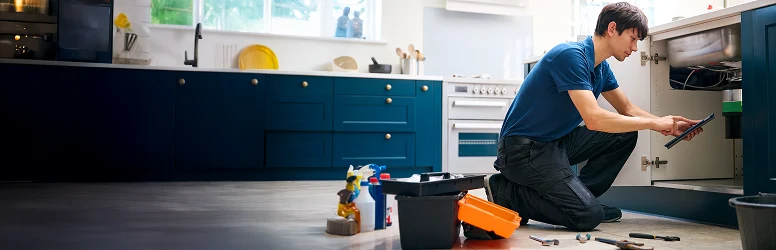
Skip fats, oils, and grease; fibrous or stringy produce; starchy foods like pasta and rice; bones, shells, and pits; coffee grounds; large volumes of anything; non-food items; and harsh chemical drain cleaners. When in doubt, the trash or compost bin is the safer choice.
Despite the name, disposals don’t have blades. Inside the chamber, spinning impellers fling food against a stationary grind ring, which shreds it into small pieces that water carries down the drain. It’s a small chamber built for small amounts of soft debris, not a second trash can.
Two things make jams more likely: a lower-horsepower motor that can’t power through tougher scraps, and older or narrower plumbing that’s less forgiving of buildup. Disposals use impellers and a grind ring rather than blades, and feeding small amounts with cold water improves performance. Keeping the chamber clean also helps; see our tips on how to clean a garbage disposal for a simple routine.
Quick tip: Always run cold water during use and for 20 to 30 seconds afterward. Cold water keeps grease solid enough to break apart, while hot water can melt it, letting it re-harden further down the pipe.
Bacon grease, pan drippings, melted butter, and shortening all seem liquid going in, but they solidify once they cool inside your pipes, coating the walls, trapping other debris, and eventually blocking flow. Running hot water doesn’t prevent this; it just delays where the grease resolidifies. This isn’t a minor household nuisance, either. The EPA estimated that 23,000 to 75,000 sanitary sewer overflows occur each year in the U.S., with blockages from fats, oils, and grease among the leading causes, and in Los Angeles specifically, approximately 70% of sewer spills are caused by grease blockages.
Alternative: Let grease cool, pour it into a can or jar, let it solidify, and toss it in the trash. If you cook with oil often, check for a local recycling program for larger volumes.
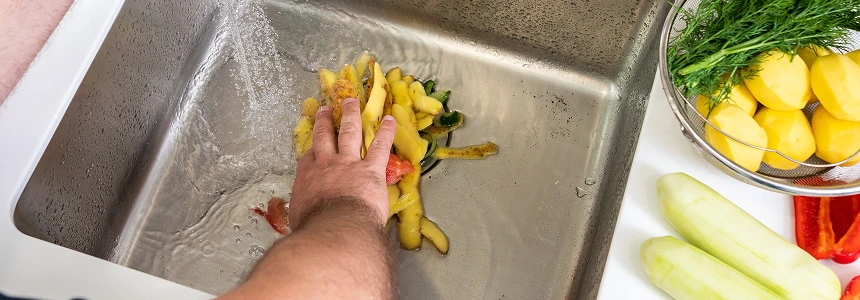
Pasta, rice, oatmeal, bread, and potato peels absorb water and expand, even after they’ve been "ground up." That swelling can form a gel-like clog well past the disposal itself.
Celery, asparagus, artichokes, kale, corn husks, onion skins, and pumpkin or squash fibers can wrap around the impellers instead of breaking apart, forming ropey tangles that jam the mechanism.
Chicken and beef bones, crab and lobster shells, fruit pits, and nut shells are simply too hard for a disposal to grind. At best they dull the components; at worst they jam the unit entirely, and repeated jams over time can shorten its lifespan. If your unit has been struggling for a while, it’s worth reviewing when to replace a garbage disposal.
They look harmless, but coffee grounds compact into a dense, sludgy layer that settles in your trap and pipes over time.
Alternative: Compost them or toss them in the trash.
The inner membrane of an eggshell is stringy and can wrap around moving parts, and shell fragments contribute to sediment buildup. A stray shell now and then usually isn’t a problem, but it’s best to compost or trash them as a habit.
Glass, metal, plastic, twist ties, produce stickers, paper towels, "flushable" wipes, and rubber bands don’t belong anywhere near a disposal. These items don’t break down and can damage the unit or create safety hazards.
Chemical drain cleaners are corrosive to metal components and rubber seals, and they can splash back and release harmful fumes. They also don’t do much for a mechanical jam; the actual obstruction is still there.
Alternative: Clear jams mechanically (see the troubleshooting section below),or use an enzyme-based cleaner that’s gentler on pipes. Call a professional if the problem doesn’t resolve.
If you’re on a municipal sewer system, the main goal is keeping FOG and solids out of the line to avoid contributing to neighborhood blockages and overflows.
If you’re on a septic system, disposals deserve extra caution. The EPA advises limiting or eliminating garbage disposal use on septic systems because disposals add solids that can lead to system failure and more frequent pumping. University Extension guidance similarly notes that garbage disposals can significantly increase the amount of solids entering a septic tank, requiring more frequent pumping. If you rely on a septic tank, consider composting food scraps instead of grinding them.
Safety first:
Steps to try:
If the disposal hums but won’t spin, you notice a leak, or the breaker keeps tripping, stop and call a professional. Those are signs of a deeper issue, not a simple jam. For step-by-step help, see our guide on how to unclog your garbage disposal, and if you’re seeing water underneath the unit, check out garbage disposal leaking from the bottom.
Even with careful use, disposals wear out. When a covered garbage disposal fails from normal wear and tear, Liberty Home Guard can dispatch a licensed technician, typically within 24 to 48 hours after the service fee is paid. Every repair is backed by a 365-day workmanship guarantee, and coverage is available in all 50 states plus D.C. Explore our garbage disposal coverage or learn more about garbage disposal repair costs and coverage to see how a home warranty can help you protect tomorrow, today.
Best avoided as a habit. The membrane is stringy and shells add grit, but a small incidental amount is typically fine.
No. They compact into sludge that settles in your trap and pipes. Compost or trash them instead.
Avoid them or use very sparingly. They swell and turn paste-like, which can cause clogs.
No. The grease re-solidifies further down the line and contributes to clogs and sewer overflows. Collect and solidify it, then throw it away or recycle where available.
Small pieces used occasionally can help with odor, but don't overload the unit with large peels, and always run cold water.
No. They're too hard and can jam or damage the unit. Put them in the trash.
Power it off, cut the breaker, remove visible obstructions with tongs, use the hex key on the bottom to free the flywheel, and press reset. Call a professional if it's still stuck.
Limit or avoid heavy use. Disposals add solids that can increase pumping frequency and raise the risk of system failure. Follow EPA and local health department guidance for your setup.
Stay Ahead of Potential
Home Mishaps!
Subscribe to our Liberty Home Guard Newsletter and gain access to exclusive content that ensures your peace of mind.

Subscribe to receive our emails & get
Have questions?
Call us: (833) 544-8273