



Contemplating coverage?
Subscribe to receive our emails & get
$300 OFF!
Have questions?
Call us: (833) 544-8273

Expert-Reviewed Content: Guided by Editorial Standards

Written By Erin Easley
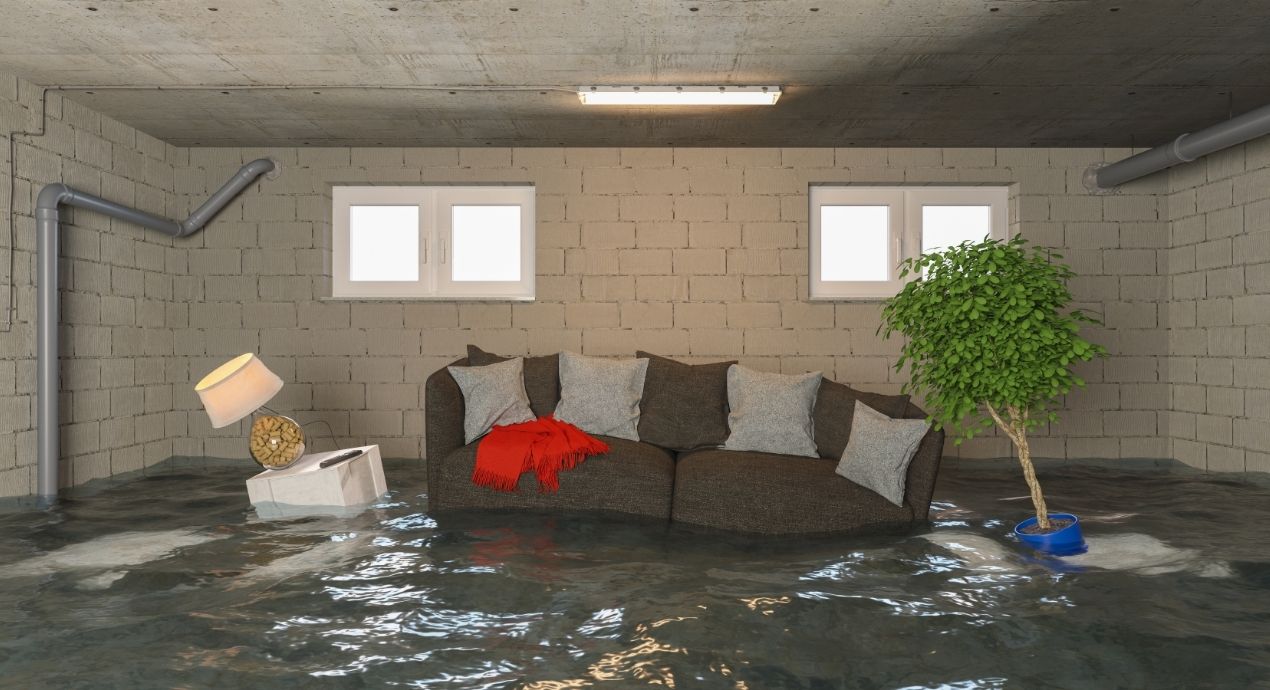
A flooded basement is one of the most stressful problems a homeowner can face. Beyond the cleanup, you’re dealing with water damage, possible mold growth, and the question of who is going to pay for it. Roughly 98% of U.S. basements will experience some form of water damage during their lifespan, according to water damage statistics compiled by Basement Defender using FEMA and flood risk data. That makes a flooded basement less a rare disaster and more something nearly every homeowner should have a plan for.
Homeowners insurance does not automatically exclude flooded basements; coverage depends on the cause. Sudden, accidental events like a burst pipe are often covered, while storm and groundwater flooding usually are not. The steps below align with CDC and FEMA flood safety guidance, and a home protection plan can help cover some of the systems that cause basement flooding in the first place.
When your basement floods, work through these eight steps in order: secure the area, identify the source, document the damage, call the right professional, remove belongings, extract standing water, dry the space, and repair damaged materials.
Turn off the electricity and gas to the basement before you do anything else. This matters even if the flooding looks minor, since you cannot see whether water has reached in-wall wiring. If your circuit breaker is located in the flooded basement, do not attempt to reach it. Call a licensed electrician.
According to Ready.gov, just 6 inches of moving water can knock a person down, and floodwater can be electrically charged and carry debris. The CDC also warns that floodwater can contain sewage, chemicals, and other contaminants that are dangerous to your health. Put on boots, gloves, and eye protection before entering the area; a mask is a good idea too, and covering exposed skin reduces your risk of irritation or infection.
Once the area is safe, figure out where the water is coming from. Common sources include:
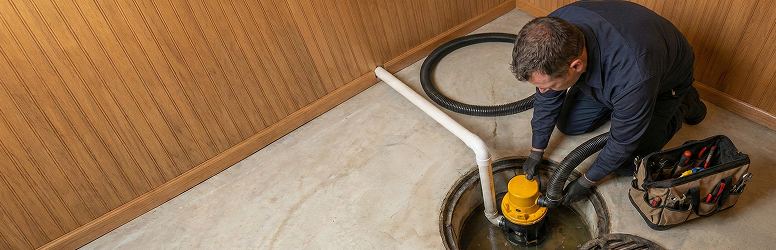
If a sump pump seems to be the culprit, check the float switch, look for a clog, confirm the power connection, and inspect the discharge line before assuming the unit needs full replacement. If the water is coming from inside the home, shut off the water source if it is safe to do so. Take photos and notes on how and where the water entered.
Before you move a single item, photograph everything: standing water levels, affected belongings, walls, and flooring. Record a short video walkthrough of the space as well. Note the time you discovered the flooding, and save receipts for any emergency purchases like a wet/dry vacuum or a dehumidifier rental. This documentation is what supports your insurance claim later, so do it before cleanup begins.
Who you call first depends on the cause. For a burst pipe or appliance leak, call a licensed plumber first. For a sump pump failure, call your home warranty provider to start a claim. For a sewer backup, start with your municipal water authority. For storm flooding, call a water damage restoration company first. Once the immediate cause is handled, contact your insurance carrier to open a claim.
Wearing gloves, start removing items from the flood zone. Wash what can be salvaged and responsibly dispose of what cannot. To decontaminate salvageable items, rinse them in a solution of 1 cup of bleach per 1 gallon of water.
If the flooding was caused by a sewer backup, soft materials that contacted the water, including carpet, upholstered furniture, and clothing, are considered category 3 (black water) contaminated. These items should be disposed of rather than cleaned.
Match your equipment to the depth of the water. Use a mop and bucket for under 1 inch, a wet/dry vacuum for 1 to 3 inches, a submersible pump for 3 inches or more, and a professional water extraction service for large-scale flooding. If the damage is extensive or you’re not confident handling it yourself, hiring a licensed contractor is a safer route than tackling it alone.
Drying needs to start immediately once standing water is gone. Open windows and doors if outdoor humidity is below 50%. Position industrial fans to blow air toward exits, and run a dehumidifier continuously until moisture readings normalize. A HEPA air purifier helps capture airborne particulates while the space dries.
According to water damage restoration professionals, mold can begin colonizing porous surfaces within 24 to 48 hours of water exposure. Starting the drying process immediately after water extraction is the single most important step in mold prevention. If moisture readings remain above 1% in drywall, cut it 12 inches above the waterline, and call a mold remediation specialist if you see visible mold or notice a persistent smell after drying. Learn more about mold growth after a flood and what coverage may apply.
Cut damaged drywall 12 inches above the visible waterline; anything lower will likely need replacing. Carpet padding cannot be dried and must be replaced, not cleaned. Replace any water-stained ceiling tiles. If your basement is finished and the damage is extensive, hiring a licensed contractor is the safer choice over a DIY repair.
Knowing the cause of your flooded basement determines what kind of coverage or repair applies.
The right first call depends on what caused the flood.
For flooding caused by a covered system failure, Liberty Home Guard coverage plans should be your first call.
Cleanup costs depend heavily on how much water was involved and whether the basement is finished. Minor flooding, under 1 inch in an unfinished basement, typically runs $500 to $1,500. Moderate flooding in a finished basement with drywall and carpet damage runs $3,000 to $7,000. Severe flooding with structural damage or mold can run $10,000 or more.
A home warranty does not cover water damage cleanup or structural repairs, but it can cover the failed system, such as a sump pump or plumbing pipe, that caused the flood in the first place. Covering the repair of the failed component reduces your total out-of-pocket cost significantly.
Homeowners insurance typically covers basement flooding caused by sudden internal events like burst pipes or appliance failures. It does not cover flooding from groundwater, storms, or rising surface water. For those causes, a separate flood insurance policy through the National Flood Insurance Program is required. Coverage depends on your specific policy, so review your declarations page or contact your insurer to confirm what’s included.
Flood insurance is required for groundwater events, storm surge, and rising water, since standard homeowners policies exclude these. It’s purchased separately through the National Flood Insurance Program (NFIP) or a private carrier. Coverage extends to the structure and, depending on the policy level, some contents. Homeowners in high-risk flood zones may be required to carry it.
A home warranty covers the mechanical failure of systems and appliances that can cause a flood, such as a sump pump failure or a burst plumbing pipe, depending on the plan. It does not cover the water damage cleanup, mold remediation, or structural repairs that follow. Think of it as protection for the systems that fail, not the damage they leave behind. See home warranty vs. homeowners insurance for a full breakdown of how the two work together.
Liberty Home Guard has been rated #1 by U.S. News and World Report for 2021, 2022, 2023, 2024, and 2026. If you want to protect the systems most likely to cause a flooded basement, get a free quote from Liberty Home Guard.
A few maintenance habits go a long way toward keeping your basement dry:
Gutter and drainage problems are a major contributor to soil saturation near the foundation, so a regular roof and drainage inspection is worth adding to your maintenance schedule.
Basement flooding can happen for a variety of reasons, including heavy rainfall and storms, poor drainage or grading, clogged or broken gutters and downspouts, cracks in foundation walls or floors, sump pump failure, sewer backup, burst or leaking pipes, and window well leaks. Identifying the exact cause matters, since it determines which type of insurance or coverage applies.
You should call a professional as soon as you discover your basement is flooded, ideally within the first 24 hours. Call a plumber for pipe or sump pump issues, a water damage restoration company for large-scale cleanup, or your home warranty provider if a covered system failed. Acting quickly limits mold risk and keeps repair costs down.
Homeowners insurance typically covers basement flooding caused by sudden internal events like burst pipes or appliance failures. It does not cover flooding from groundwater, storms, or rising surface water. For those causes, a separate flood insurance policy through the National Flood Insurance Program is required. Coverage for sewer backup may also require a separate rider. Review your policy or contact your insurer to confirm what is included.
Remove all standing water first using a wet/dry vacuum or submersible pump. Open windows and doors if outdoor humidity is below 50%, run industrial fans pointed toward exits, and operate a dehumidifier continuously. Use a HEPA air purifier to capture airborne particles. Mold can begin growing within 24 to 48 hours, so start the drying process immediately after water is removed.
For a burst pipe, call a licensed plumber first. For storm flooding, contact a water damage restoration company. If a sump pump failed, call your home warranty provider to file a claim before calling a repair specialist. For a sewer backup, start with your municipal water authority. If the cause is unknown, a licensed plumber can diagnose the source before you involve other contractors.
Stay Ahead of Potential
Home Mishaps!
Subscribe to our Liberty Home Guard Newsletter and gain access to exclusive content that ensures your peace of mind.

Subscribe to receive our emails & get
Have questions?
Call us: (833) 544-8273