


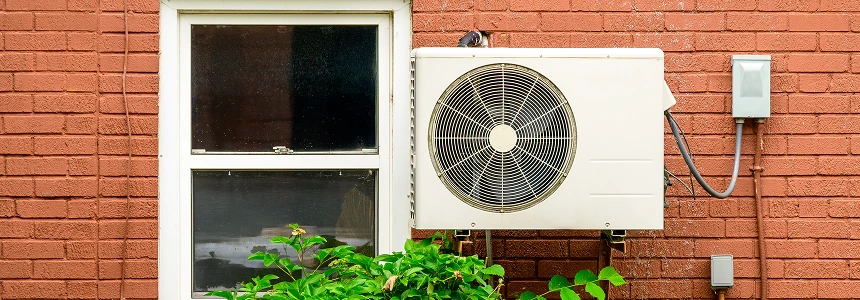


Air Conditioner Size
Liberty Home Guard

Expert-Reviewed Content: Guided by Editorial Standards

Angel Vallejo

Written By Angel Vallejo

Published 08/28/26
Home Maintenance

6 Factors That Determine What Size Air Conditioner You Need

Key Takeaways:

  • The cooling capacity of an air conditioner is measured in BTUs. A very rough rule of thumb for the ideal air conditioner size is 20 BTUs per square foot.
  • In addition to square footage, factors that determine an appropriately sized air conditioner include ceiling height, climate, windows and sun exposure, insulation quality, number of residents, and number and size of indoor appliances.
  • Improperly sized air conditioners waste energy. Undersized units run constantly to maintain a desired temperature. Units that are too powerful bring the temperature down too quickly and then shut off, resulting in chronic short cycling.
  • An AC BTU calculator or professional assessment can help you determine your home’s cooling needs.

It may sound counterintuitive, but cooling down your living space isn’t just a matter of finding the largest or most powerful air conditioner available. While an undersized AC will struggle to effectively cool off a large room, an oversized AC will work too well, bringing down the temperature before it reduces the humidity.

Finding that sweet spot between just powerful enough and too powerful is largely dependent on square footage, but several other factors are relevant as well. 

Submit a Claim

Chill out—we’ve got your cooling covered.

Protection that keeps your home comfortable
when temperatures soar.

Explore AC Coverage

Why Getting the AC Size Wrong Costs You More Than You Think

Incorrectly matching your AC tonnage to your home’s cooling requirements can affect your finances as much as your personal comfort. An air conditioner that is too small will have a hard time bringing the room’s temperature down to your desired level. On especially hot and humid days, it may need to run nonstop, even then failing to make the room cool enough. Running so frequently will draw more electricity, driving up your energy bills.

An air conditioner that is too powerful is no better. A high-capacity unit will bring down the temperature of a small room too quickly, shutting off before it can remove moisture from the air. This leaves the room feeling cold and damp, more like a dank basement than a comfortable living space. It also results in short cycling, as the unit turns on and off in rapid succession. Because the compressor and motor command a surge of power upon startup, short cycling consumes much more energy than is otherwise typical of an air conditioner.

Finally, constantly running or short cycling your air conditioner increases the amount of wear and tear on the appliance, driving up your HVAC maintenance costs because of more frequent or more costly breakdowns and malfunctions.

The 6 Factors That Determine What Size AC You Need

Room size is relevant, but it isn’t the only thing to consider when determining what kind of output you need from your air conditioner. Here’s what you should keep in mind.

  • Square footage. Larger rooms require more powerful air conditioners. A 20 BTU per square foot ratio is a good rule of thumb, but treat that as a starting point and adjust higher or lower based on other factors.
  • Climate. Homes that are otherwise comparable in size will need greater cooling capacity if located in an area with hot and humid weather.
  • Ceiling height. Room height and air volume are directly correlated. Rooms with higher ceilings have a larger volume of air that needs to be cooled, and they need more powerful air conditioners accordingly.
  • Amount of sunlight. The intensity of sunlight in a room drives cooling needs as well. Rooms that get a lot of sun, especially from skylights or windows that face west or south (in the Northern Hemisphere),usually need a stronger AC. Conversely, heavy shade cover means you can get away with a less powerful unit.
  • Insulation. Insulation isn’t just a winter concern. In the summer, insulation keeps air conditioned air from escaping. If your home isn’t well insulated or has drafty doors and windows, you may need a slightly stronger air conditioner to compensate.
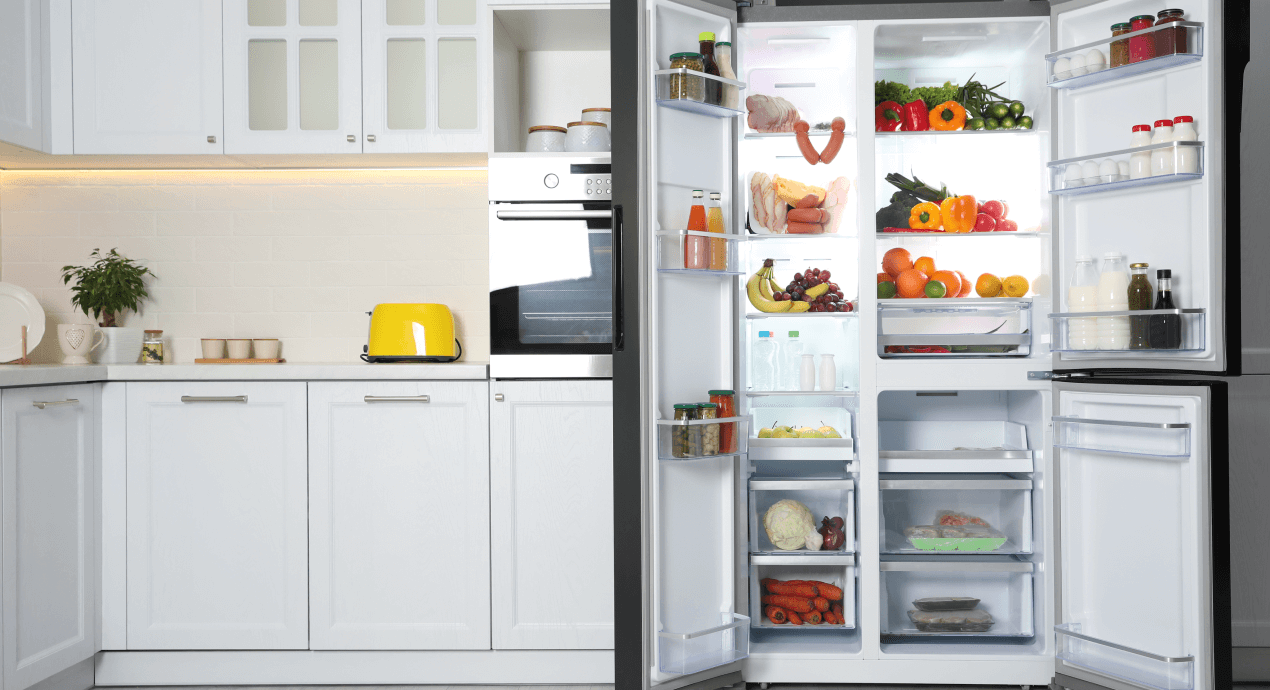
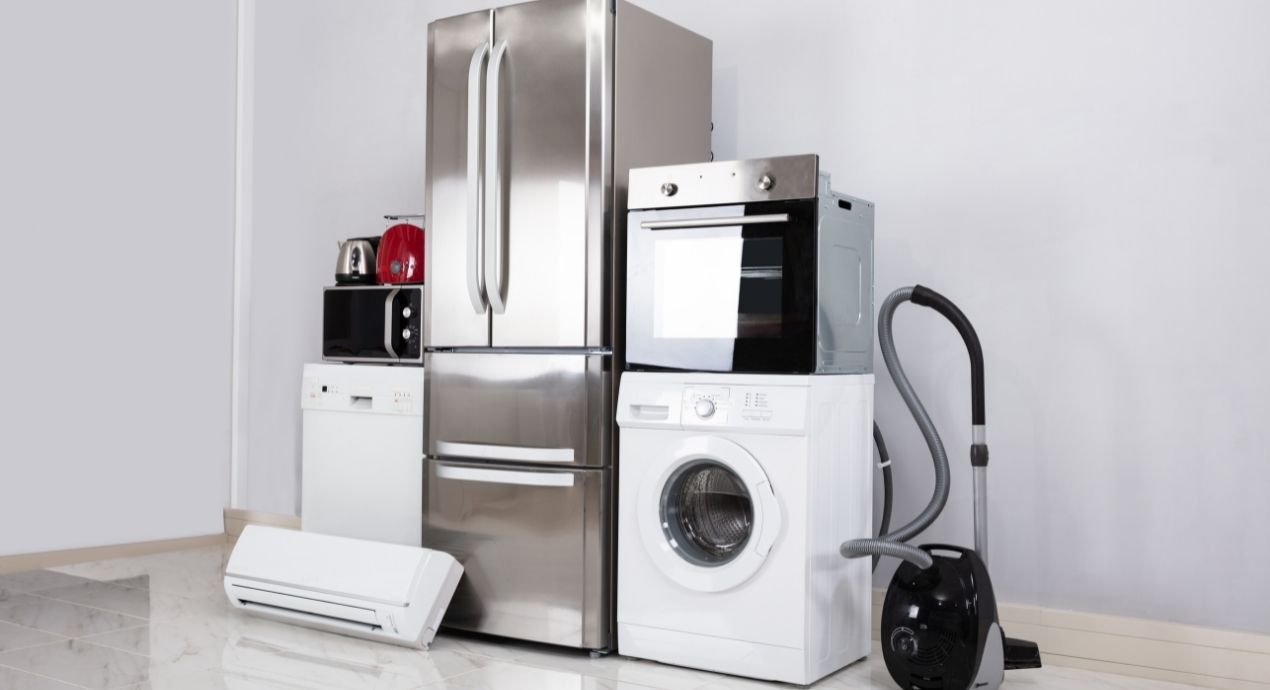
  • Types of appliances. If a room has large, heat-generating appliances, the cooling unit may need to work a little harder. This is particularly relevant to kitchens, as the oven, stove, fridge, and dishwasher boost the temperature and humidity in their immediate vicinity. A room with a washer and dryer nearby may likewise benefit from stronger AC.
  • Number of people. People generate heat. If you have a large family or frequently use a space in your home for social gatherings, you might consider a slight upgrade in your AC’s cooling capacity.

How to Calculate the Right AC Size for Your Home

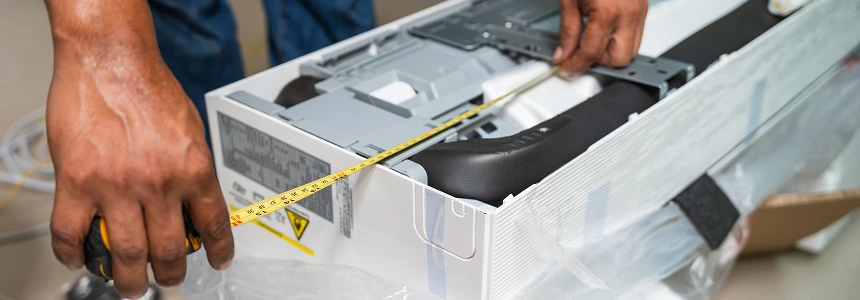
Several factors may impact your home’s cooling needs, but you can often determine the right size AC for your home with little more than a tape measure and some casual observations.

  1. First measure the length and width of the space you want to cool and multiply those measurements to get the square footage.
  2. Multiply your space’s square footage by 20 BTUs to arrive at a baseline approximation of your cooling needs. For example, a space that’s 400 square feet could use an AC with 8,000 BTUs.
  3. Begin to adjust your baseline based on the layout and features of your living space as outlined above. If you have a 10- or 12-foot ceiling, boost your BTU target by 10%. Scale appropriately if your ceilings are greater than 12 feet.
  4. Assess your insulation and amount of sunlight. If your living space is drafty and gets a lot of afternoon sun, add 10% to 15% to your BTU target. Subtract the same amount if your home is very well insulated or has abundant shade.
  5. If there are more than two adults in your home, add around 600 BTUs for each additional person.
  6. If you’re calculating your cooling capacity for a kitchen, add 4,000 BTUs to offset the heat and humidity generated during cooking.

If necessary, you can also contact a professional for a more precise assessment of your home’s cooling needs. An expert can also help you understand which air conditioning systems are compatible with your existing home HVAC system.

Common AC Sizing Mistakes Homeowners Make and How to Avoid Them

As you shop for the appropriately sized AC for your home, be mindful of the pitfalls many homeowners encounter.

  • Getting an AC that’s too large. Many homeowners assume that you might as well purchase a more powerful AC to be safe, but there is such a thing as too powerful. An oversized AC is prone to short cycling and will leave a home feeling cool but clammy.
  • Neglecting insulation and air leaks. Poor insulation and drafts work against an air conditioner’s cooling action. If cool air is easily escaping the home, the AC has to be more powerful to compensate.
  • Ignoring ceiling height. If you consider square footage alone, you might underestimate your cooling needs. High ceilings need to be accounted for because of the greater volume of air in the room. 

Increasing Your AC’s Longevity

Correctly sizing your AC for your living space is key to getting your money’s worth. An AC that is too weak or too powerful is liable to break down more quickly. But don’t discount other strategies to get the most out of your HVAC equipment. Home warranty protection, for instance, can ensure that any malfunctions are remedied quickly, before they have the chance to cause additional damage. Learn more about Liberty Home Guard’s top-rated coverage by calling (866)-983-0940.

Protect What’s Most Important With
America’s #1 Home Warranty

Get A Free Quote
  • Comprehensive Plans
  • Highly Competitive Rates
  • 24/7/365 Claims
  • Online Portal

Frequently Asked Questions

  • What happens if your AC is too big for your home?

    An AC that is too powerful for a home will cool the space down too quickly, shutting off before it has reduced the indoor humidity. This makes the room feel cold and damp instead of cool and comfortable. It also leads to short cycling, straining the air conditioner and working against its longevity.

  • What does BTU mean for air conditioner sizing?

    A British Thermal Unit, or BTU, is a scientific unit of measurement for heat. The BTU rating on an air conditioner refers to the amount of heat the appliance can remove from a room in a single hour. For example, an 8,000 BTU air conditioner is removing 8,000 BTUs of heat from the room in one hour’s time. The higher the BTU rating, the greater the cooling effect.

  • Does ceiling height affect what size AC you need?

    Yes, high ceilings can mean that the space needs a more powerful air conditioner. Square footage is a two-dimensional measurement, but your living space is in three dimensions. A higher ceiling means a greater volume of air that needs to be cooled to a comfortable temperature. 

    An AC in a room with 10- or 12-foot ceilings should be about 10% more powerful than an AC in an otherwise identical room with 8-foot ceilings.

  • Can one AC unit cool an entire house?

    In a home with central air, a properly sized air conditioner can potentially cool the entire house. A window unit or ductless mini split is not powerful enough to cool a full home.

  • How do you know your AC is the wrong size?

    An air conditioner that runs constantly to keep a room cool is very likely undersized. Conversely, an air conditioner is probably oversized if it rapidly cycles between being on and off and leaves the room feeling cool but still humid.

Liberty Home Guard
Need help?

Talk to our Liberty Home Guard Agents 24/7.

(855) 953-9695
Liberty Home Guard
Special Offer
GET QUOTE
Liberty Home Guard
Need help?

Talk to our Liberty Home Guard Agents 24/7.

(855) 953-9695