Coupons & Promotions

Ge washer is leaking from the bottom

A GE washer leaking from the bottom can be a frustrating and messy problem, but fortunately, there are several possible causes and easy fixes. Understanding the underlying issues that could lead to a washer leak is essential for any homeowner who wants to prevent further damage to their appliance or flooring. Whether it’s a simple hose issue or something more complex, this guide will walk you through what to check and how to fix it.

In this article, we’ll cover the most common causes of water leakage from the bottom of your GE washer and provide step-by-step solutions to help you address them. Read on to learn how to troubleshoot and resolve this issue quickly.

Key reasons for the problem:

%

45% of reported issues are the

Drain Pumpquestion

%

35% of reported issues are the

Tub Sealquestion

%

15% of reported issues are the

Water Inlet Valvequestion

%

5% of reported issues are the

All Other Causesquestion

One Plan. Every Appliance. Zero Stress.

Extended warranties only cover one item. Liberty Home Guard protects all your appliances and systems under one simple plan.
If it breaks, we’ve got you covered—no matter the brand.

Get My Free Quote

Diagnostic and troubleshooting steps

Is your GE washer leaking from underneath? This step-by-step guide breaks down the most common causes—from faulty drain pumps to worn tub seals—and provides practical solutions to stop the leaks and keep your laundry routine running smoothly.
Diagnostic & Troubleshooting
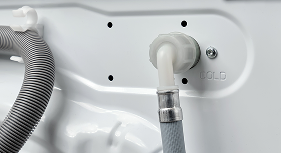
Check the Drain Hose

Step 1:

Check the Drain Hose

  • Unplug the washer and inspect the hose. Check the drain hose for any visible bends, kinks, or obstructions. 
  • Inspect the hose for cracks or holes. 
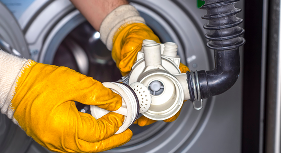
Clean the Pump Filter

Step 2:

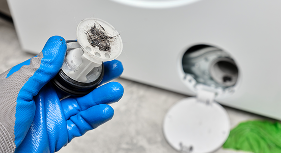
Clean the Pump Filter

  • Locate the filter and place a towel or small container under the area to catch any water that may spill out when you remove the filter.
  • Remove the filter and rinse it under running water to remove lint, dirt, and any small debris. Be sure to thoroughly clean the filter to ensure optimal water flow.
  • Once the filter is clean, carefully replace it and close the access panel.
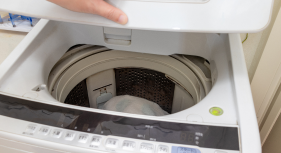
Check the Lid Switch

Step 3:

Check the Lid Switch

  • Open the washer lid and locate the lid switch, which is designed to stop the washer from spinning if the lid is open.
  • Using a multimeter, test the lid switch for continuity. If the switch fails the test or does not engage properly when the lid is closed, it may be faulty.
Inspect the Drain Pump

Step 4:

Inspect the Drain Pump

  • Start a drain cycle on your washer and listen for a humming sound coming from the drain pump. If you don’t hear anything, the pump may be faulty.
  • Inspect the pump for any debris or blockages that may be causing a disruption in its operation. You may need to remove the pump to check it more thoroughly.
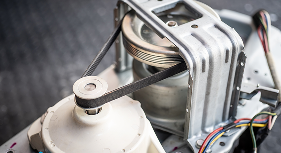
Examine the Belt

Step 5:

Examine the Belt

  • Open the back panel of the washer to access the drive belt. Inspect the belt for any signs of damage, like fraying, cracking, or excessive wear.
Get a Home Warranty to Cover Appliance Breakdowns

Step 6:

Get a Home Warranty to Cover Appliance Breakdowns
  • Protect yourself from costly appliance failures—companies like Liberty Home Guard offer helpful coverage.

Key actions for homeowners:

  • Ensure your loads are balanced to avoid excessive water spillage. Overloading your washer can strain the motor, belts, and other components, leading to leaks or damage.
  • Make it a habit to regularly clean the pump by removing any lint, debris, or small objects that may have gotten caught in the filter.
  • Inspect the lid switch and door lock before each cycle. These components prevent water from leaking out during the washing and spinning cycles.
  • Regularly inspect the drive belt for signs of fraying, cracking, or excessive wear. Replace the belt if necessary to maintain smooth operation.
Diagnostic & Troubleshooting

Most common repairs needed to fix a ge washer that’s leaking from the bottom

When your GE washer is leaking from the bottom, certain repairs are more commonly required than others. Below are the most frequent fixes:

    • Replace a Worn-Out Drive Belt: The drive belt is responsible for rotating the washer drum during the spin cycle. Over time, this belt can wear out, become loose, or even break completely. If this happens, the drum won’t spin properly, and water may not drain efficiently, leading to leaks.
    • Replace a Broken Motor Coupling: The motor coupling connects the washer’s motor to the transmission, allowing the drum to rotate during the wash and spin cycles. If the motor coupling breaks, the motor will still run, but the drum will not move, and the washer may fail to drain properly.
    • Clean or Replace a Clogged Drain Pump: A clogged drain pump can prevent your GE washer from draining properly, which can cause it to stop mid-cycle or fail to enter the spin cycle. Inspect the drain pump for debris, lint, or small objects that may be blocking the flow of water.

Frequently Asked Questions

  • Why is my GE washer leaking from the bottom?

    There are several possible reasons for your GE washer leaking from the bottom. Common causes include a damaged or clogged drain pump, worn-out drive belt, faulty lid switch or door lock, or issues with the hoses. Inspecting and addressing each of these components can help resolve the leak.

  • How can I fix a clogged drain pump in my GE washer?

    To fix a clogged drain pump, first unplug the washer for safety. Then, locate the drain pump filter, typically near the bottom of the washer. Remove the filter and clean it thoroughly, removing any debris or lint. If the pump itself is clogged, you may need to remove it and check for blockages. If cleaning doesn’t resolve the issue, replacing the pump may be necessary.

  • Can a broken drive belt cause my GE washer to leak?

    Yes, a broken or worn-out drive belt can lead to water leakage. The drive belt is responsible for rotating the drum during the spin cycle. If it’s damaged, the drum may not spin properly, causing water to remain in the drum and eventually leak out. If you notice a loose or damaged belt, replacing it should resolve the issue.

  • How do I know if my GE washer's door lock is faulty?

    If you have a front-load GE washer, a faulty door lock can prevent the washer from sealing properly, leading to leaks. To check the door lock, listen for a clicking sound when the door is closed. If the washer doesn’t engage or the door doesn’t stay sealed, the lock mechanism may need to be replaced. You can also test the lock with a multimeter to check for electrical continuity.

Liberty Home GuardLiberty Home GuardLiberty Home GuardLiberty Home GuardLiberty Home Guard

The Most Consumer Centric
Home Warranty Provider.

Homeowners across the country recommend Liberty Home Guard Home Warranty above all others.
Don’t just take our word for it—Liberty Home Guard Reviews speak for themselves!

I've had this home warranty service ...

I've had this home warranty service for over a year. I've exclusively used the "pick a contractor" option and have had good result...

Omar K.

Liberty home Guard
I was expecting so so service and re...

I was expecting so so service and repair, but that was not the case. The over the range microwave door stopped closing. I put in a...

Alice N.

Liberty home Guard
JP was extremely professional, frien...

JP was extremely professional, friendly, and efficient throughout the entire process. He communicated clearly, handled everything ...

Donald P.

Liberty home Guard
E Perach is the most understanding h...

E Perach is the most understanding helpful home warranty professional I’ve ever dealt with after have 3 other companies. Her cus...

Michael F.

Liberty home Guard
The support-person was very knowledg...

The support-person was very knowledgeable and gave me the information I needed to make my decision. Suppoet-person was Tony Torres...

John M.

Liberty home Guard
Great job. Would highly recommend th...

Great job. Would highly recommend the technician!! And fast: our dryer needed repair on a Friday and by the following Tuesday we h...

Larry F.

Liberty home Guard
Representative was very knowledgable...

Representative was very knowledgable and friendly. This is the second call about an issue and Tony was extremely patient and helpf...

JoAnn W.

Liberty home Guard
Maia Palmer was the most helpful rep...

Maia Palmer was the most helpful representative I have spoken with at Liberty Home Guard. They took care of my claim with compassi...

May D.

Liberty home Guard
I'm so glad I switched to Liberty. T...

I'm so glad I switched to Liberty. They were quick to respond to my request and covered the work that needed to be done. 

Debra D.

Liberty home Guard
I have Liberty Home Guard for an yea...

I have Liberty Home Guard for an year. I worked with Ronald Moran. He is an awesome service representative. From the point I open ...

Vidyasagar U.

Liberty home Guard
Liberty Home Guard
Need help?

Talk to our Liberty Home Guard Agents 24/7.

(866) 225-7958